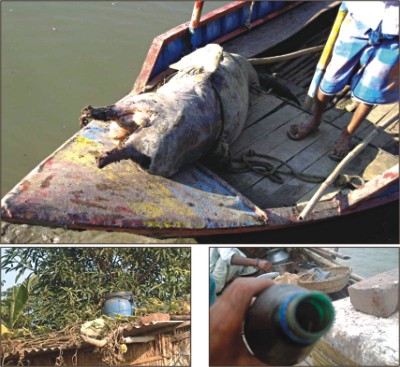
|
In recent decades science has rediscovered what 'primitive' peoples intuitvely understood: namely, that all living organisms profoundly interacts with one another and with their non-living surroundings. The modern study of this system of myrida interactions is called ecology. |
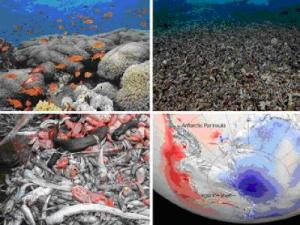 Many scientific efforts have been made to link the decline of wild marine and terrestrial populations with human activities such as habitat fragmentation, overexploitation and global warming.
"Establishing the link between the loss of biodiversity and human-related threats is crucial to develop policies aimed at mitigating such threats", says Camilo Mora at Dalhousie University, leading author of the paper. "Unfortunately, in many cases several threats are operating simultaneously making it difficult to isolate their individual and combined effects through field observations,"Mora adds.
This new study used an experimental approach that has been broadly used in ecology to shed light into complex ecological processes. In this approach, populations of rotifers were maintained at equilibrium under laboratory conditions and then exposed to the simulated effect of exploitation, habitat loss and warming. Changes in population size were then quantified and compared to the changes occurred among populations that were not impacted.
"Our experiment clearly shows that exploitation, habitat loss ad warming are equally capable of causing significant population declines," Mora says. "More importantly, our results showed that the stress induced by any one threat impairs the ability of populations to resist or adapt to other threats.
Populations exposed to more than one threat declined drastically. Population declines were up to 50 times faster when all threats operate at their maximum extent upon a given population."
"It is hard to think of a system that would not be exposed to several threats at once," says Nancy Knowlton, from the Scripps Institute of Oceanography. "Coral reefs, as an example, are being overexploited to satisfy food demands and the trade of ornamental species. They are also harmed by blast fishing, coastal development and pollution, all of which directly or indirectly kill the corals and leave them vulnerable to erosion and loss of their complex matrix. Habitat loss is also occurring in areas that are very important to the ecological functioning of coral reefs such as estuaries and mangroves. Finally, it, is the widespread effect of ocean warming, which is evident by the regional to global scale patterns of coral bleaching and mortality when temperature increases only few degrees (Mora C, Meztger R, Rollo A, Myers R. (2007) Experimental simulations about the effects of overexploitation and habitat fragmentation on populations facing environmental warming.).
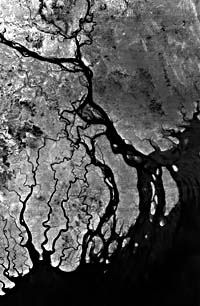 Per capita withdrawals of freshwater for domestic demands are very low in Bangladesh (6 m3/person/yr), reflecting hand pumped supplies for most of the rural population . Domestic water withdrawals in Egypt average about an order of magnitude greater (60 m3/person/yr), in large part because of the much higher fraction of urban population, including Cairo, which receive treated surface waters. Domestic water withdrawals in the USA average about 250 m3/person/yr, reflecting extensive use for washing of clothes, dishes, showers, flushing of toilets plus watering of lawns and other vegetation. Irrigation withdrawals in Bangladesh (200 m3./person/yr) are appreciably lower than in Egypt (900 m3/person/yr).
 Bangladesh Country Profile If environmentalists are painting a grim picture for the future of the planet, there is good reason for it. With droughts, heat waves and hurricanes expected to become increasingly common and more severe if global warming is allowed to continue unchecked, it is time the world takes action. We collectively feel that if we were to go beyond the two degrees warming... we are bound for complete chaos and disaster on this planet (IUCN, November, 2004)."
Scientists further said that the oceans were an important part of the ecological system and helped in slowing global warming. Marine plants, they said, soaked up carbon dioxide and converted it into food during photosynthesis. The current century is expected to see warming quicker than at any time in the past 10,000 years
due to many anthropogenic activities Bangladesh is one of the poor developing countries of the world,
characterized by high density of population, low resources base, poor
governance and high incidence of natural disasters. All those factors
have adverse implications on
economic growth and poverty
situation. The country has
experienced slow progress in poverty
reduction in 1980s. However,
the1990s saw a better performance in
reduction of poverty
.The global sustainability is
threatened by the increasing global
warming and the associated climate
change impacts. The poor are the first
to suffer from the various adverse
impacts of climate change. The
industrialized countries and rich
people have created the problem
while the developing countries and
the poor communities are the main
victims and they are least able to
cope with the adverse impacts of
climate change on their lives and
livelihood. Dirty water 'kills 1.5m children'"Access to safe water is a fundamental human need and therefore a basic human right" said UN Secretary General Kofi Annan. "In this new century, water, its sanitation, and its equitable distribution, pose great social challenges for our world. We need to safeguard the global supply of healthy water and to ensure that everyone has access to it."
Rivers are suffering primarily on two counts:
|
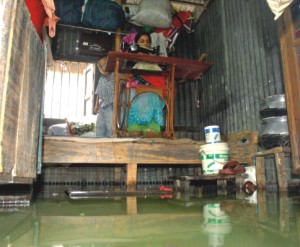 Mankind's actions are noticeably harming groundwater resources worldwide, according to a recent report by the United Nations Environment Programme (UNEP). Across the globe, states Groundwater and Its Susceptibility to Degradation: A Global Assessment of the Problem and Options for Management, groundwater is being depleted by the demands of megacities and agriculture, while fertilizer runoff and chemical pollution threaten water quality and public health. By 2025, two-thirds of the world's population will live in a nation that is considered water-stressed.
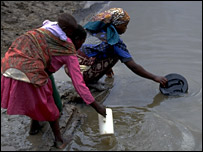 More than 1.5m children under five die each year because they lack access to safe water and proper sanitation, says the United Nations children's agency.
In a report, Unicef says that despite some successes, a billion people worldwide do not have access to safe drinking water from protected sources.
More than 1.2 billion people have gained access to safe water since 1990.
More than 1.5m children under five die each year because they lack access to safe water and proper sanitation, says the United Nations children's agency.
In a report, Unicef says that despite some successes, a billion people worldwide do not have access to safe drinking water from protected sources.
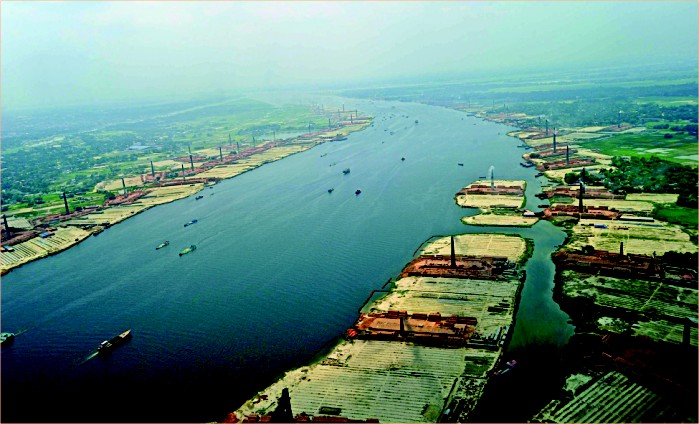
More than 1.2 billion people have gained access to safe water since 1990. 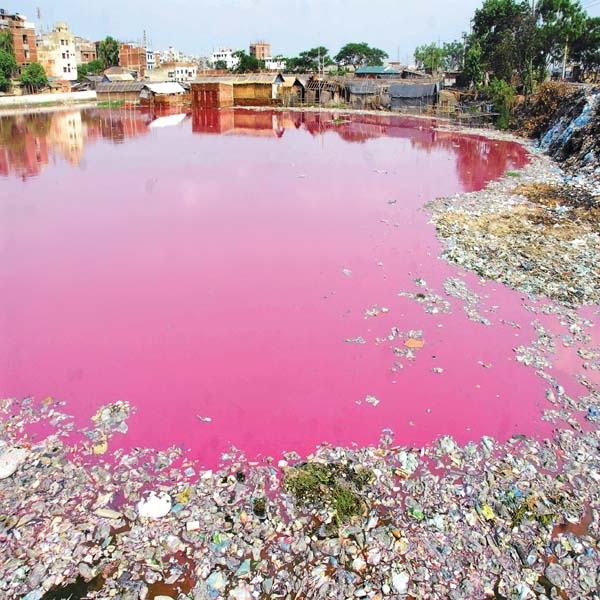 They are being subjected to severe pollution, particularly the four that serve the capital, by unchecked effluence from the large numbers of industries that have come up on the banks of the rivers over the last few decades. This has made the river water, which is the prime source of the city's surface water supply, unfit for consumption, and a time may soon come when no amount of purification will render the water usable, let alone potable. This is so with most of the rivers in the country that pass through major conurbations. The prospect bodes very ill for us.
 If the goals of development of the developing countries remain the same as they are, or were, for the industrialised societies, then any new strategy of development, whether ecological or otherwise, might become no more than a mere modification of the present policies and trends rather than genuine trend. The developed countries fail to carry conviction because they do not seek seriously and systematically to change their own structures, and profound changes in attitudes, life styles, and approaches.
The definition of sustainability implies that, in our endeavour to build sustainable communities, we must understand the principles of organisation that ecosystems have developed to sustain the web of life. This understanding is what we call ‘ecological literacy’. In the coming decades the survival of humanity will depend on our ability to understand the basic principles of ecology and to live accordingly.
We need to teach our children – and our political and corporate leaders! – the fundamental facts of life.
1. Environmental destruction by War and Peace
1.1 The big melt has begun 1.2. 1.2 Global Warming Kills 150,000 People a Year 1.3. Climate change: The big emitters 1.4. Climate victims 'are refugees 1.5. Bangladesh: The Worst Victims of Global Warming 1.6. Flooded future looms for Bangladesh 1.6.1 Manhattan, Florida to go under water with Bangladesh and Male 1.7. Global fish stocks could be almost eliminated within 50 years 1.8. Offshore Nijhum island, Bay of Bengal: Overcoming climate change impact 1.9. Huge mangrove forests at stake
2. Industrial Pollution - Poor Suffers 2.1 Mining boom affecting Indian tribes, environment, Poor people 2.2 Toxic chemicals we're not aware of 2.2.1 2.2.1 Aldrin in Milk 2.3 Eating hot food in plastic plates links to kidney stones Poisonous ‘nutrition’ in fish, chickenPoultry-fish feed creates fatal diseases in human body2.4 Poisonous ‘nutrition’ in fish, chickenPoultry-fish feed creates fatal diseases in human body
3. Ship Wrecking in Bangladesh 3. 1. Accidents 3. 2.Ship Wrecking in Bangladesh 3. 3.South Asia's ship graveyard 3. 4. US under fire for old navy ships export plans 3. 5. Ship breaking yard pollution threatens extinction of hilsa 3. 6. New scrap shipyards near Sundarbans
4. POLLUTION 4.1. Agriculture 4.1.1 Bangalees started the killing of the forest as they settled down here - (Of forests and Kochu plantation) 4.2. Bhopal disaster- Hiroshima of Chemical Industry 4.3. Arsenic-compound spill affects drinking water for 80,000 in China 4.4. Dhaka’s air pollution level highest in the world
5. SERIOUS THREATS TO PUBLIC HEALTH 5.1. 50 tonnes of medical waste dumped a day Poses serious health 5. 2. River Pollution In Foodstuff 5. 4.A River Runs Dry
6. Biodiversity 6.1. DDT, the long-banned insecticide now approved to fight malaria, WHO 6.2. Environmentalists: Inaction by India, China driving tigers to extinction 6.3. "More dolphins are getting killed by fishermen now, than by river pollution,"
7. ARTICLES ON ENVIRONMENT
1. Environmental destruction by War and Peace
"Our world faces a crisis as yet unpreceived by those possesing power to make great decisions for good or evil..... a new type of thinking is essential if mankind is to survive."-- Einstein on Peace
Firing nuclear waste into the sun, placing it in Antarctic ice sheets so it sinks by its own heat to the bedrock, or putting it under Earth's crust so it is sucked to the molten core. These are three of the 14 options the government's advisers are considering to get rid of the UK's troublesome nuclear waste legacy.
Martin Forwood, of Cumbrians Opposed to Radioactive Environment, dismissive of the 14 ideas: "We thought all these madcap schemes had been junked donkey's years ago. The only sensible solution is to store it where it rightfully belongs - in above ground custom built concrete stores at the site of origin."
(Gurdian April 14, 2004).
The nuclear industry is simply trying to export a national problem Can we produce waste that does not have any safe disposal on this earth?
Humans are damaging the planet at an unprecedented rate and raising risks of abrupt collapses in nature that could spur disease, deforestation or 'dead zones' in the seas, an international report said on Wednesday. The study, by 1,360 experts in 95 nations, said a rising human population had polluted or over-exploited two thirds of the ecological systems on which life depends, ranging from clean air to fresh water, in the past 50 years. 'At the heart of this assessment is a stark warning,' said the 45-member board of the Millennium Ecosystem Assessment. 'Human activity is putting such strain on the natural functions of Earth that the ability of the planet's ecosystems to sustain future generations can no longer be taken for granted,' it said. Ten to 30 per cent of mammal, bird and amphibian species were already threatened with extinction, according to the assessment, the biggest review of the planet's life support systems.
'Over the past 50 years, humans have changed ecosystems more rapidly and extensively than in any comparable time in human history, largely to meet rapidly growing demands for food, fresh water, timber, fibre and fuel,' the report said. 'This has resulted in a substantial and largely irreversible loss in the diversity of life on earth,' it added. More land was changed to cropland since 1945, for instance, than in the 18th and 19th centuries combined. 'The harmful consequences of this degradation could grow significantly worse in the next 50 years,' it said. The report was compiled by experts, including from UN agencies and international scientific and development organisations. The UN secretary general, Kofi Annan, said the study 'shows how human activities are causing environmental damage on a massive scale throughout the world, and how biodiversity - the very basis for life on earth - is declining at an alarming rate'(Reuter. March 31, 2005).
"The world's greatest pharmaceutical laboratory and a flywheel of climate,"
"The Amazon is a library for life sciences, the world's greatest pharmaceutical laboratory and a flywheel of climate," says Thomas Lovejoy of the Smithsonian Institute. Such may be said of the Sunderbans or the hill forests of Chittagong as well. Many facts relating to our forest are unknown because of the lack of interest and research funding needed to make these discoveries. In the Brazilian part of the Amazon rain forest, one estimate by the U.S. Academy of National Sciences in 1982 states that a typical 4 square mile patch of forest may contain 750 species of trees, 125 kinds of mammals, 400 types of birds, 100 of reptiles and 60 of amphibians. Each type of tree may support more than 400 insect species. The forest region here, in our country, or in Brazil is a virtually untapped storehouse of evolutionary achievement that will prove increasingly valuable to mankind as it yields its secrets.
However, biologists who explore biodiversity see it vanishing before their eyes, amply demonstrated by the fact that they now live in a world of wounds and practice a scientific discipline with a deadline. The reason: deforestation. Further, deforestation has devastating impacts on climatic change and on natural processes upon which the Earth's delicate balance depends.
Brazil, home to about half the Amazonian basin, has shown reckless penchant for squandering resources that matter to all mankind. Says Al Gore, a conservationist and former US vice-president who visited the densely packed forest areas, "The devastation is just unbelievable. It's one of the great tragedies of all history."
"The devastation is just unbelievable. It's one of the great tragedies of all history,"(Al Gore).
Emissions trading cannot solve Amazon deforestation
 Some say that emissions trading under the Kyoto Protocol should be used to preserve intact areas of the Amazon rainforest as well as to restore deforested regions. This is a commendable aim — but there are several reasons why it is unlikely to work in practice.
The Clean Development Mechanism (CDM) is a key function of the Kyoto Protocol and is already being used in the emissions trading markets. It allows companies in developed countries to invest in certain projects in developing countries in return for emissions credits. For a project to be eligible for CDM credits, it must result in a net reduction of greenhouse-gas emissions. Carbon capture projects, including reforestation, do qualify for CDM credits, but conservation projects that would avoid trees being cut down in the first place do not.
Some people say that projects that avoid deforestation should be eligible for CDM credits. They say that preventing deforestation would halt a root cause of carbon dioxide being released into the atmosphere. The conversion of forests to poorly managed agricultural land leads not only to the release of carbon from trees, but also from soils that subsequently erode away.
The problem is of particular concern in Brazil, where most of the Amazon rainforest lies. Data from the Instituto de Pesquisa Ambiental da Amazônia, a research institute in northern Brazil, suggest that deforestation is responsible for emissions of an estimated 200 million tonnes of carbon each year. That is equivalent to two-thirds of Brazil’s emissions of greenhouse gases and about 2.5 per cent of global carbon emissions:
PARIS CLIMATE SUMMIT : Will Bangladesh be "compensated" for loss and damage?
Bangladesh is in the frontlines of mounting costs of climate change. With the United Nations Summit on Climate Change scheduled to start on November 30 in Paris, it is not too unbecoming to ask, "What's in it for Bangladesh?" Are we going to be compensated for the billions of dollars we might potentially lose if the global temperature increases by 3.5°C as projected, and rivers rise, salt water inundate our coastal areas, and the weather pattern displays all the effects of warming? Or are we going to just take what we get and try to manage the best we can?
The issue of money is always a tricky one, and like all families which face financial troubles and hardship following a catastrophe, the conventioneers at the Climate Summit and the organisers will reasonably try to stay clear of any bickering centred on the three critical questions that need to be addressed:
What is the full extent of loss and damage incurred by each country?
How much resource is available each year until 2050 to manage the damage, adopt, and adapt greener technologies?
How is funding going to be administered and divided up among the less developed countries and small island nations?
It is not my intent to debate these questions here nor offer detailed answers. Nonetheless, I do want to point out that now that we know the promised cuts in emissions and levels of financial commitments from the affluent countries, Bangladesh needs to raise its voice and ask for a fair share of the funds available to support us as we adopt, mitigate, and adapt in the face of climate change.
As we argue and deal with other parties at Paris, we need to have a clear stance on two key issues. One of them is that Bangladesh and other countries that can be considered to have credit in terms of CO2 emissions, have a legitimate need for financing. The other one is that the mechanism for "loss and damage" arbitration must be formally adopted at the Paris Summit.
According to new research done by Prof Damon Matthews of Concordia University in Montreal, Canada, every citizen of US and Australia owes $12,000 in carbon debt. This amount only takes into account the excess emissions since 1990.
Since lifestyles in these countries are dependent on higher level of CO2 emissions, as compared with those who live "off the grid", so to speak, countries are broken down into "creditor" and "debtor" nations. A debtor nation like the US has incurred climate debts defined as the amount by which its climate contributions have exceeded a hypothetical equal per-capita share over time. Using the estimate provided by the US Environmental Protection Agency (EPA) that each tonne of CO2 emissions causes $40 in damage, Prof Matthews estimates that the US has incurred a debt of $4 trillion during the period 1990-2013. He has also suggested that each citizen of India, as a creditor nation, is owed $2,500 per capita for their lesser contribution to carbon emissions (see chart).
While nobody expects that these estimates will be translated into real claims at Paris, these numbers are indicative and provide a frame of reference for the terms of the conversation. It can be expected that the bloc Association of Small Island States (AOSIS) which represents 44 islands and low-lying countries, will have a legitimate demand should they decide to force the hands of the richer countries once the initial hoopla dies down. While the term "compensation" is strongly opposed by the US and other big emitters and will not be included in the final agreement, Bangladesh could, as a leader of the LDC group, make all out efforts to bolster the financial aspect of the Paris Agreement.
Finally, the Paris Agreement must set in motion the mechanism to allocate financing according to "loss and damage" sustained by the countries that have grouped together under the less developed countries (LDC) and small island developing states (SIDS) banners. In 2013, the United Nations Framework Convention on Climate Change (UNFCCC), the host of the Climate Summit, established the Warsaw International Mechanism for Loss and Damage (the WIM) to address the issue. However, there is growing apprehension that the Paris Summit might sideline the "loss and damage" component and address it only in the footnote, if at all. A number of countries have joined forces to register in the strongest terms that WIM must be part and parcel of any climate agreement. "Many developed countries are arguing that the Warsaw Decision set a different timetable for this issue, which would mean that loss and damage is not currently set to be decided on as part of the Paris Agreement, unlike the issues of adaptation, mitigation, and finance," (The Road Through Paris, "Loss and Damage"). Bangladesh should be at the forefront of countries that foil such moves!
(Bangladesh is in the frontlines of mounting costs of climate change. With the United Nations Summit on Climate Change scheduled to start on November 30 in Paris, it is not too unbecoming to ask, "What's in it for Bangladesh?" Are we going to be compensated for the billions of dollars we might potentially lose if the global temperature increases by 3.5°C as projected, and rivers rise, salt water inundate our coastal areas, and the weather pattern displays all the effects of warming? Or are we going to just take what we get and try to manage the best we can?
The issue of money is always a tricky one, and like all families which face financial troubles and hardship following a catastrophe, the conventioneers at the Climate Summit and the organisers will reasonably try to stay clear of any bickering centred on the three critical questions that need to be addressed:
What is the full extent of loss and damage incurred by each country?
How much resource is available each year until 2050 to manage the damage, adopt, and adapt greener technologies?
How is funding going to be administered and divided up among the less developed countries and small island nations?
It is not my intent to debate these questions here nor offer detailed answers. Nonetheless, I do want to point out that now that we know the promised cuts in emissions and levels of financial commitments from the affluent countries, Bangladesh needs to raise its voice and ask for a fair share of the funds available to support us as we adopt, mitigate, and adapt in the face of climate change. As we argue and deal with other parties at Paris, we need to have a clear stance on two key issues. One of them is that Bangladesh and other countries that can be considered to have credit in terms of CO2 emissions, have a legitimate need for financing. The other one is that the mechanism for "loss and damage" arbitration must be formally adopted at the Paris Summit.
According to new research done by Prof Damon Matthews of Concordia University in Montreal, Canada, every citizen of US and Australia owes $12,000 in carbon debt. This amount only takes into account the excess emissions since 1990. Since lifestyles in these countries are dependent on higher level of CO2 emissions, as compared with those who live "off the grid", so to speak, countries are broken down into "creditor" and "debtor" nations. A debtor nation like the US has incurred climate debts defined as the amount by which its climate contributions have exceeded a hypothetical equal per-capita share over time. Using the estimate provided by the US Environmental Protection Agency (EPA) that each tonne of CO2 emissions causes $40 in damage, Prof Matthews estimates that the US has incurred a debt of $4 trillion during the period 1990-2013. He has also suggested that each citizen of India, as a creditor nation, is owed $2,500 per capita for their lesser contribution to carbon emissions (see chart).
While nobody expects that these estimates will be translated into real claims at Paris, these numbers are indicative and provide a frame of reference for the terms of the conversation. It can be expected that the bloc Association of Small Island States (AOSIS) which represents 44 islands and low-lying countries, will have a legitimate demand should they decide to force the hands of the richer countries once the initial hoopla dies down. While the term "compensation" is strongly opposed by the US and other big emitters and will not be included in the final agreement, Bangladesh could, as a leader of the LDC group, make all out efforts to bolster the financial aspect of the Paris Agreement.
Finally, the Paris Agreement must set in motion the mechanism to allocate financing according to "loss and damage" sustained by the countries that have grouped together under the less developed countries (LDC) and small island developing states (SIDS) banners. In 2013, the United Nations Framework Convention on Climate Change (UNFCCC), the host of the Climate Summit, established the Warsaw International Mechanism for Loss and Damage (the WIM) to address the issue. However, there is growing apprehension that the Paris Summit might sideline the "loss and damage" component and address it only in the footnote, if at all. A number of countries have joined forces to register in the strongest terms that WIM must be part and parcel of any climate agreement. "Many developed countries are arguing that the Warsaw Decision set a different timetable for this issue, which would mean that loss and damage is not currently set to be decided on as part of the Paris Agreement, unlike the issues of adaptation, mitigation, and finance," (The Road Through Paris, "Loss and Damage"). Bangladesh should be at the forefront of countries that foil such moves!
(Abdullah Shibli,Professor Damon Matthews, Concordia University, Montreal, Canada, November 29, 2015).
In the decades to come Asia, home to more than half the world's 6.3 billion people, will lurch from one climate extreme to another, with impoverished farmers battling droughts, floods, disease, food shortages and rising sea levels. "It's not a pretty picture," said Steve Sawyer, climate policy adviser with Greenpeace in Amsterdam. Global warming and changes to weather patterns are already occurring and there is enough excess carbon dioxide and other greenhouse gases in the atmosphere to drive climate change for decades to come.
Sawyer said India, with a population of just over one billion people, is one of the areas most threatened by climate change. "The threat to the agricultural base for the Indian subcontinent from drought and increased heat waves, the consequences to the burgeoning Indian economy and the very large number of people to feed are potentially very very substantial." Rising sea levels will also bring misery to millions in Asia, he said, causing sea water to inundate fertile rice-growing areas and fresh-water aquifers, making some areas uninhabitable. Sawyer said India and Bangladesh will have to draw up permanent relocation plans for millions of people.
Sawyer thinks rich countries, by far the biggest polluters, should look after the millions at risk from climate change or suffer the consequences that could include mass migration or trying to feed millions made homeless by droughts and floods in a world struggling to grow enough food.
Malcolm Duthie, WFP's country director in Laos, said even small changes in weather patterns, such as a delay in the monsoon of just a few weeks, is a threat to subsistence farmers. In Laos, he said rains seemed to have become shorter and sharper, meaning faster run-off and more erosion. Such changes are also threatening millions of farmers in Indonesia, where rapid industrialisation, slash-and-burn land clearing and illegal logging have caused extreme weather and pollution across the archipelago, experts say (New age, November 26, 2004).
Glaciers face threat of disappearing: UNScientists aren't certain about the rate of global warming or what exactly will happen in any one spot. Most agree that human technology contributes significantly to global warming through ozone-damaging emissions such as automobile exhaust, coal-fired electric plants, and pollution from industrial manufacturing. This week the National Wildlife Federation, a wildlife advocacy group, reported that climate change is emerging as a major threat to duck and goose populations prized by hunters. The report said the animals are threatened by the effects of climate change at its costal wintering grounds, its resting grounds in Nebraska, and even at its breeding grounds in the Arctic. "The science is telling us that we're in for some changes if we don't change what we're doing," said Duane Hovorka, executive director for the Nebraska Wildlife Federation, an affiliate of the national group. Bill Grant, associate director of the Midwest Region of the Izaak Walton League, another conservation group, noted that the Federation's report wasn't surprising. "The pace of change is already somewhat faster than we might have earlier expected," he said. "Should that continue, it would not be surprising if we notice significant changes in our lifetime." The National Wildlife Federation is made up of a variety of outdoor enthusiasts, ranging from hunters and fishermen to environmentalists and birders. The Izaak Walton League's membership is also varied, but mainly hunters and fishermen. The National Wildlife Federation's report is drawn from a number of scientific and government studies. Additional conclusions of the report are equally alarming. For example, some predict sea levels could rise anywhere from three to 34 inches over the next 95 years. If it does, the increase could inundate 45 percent of coastal wetlands in the continental United States, damaging wintering grounds of diving ducks such as pintails and canvasbacks, and those of snow geese. Others believe climate changes could diminish snow pack in the Rockies, resulting in droughts in the Plains and less water in other regional rivers. If this happens, it could affect the sandhill crane and the already endangered whooping crane. Both depend upon the waterways each spring for a place to rest and fatten up before heading north. Even seasonal ponds in the northern Great Plains could lose water or dry up for short periods. This region is one of North America's most important breeding grounds for ducks. Calculations vary, but climate changes could lead to a population reduction anywhere between 9 and 69 percent. Species affected include mallards, teal, gadwall and others. The Arctic, which serves as breeding habitat for 20 percent of America's waterfowl, is among the fastest-warming regions on earth. The permafrost is thawing and the tundra is disappearing. Some species may see breeding success improve because of an increase in wetlands in the Arctic, but others could be harmed by changes. For example, it may be harder for some waterfowl to find food if rising sea temperatures reduce the populations of some fish. |
Global warming is causing the Arctic ice-cap to melt at such an unprecedented rate that by the summer of 2070 it may have no ice at all, according to the most comprehensive study carried out on global climate change in the region. The icecap has shrunk by 15% to 20% in the past 30 years and the trend is set to accelerate, with the Arctic warming almost twice as fast as the rest of the planet, due to a build-up of heat-trapping gases.
Conducted by nearly 300 scientists, as well as elders from the native communities in the region, the report was commissioned in 2004 by the eight countries with Arctic territories –– including the US –– amid a growing sense of urgency about the effects of global warming on the region.
The report says that “while some historical changes in climate have resulted from natural causes and variations, the strength of the trends and the patterns of change that have emerged indicate that human influences, resulting primarily from increased emissions of carbon dioxide and other greenhouse gases, have now become the dominant factor”.
The Arctic “is now experiencing some of the most rapid and severe climate change on Earth”, the report says, adding: “Over the next 100 years climate change is expected to accelerate, contributing to major physical, ecological, social and economic changes, many of which have already begun”(Jamie Wilson, 2004).
The WWF environmental group on November 2, 2004 accused the eight nations –– which account for 30% of global greenhouse gas emissions –– of hypocrisy in sponsoring the report while failing to take action. George Bush pulled the US out of the UN’s Kyoto protocol on global warming in 2001, arguing it was too expensive. “The big melt has begun,” Jennifer Morgan, director of the WWF’s global climate change campaign, said in a statement. “Life on Earth will change beyond recognition with the loss of the ice sheet at the north pole and higher sea levels threatening major global cities such as London”(The Guardian/UK, November 3, 2004).
An unexplained and unprecedented rise in carbon dioxide in the atmosphere two years running has raised fears that the world may be on the brink of runaway global warming. Scientists are baffled why the quantity of the main greenhouse gas has leapt in a two-year period and are concerned that the Earth’s natural systems are no longer able to absorb as much as in the past. The findings [were] discussed [on October 13] by the [British] government’s chief scientist, Dr David King, at the annual Greenpeace business lecture.
The fear held by some scientists is that the greater than normal rises in C02 emissions mean that instead of decades to bring global warming under control we may have only a few years. At worst, the figures could be the first sign of the breakdown in the Earth’s natural systems for absorbing the gas. That would herald the so-called “runaway greenhouse effect”, where the planet’s soaring temperature becomes impossible to contain. As the icecaps melt, less sunlight is reflected back into space from ice and snow, and bare rocks begin to absorb more heat. This is already happening.
One of the predictions made by climate scientists in the Intergovernmental Panel on Climate Change is that as the Earth warms, the absorption of carbon dioxide by vegetation –– known as “carbon sink” –– is reduced.
The heatwave of last year that is now believed to have claimed at least 30,000 lives across the world was so out of the ordinary that many scientists believe it could only have been caused by global warming.
A three-degrees Celsius rise in temperature over the next century will increase the risk of drought, wildfires and forest loss in many parts of the developing world, say researchers. Marko Scholze of the University of Bristol in the United Kingdom led an assessment of the impact of climate change on key ecosystems (Sept. 01, 2006).
Scholze says an important finding is the degree to which the effects get rapidly more pronounced with small increases in temperature. "Most importantly," he says, "we show the steeply increasing risks, and increasingly large areas affected, associated with higher warming levels."
Melting Himalayan glaciers threaten 1.3b Asians
More than a billion people in Asia depend on Himalayan glaciers for water, but experts say they are melting at an alarming rate, threatening to bring drought to large swathes of the continent.
Glaciers in the Himalayas, a 2,400-kilometre range that sweeps through Pakistan, India, China, Nepal and Bhutan, provide headwaters for Asia's nine largest rivers, lifelines for the 1.3 billion people who live downstream.
But temperatures in the region have increased by between 0.15 and 0.6 degrees Celsius each decade for the last 30 years, dramatically accelerating the rate at which glaciers are shrinking.
As world leaders gather in Copenhagen for a crucial climate change summit, campaigners warn that some Himalayan glaciers could disappear altogether within a few decades.
'Scientists predict that most glaciers will be gone in 40 years as a result of climate change,' said Prashant Singh, leader of environmental group WWF's Climate for Life campaign.
'The deal reached at Copenhagen will have huge ramifications for the lives of hundreds of millions of people living in the Himalayan drainage systems who are already highly vulnerable due to widespread poverty.'
The Intergovernmental Panel on Climate Change, a UN body regarded as the world's top authority on climate change, has warned Himalayan glaciers could 'disappear altogether by 2035' and experts say the effects of global warming are already being felt in the region.
In Nepal and Bhutan, the receding glaciers have formed vast lakes that threaten to burst, devastating villages downstream.
Nepalese mountaineer and environmental campaigner Dawa Steven Sherpa said he first became interested in climate change after a close call when part of the Khumbu icefall above Everest base camp collapsed during an expedition in 2007.
Sherpa, who has scaled Everest three times, was walking on the glacier minutes before the collapse, and said his near miss alerted him to the dramatic toll that global warming is already taking on the Himalayas.
'Every time I go to the mountains the older Sherpas tell me this is the warmest year yet,' Sherpa, who will take part in a special 'summiteers' summit' in Copenhagen, said.
'Initially it struck me how much more dangerous mountaineering would become. But then I realised it was much bigger than that. Entire villages could be wiped out if one of the glacial lakes burst.'
In China, studies have shown that the rapid melting of the glaciers will result in an increase in flooding in the short term, state news agency Xinhua has reported.
In the longer term, it said, the continued retreat of glaciers would lead to a gradual decrease in river flows, severely affecting large parts of western China.
Experts say the resulting water shortages could hit the economic development of China and India, with potentially dire consequences for development in two of the world's most populated countries.
Even in low-lying Bangladesh, prone to severe floods, the IPCC has said rivers could run dry by the end of the century.
ICIMOD has warned that the current trends in glacial melt suggest flows in major Asian rivers including the Ganges, Indus and Yellow Rivers will be 'substantially reduced' in the coming decades (Agence France-Presse . Kathmandu , December 8, 2009).
Back to Content1.2 Global Warming Kills 150,000 People a Year
Global warming is killing about 150,000 people a year, mostly in deprived and tropical areas, and the toll could rise dramatically if efforts are not made to combat climate change, the World Health Organisation (WHO) warned yesterday. The United Nations agency said the health of millions of people was under threat as a consequence of rising temperatures and uncertain weather patterns, which many scientists claim are caused by greenhouse gas emissions. The WHO said climate change could cause increases in malaria and other insect-born diseases, malnutrition and pollution-related diseases, as well as deaths from extreme one-offs such as this summer's heatwave in Europe.
The report, which has been published this week to coincide with the UN conference in Milan on climate change, blamed global warming for 2.4 per cent of diarrhea cases and 2 per cent of all cases of malaria worldwide. It estimated that, by 2030, climate change could cause 300,000 deaths annually and that a further 5.5 million years of healthy living had been lost worldwide due to debilitating diseases caused by rising temperatures. The report said: "The 1990s were the hottest decade on record and the upward trend in the world's temperature does not look like it is abating. In Europe this past summer, for example, an estimated 20,000 people died due to extremely hot temperatures."
Kerstin Leitner, the WHO assistant director general, said: "There is growing evidence that changes in the global climate will have profound effects on the health and well-being of citizens in countries around the world." The report said that even a rise of a few degrees in average annual temperatures could expose millions more people to the threat from malaria. This would be by both extending the malaria season in countries, where it is already endemic, and also by allowing the malaria mosquito to live in countries where, at present, it cannot survive, such as Europe. Other diseases spread by mosquitoes, such as dengue fever, could also increase.
Hotter and wetter conditions are also likely to increase the spread of diarrhoeal disease, which is particularly dangerous to children. And people living in deprived conditions who cannot afford proper refrigeration are more likely to eat food tainted with increased bacterial contamination, caused by higher temperatures. Countries which are heavily dependent on a predictable monsoon season for the cultivation of rice crops - such as India, Bangladesh and Burma - are more likely to suffer increases in malnutrition if the changes affect the reliability of the rainy season. The report also said that increasing air pollution might lead to a rise in allergic conditions, such as asthma, and lung and respiratory complaints, Independent UK, 12 December, 2003 ).
Melting of glaciers in the Himalayas
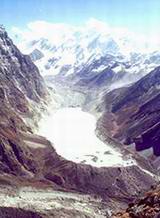 Environmentalists are warning that the melting of glaciers in the Himalayas could spell disaster for millions of people living in the region.
They claim the situation is not being adequately monitored; the last major studies having been done in the 1990s.
Swelling glacial lakes would increase the risk of catastrophic flooding.
Environmentalists are warning that the melting of glaciers in the Himalayas could spell disaster for millions of people living in the region.
They claim the situation is not being adequately monitored; the last major studies having been done in the 1990s.
Swelling glacial lakes would increase the risk of catastrophic flooding.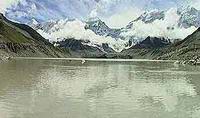 This is a lake that should not exist. It is 6,000 metres above sea level, a kilometre long and 100 metres deep.
Twenty-five years ago it was a glacier. United Nations Environment Programme (Unep), shows anecdotal evidence that the Himalayas are changing. At an altitude of over 4,000m, the crew found a vast glacier lake, which according to their maps, had not been there a few decades before. But since then, temperatures in what is one of the world's largest ice fields have risen year after year. The lake is held in place by a wall of frozen rock known as its terminal moraine.
The ice that binds it together is melting and it is inevitable that sooner or later this natural dam will burst, releasing a massive wall of water down the valley
This is a lake that should not exist. It is 6,000 metres above sea level, a kilometre long and 100 metres deep.
Twenty-five years ago it was a glacier. United Nations Environment Programme (Unep), shows anecdotal evidence that the Himalayas are changing. At an altitude of over 4,000m, the crew found a vast glacier lake, which according to their maps, had not been there a few decades before. But since then, temperatures in what is one of the world's largest ice fields have risen year after year. The lake is held in place by a wall of frozen rock known as its terminal moraine.
The ice that binds it together is melting and it is inevitable that sooner or later this natural dam will burst, releasing a massive wall of water down the valley
There had, though, been a glacier. In the long term, the glaciers could disappear altogether, causing several rivers to shrink and threatening the survival of those who depend on them.
There are 3,300 glaciers in the Nepalese Himalayas and 2,300 of them contain glacial lakes. These lakes are quietly growing because of rising temperatures, but a sufficiently close eye is not being kept on them, campaigners say.
A burst lake would cause flash floods which could sweep away people, houses, roads and bridges in Nepal, Bhutan, Bangladesh and India.
In the long term, researchers fear that global warming may switch the problem from too much water in the region to too little. Nearly 70% of discharge to the Ganges is from Nepalese rivers, which means that if Himalayan glaciers dry up so will the Ganges downstream in India (Richard Black, BBC, November 17, 2004).
Back to ContentGlobal dimming
Scientists call it "global dimming," a little-known trend that may be making the world darker than it used to be. Thanks to thicker clouds and growing air pollution, much of the Earth's surface is receiving about 15 percent less sunlight than it did 50 years ago, according to Michael Roderick, a climate researcher at Australian National University in Canberra. "Global dimming means that the transmission of sunlight through the atmosphere is decreasing," Roderick said. "Just look out the window when you fly into New York or to California - it's dimmer," said Beate Liepert, a climatologist at the Lamont-Doherty Earth Observatory of Columbia University in New York. Researchers say global dimming, also known as solar dimming, partially offsets the global warming .
Support for the theory comes from two types of data collected in recent decades:
Radiation meters - black metal plates that absorb the sun's rays - aren't heating up as rapidly as they previously did. The rate at which water evaporates from special measuring pans placed in the sunlight has slowed over the years.
Global warming making hurricanes stronger
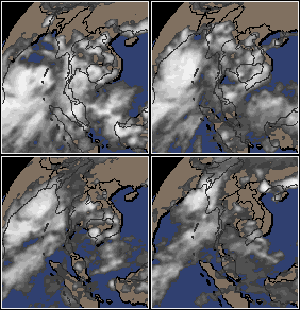 Is global warming making hurricanes more ferocious? New research suggests the answer is yes. Scientists call the findings both surprising and “alarming” because they suggest global warming is influencing storms now — rather than in the distant future, reports AP.
However, the research doesn’t suggest global warming is generating more hurricanes and typhoons.
The analysis by climatologist Kerry Emanuel of the Massachusetts Institute of Technology shows for the first time that major storms spinning in both the Atlantic and the Pacific since the 1970s have increased in duration and intensity by about 50 percent.
These trends are closely linked to increases in the average temperatures of the ocean surface and also correspond to increases in global average atmospheric temperatures during the same period.
Is global warming making hurricanes more ferocious? New research suggests the answer is yes. Scientists call the findings both surprising and “alarming” because they suggest global warming is influencing storms now — rather than in the distant future, reports AP.
However, the research doesn’t suggest global warming is generating more hurricanes and typhoons.
The analysis by climatologist Kerry Emanuel of the Massachusetts Institute of Technology shows for the first time that major storms spinning in both the Atlantic and the Pacific since the 1970s have increased in duration and intensity by about 50 percent.
These trends are closely linked to increases in the average temperatures of the ocean surface and also correspond to increases in global average atmospheric temperatures during the same period.
“When I look at these results at face value, they are rather alarming,” said research meteorologist Tom Knutson. “These are very big changes.” Knutson, who wasn’t involved in the study, works in the National Oceanic and Atmospheric Administration’s Geophysical Fluid Dynamics Laboratory in Princeton, N.J. Emanuel reached his conclusions by analyzing data collected from actual storms rather than using computer models to predict future storm behavior. Before this study, most researchers believed global warming’s contribution to powerful hurricanes was too slight to accurately measure. Most forecasts don’t have climate change making a real difference in tropical storms until 2050 or later.
But some scientists questioned Emanuel’s methods. For example, the MIT researcher did not consider wind speed information from some powerful storms in the 1950s and 1960s because the details of those storms are inconsistent. Researchers are using new methods to analyze those storms and others going back as far as 1851. If early storms turn out to be more powerful than originally thought, Emmanuel’s findings on global warming’s influence on recent tropical storms might not hold up, they said. “I’m not convinced that it’s happening,” said Christopher W. Landsea, another research meteorologist with NOAA, who works at a different lab, the Atlantic Oceanographic & Meteorological Laboratory in Miami. Landsea is a director of the historical hurricane reanalysis.
"His conclusions are contingent on a very large bias removal that is large or larger than the global warming signal itself,” Landsea said. Details of Emanuel’s study appear Sunday in the online version of the journal Nature. Theories and computer simulations indicate that global warming should generate an increase in storm intensity, in part because warmer temperatures would heat up the surface of the oceans. Especially in the Atlantic and Caribbean basins, pools of warming seawater provide energy for storms as they swirl and grow over the open oceans Source: The News Todays, 2 August, 2005).
Tragedy in the Himalays and Ganges-Brahmaputra Plain - Flood, drought, earthquake and cycloneBack to Content
Global warming will spell wildfires and drought
A three-degrees Celsius rise in temperature over the next century will increase the risk of drought, wildfires and forest loss in many parts of the developing world, say researchers. Marko Scholze of the University of Bristol in the United Kingdom led an assessment of the impact of climate change on key ecosystems. The results were published online by Proceedings of the National Academy of Sciences last week. The study says there is a considerable risk that wildfires will be more frequent in South America, Southern Africa and Central Asia even if temperatures rise by less than two degrees.
Yet research suggested last year that a rise of two degrees was fairly certain and that an 11-degree increase was possible. Even if greenhouse gas emissions were to cease now, temperatures would continue to rise as heat stored in the oceans will be released. Scholze's team warns that rising temperatures will greatly increase the risk of forest loss in Amazoni, Central America and eastern China. They say that if temperatures rise by more than three degrees, West Africa and Central America are likely to suffer a loss of freshwater and therefore more intense droughts.
At this level of warming, they add, the amount of carbon that trees and earth absorb is likely to be less than the amount they release into the atmosphere as carbon dioxide. This would create a strong positive feedback loop that would further increase global warming.
The researchers drew their conclusions by running 52 simulations of world climate using 16 different computer models and then used the results to predict changes to global vegetation. They note that while they only looked at drastic changes in land-cover, from forested to non-forested and vice-versa, even more subtle changes would affect biodiversity.
Scholze says an important finding is the degree to which the effects get rapidly more pronounced with small increases in temperature. "Most importantly," he says, "we show the steeply increasing risks, and increasingly large areas affected, associated with higher warming levels."
The fact that human beings are affecting the global climate through the emission of greenhouse gases, primarily Carbon Dioxide from burning fossil fuels such as coal, petroleum and natural gas for energy and transport, has been known since the eighties. Since then, despite efforts to reduce these emissions the concentration of these gases in the atmosphere has continued to increase to a level where some degree of dangerous climate change is now inevitable and unavoidable, at least in the next couple of decades ecosystems and communities around the globe.
Unfortunately, Bangladesh is one such country which is going to be vulnerable to the impact of such climate change, which will include both enhanced floods as well as droughts along with long-term salinity of the coastal regions and possibly more severe (but not necessarily more frequent) cyclones(Source: Holiday, September 01, 2006).
1.3 Climate change: The big emitters
The future of the Kyoto Protocol on climate change is largely in the hands of the world's biggest contributors to greenhouse gas emissions.
US
The US emits more, absolutely and per head, than any other country - although it also produces more wealth. When Kyoto was agreed, the US signed and committed to reducing its emissions by 6%. But since then it has pulled out of the agreement and its carbon dioxide emissions have increased to more than 15% above 1990 levels. For the agreement to become a legally binding treaty, it had to be ratified by countries which together were responsible for at least 55% of the total 1990 emissions reported by the industrialised countries and emerging economies which made commitments to reduce their emissions under the protocol.As the US accounted for 36.1% of those emissions, this 55% target was much harder to achieve without its participation. But 141 countries banded together and the protocol came into force in February 2005.
President George W Bush said in March 2001 that the US would not ratify Kyoto because he thought it would damage the US economy and because it did not yet require developing countries to cut their emissions. He says he backs improvements in energy efficiency through voluntary emissions reductions - rather than imposed targets - and through the development of cleaner technologies.
European Union
All 15 European Union states ratified the Kyoto deal in May 2002. The protocol's most enthusiastic supporter, the EU has pressured countries such as Russia, Japan and Canada to ratify Kyoto so that it could come into force without the commitment of the US. The EU has continually argued for a rigorous application of Kyoto, wanting to limit the use of so-called "flexibility mechanisms" which allow countries to partially meet their emissions reduction targets by paying for improvements in other countries.The EU has also opposed widespread use of forests and other carbon "sinks" to absorb pollution - but gave substantial ground on the issue at talks in Bonn in 2001. However, despite its tough stance on Kyoto, the EU is some way off its own target. It pledged to bring total greenhouse gas emissions to 8% below 1990s levels by 2008-2012, but by 2002 they had dropped only 2.9% - and CO2 emissions had risen slightly. Only four EU countries are on track to achieve their own targets.
China
China is the world's second biggest emitter of greenhouse gases, but as a developing country is not yet required to reduce its emissions. With China accounting for a fifth of the world's population, increases in its emissions could dwarf any cuts made by the industrialised countries.The average Chinese person consumes only 10-15% of the energy an average US citizen uses, but with the economy developing at high speed many analysts expect China's total emissions to overtake America's by mid-century. Fossil fuels play a major role - China is the world's biggest coal producer and oil consumption has doubled in the last 20 years. The country faced power cuts in 2004 as soaring growth outstripped electricity generation.
However, although no UN figures are available, analysts say there is evidence to back up Chinese claims of a reduction in emissions during the late 1990s, largely due to increased efficiency and slower economic growth. China's leaders recognise that climate change could devastate their society and ratified the Kyoto Protocol in 2002. In 2004 Beijing announced plans to generate 10% of its power from renewable sources by 2010. But it is far from clear whether the country would ever agree to internationally-imposed emissions restrictions.
Russia
Russia ratified the Kyoto Protocol in November 2004 - the crucial moment making the treaty legally binding. Russia's entry was vital, because the protocol had to be ratified by nations accounting for at least 55% of greenhouse gas emissions to become valid. This target was only met after Russia joined.Russia's economy has shrunk so drastically since 1990 that industrial activity has dropped, leaving emissions reduced by about 35% and well below the level allowed under Kyoto. In the short-term, Russia stands to gain billions of dollars through emissions trading - selling its unused emissions entitlement to developed countries which want to emit more than the protocol allows them to. It says the money would be used for energy efficiency projects. Committing to keep emissions low could, however, bring Russia economic costs in the longer term.
Japan
A major world economic power, Japan is a leading member of Kyoto, committed to cutting emissions. It was responsible for 8.5% of emissions in 1990 and its support for the agreement has been critical in the absence of US participation.Although previously reluctant to ratify the protocol unless the US also committed, Japan ratified it in June 2002. It committed to reduce emissions by 6% from 1990 levels, but 2002 figures showed total greenhouse gas emissions had risen 11% above the baseline figure. The country recognises that its economy could benefit from the Kyoto agreement, as Japanese companies could capture markets for new, clean technology.
India
Developing countries like India are not obliged to make any cuts in greenhouse emissions under Kyoto. But as they raise living standards their emissions will increase. India's emissions are estimated to have risen by more than 50% in the 1990s, although the country has only submitted emissions figures to the UN for one year, 1994.India recognises that many of its one billion people will be vulnerable to the effects of climate change and ratified the Kyoto Protocol in August 2002. But with India's economy and population, like China's, continuing to grow, it is clear that the thorny issue of developing country emissions commitments will have to be tackled soon in future rounds of negotiations.
(BBC News Online looks at how much they emit, what are they doing about it and where they stand on Kyoto, July 2005).
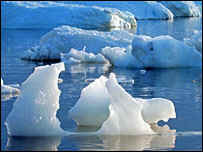 The fact that human beings are affecting the global climate through the emission of greenhouse gases, primarily Carbon Dioxide from burning fossil fuels such as coal, petroleum and natural gas for energy and transport, has been known since the eighties. Since then, despite efforts to reduce these emissions the concentration of these gases in the atmosphere has continued to increase to a level where some degree of dangerous climate change is now inevitable and unavoidable, at least in the next couple of decades ecosystems and communities around the globe.
World leaders have been urged to put more money into developing new energy technologies to tackle global warming.
Royal Society president Martin Rees wants a publicly funded international research programme, he says in the US journal Science.
Lord Rees says a pledge to increase governments' investments in energy technologies should have been made at the recent G8 summit in Russia.
He describes a "worrisome lack of determination" among world leaders.
Lord Rees said: "Energy security was a key issue at the St Petersburg summit of G8 leaders last month.
"Their joint communique included many important commitments, but it omitted one crucial pledge - a significant increase in their governments' investments in R&D (research and development) for energy technologies."
He said an "urgent challenge" was to meet global demand for energy, while reducing the impact of greenhouse gas emissions on climate change.
To do this, "more needs to be done to develop new energy technologies that are currently far from market", he said.
"If we look at what is happening worldwide, there is a greater and greater demand for energy, especially in the developing world, India and China in particular, and at the same time carbon dioxide is rising very fast and it's clear that unless we can control the carbon dioxide then we will run into a dangerous level of potential climate change 50 years from now.
"And that's why there's urgency, because if you want to meet the expectations of the developing world, we need new kinds of energy.
"None of the kinds of energy that we can produce now routinely are going to really be sustainable in the long run at the scale we need."
The International Energy Agency predicts that by 2030 global energy demand will increase by 50% (Source: BBC News, August 04, 2006).
Climate change: LDCs (Least Developing Countries) are double losers
Effects of climate change are not the same across regions and this makes it difficult to devise a global policy for implementation. The LDCs are likely to be the most affected group of countries. The ongoing market-led globalisation accentuates this vulnerability in some countries. Least developed countries (LDCs) with antecedent poverty suffer from global structural "omissions," as argued by Nobel Laureate Amartya Sen. This 'double exposure' makes the LDCs 'double losers.' Obviously, LDCs are particularly concerned about this skewed distributional impact of climate change. It needs to be kept in mind that climate change impacts threaten lifestyle in the Annex-1 countries, while they threaten life as such in the LDCs.
Climate change hitting Africa badly
Africa has contributed less than any other region to the greenhouse gas emissions that are widely held responsible for global warming. But the continent is also the most vulnerable to the consequences.
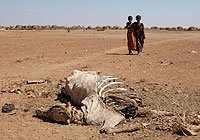 Even as global policymakers debate how to deal with anticipated climate change disasters of the future, the effects of climate change are already hitting the African region and many other parts of the developing world.
 Climate change 'will set Kalahari dunes in motion': Researchers predict that warmer temperatures will make sand dunes in southern Africa unstable, with serious implications for farmers whose livestock graze there.
A report published on 29 October 2006 by a coalition of leading development and environment NGOs in the United Kingdom says that climate change is already having serious impacts on peoples' lives across Africa. The problems will get much worse without urgent action now.
The report, "Africa Up in Smoke 2", is based on the latest scientific research and as well as evidence from the ground. The report is published by The Working Group on Climate Change and Development whose members include ActionAid International, CAFOD, Christian Aid, Columban Faith and Justice, Friends of the Earth, Greenpeace, Institute for Development Studies, International Institute for Environment and Development, MedAct, New Economics Foundation, Oxfam GB, Panos, World Vision and WWF.
It says that Africa is already warmer by 0.5 degrees centigrade than it was 100 years ago. According to the Hadley Centre, a leading climate research body in the UK, temperature increases over many areas of Africa will be double the global average increase, and drought patterns stand to worsen catastrophically. The coalition stressed that Africa is the continent probably most vulnerable of all to the negative effects of climate change, and the one that faces the greatest challenges to adapt. An example given is that for millions of people in the Horn and East Africa, the success or failure of rains due over the next two months will be critical. Whether the rains fall will determine if in 2007 there can be recovery from the serious drought of 2005-2006, or there will be another disastrous year.
Africa is undergoing big environmental changes. Although the climates of
Africa have always been erratic, the latest scientific research, and the agencies' on-the-ground experience indicates new and dangerous extremes, continual warming and more unpredictable weather patterns.
The success or failure of one rainy season, or even several, cannot be attributed to global warming. But, says the report, Africa is steadily warming and the climate is changing.
Quoting the experience of ordinary African people and aid agency partners, the report catalogues the impact of rising temperatures, more frequent and severe droughts in some places, more torrential rains in others and greater climatic uncertainty for the continent's farmers.
Climatic unpredictability increases the pressure on people's lives and livelihoods from poverty, HIV/AIDS and government neglect. Women and rural societies, especially pastoralists, are under the greatest stresses.
While local conditions vary, across sub-Saharan Africa as a whole, 33 per cent of people are under-nourished, compared with 17 per cent of people in all developing countries. This rises to 55 per cent in Central Africa. The average number of food emergencies in Africa per year almost tripled since the mid 1980s. Climate change poses a new and unprecedented threat to food security.
The report says that the international community is failing to meet even the limited commitments it has made to help the world's poorest people adapt to the impact of climate change.
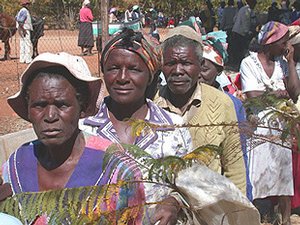 People who speak about hunger and environmental crises are viewed as muddle-headed moralists, as opposed to the hard-headed realists who deal with war and peace. Our political systems and global politics are largely unequipped for the real challenges of today’s world. Global economic growth and rising populations are putting unprecedented stresses on the physical environment, and these stresses in turn are causing unprecedented challenges for our societies. Yet politicians are largely ignorant of these trends. Governments are not organised to meet them. And crises that are fundamentally ecological in nature are managed by outdated strategies of war and diplomacy.
Contributions to the two funds specifically designed to help poor countries adapt stand at just $43 million in 2005-2006, around one tenth of the amount pledged, whilst the overall annual costs to adapt to projected climate change are likely to be between $10 billion and $40 billion per year.
The majority of the continent's poorest and most undernourished people live in rural areas - especially small-holders, nomadic pastoralists, and women.
The need to give more support to small-scale farming is critical, yet aid for agricultural production in sub-Saharan Africa dropped by 43 percent between 1990-92 and 2000-02.
The coalition concludes that Africa urgently needs a new model for human development that is "climate proof and climate friendly and gives everyone a fair share of the natural resources on which we all depend."
It warns that unless the international community takes urgent action to reduce emissions, their efforts to end poverty in Africa will "go up in smoke."
(Martin Khor ,Third World Network Features , Holiday, November 17, 2006)
1.4. Climate victims are refugees
People affected by rising temperatures should be given a special status as "environmental refugees". In a report, Environmental Refugees: The Case For Recognition, the London-based foundation says there is a growing interdependency in a world where environmental problems have no respect for borders, so this new status is an essential response to a growing and unavoidable crisis.
About $80bn is going in subsidies to fossil fuel industries in rich countries, against $0.4bn pledged to help poor ones to adapt to climate change
It says the number of people around the world uprooted for environmental reasons probably totals 25 million, compared with 22 million displaced by civil wars and persecution.
By 2050, it suggests, there could be 150 million people worldwide "displaced by a cocktail of ecological 'push factors'".
Polluters to pay
Apart from amending or replacing the Geneva Convention, NEF suggests there should be compensation for ecological debts "to clarify the financial and environmental obligations of 'over-polluting' countries... "
One of the report's co-authors, Andrew Simms, said: "Hysteria and hypocrisy walk in the footsteps of refugees and migrants. The paranoia of wealthy countries is deeply ironic.
"Their carbon-intensive lifestyles are driving global warming, which is likely to become the largest single factor forcing people to flee their homes around the world... People in poor, vulnerable countries pay with their homes for our lifestyles."
NEF says the refugee convention lacks an explicit clause acknowledging the plight of people like these. If such a clause were added, it believes, there would then be an enforceable international duty to help them.
The United Nations High Commission for Refugees says it is already overburdened and underfunded, and could not take on the extra work.
But Andrew Simms told BBC News Online: "Just because UNHCR's hands are full, that doesn't mean the problem will simply go away.
Unequal shares
"Unless you create a proper legal status for the people affected and put the responsibility for helping them on the developed world, it will go on being the poor countries who are left to pick up the tab.
"We have a pretty watertight ability to pin the responsibility for climate change where it belongs.
"We know, for instance, that when it sits down to dinner on 2 January, a US family will already have consumed as much fossil fuel since the stroke of midnight on New Year's Day as a Tanzanian family will survive on for the entire year.
"What I find most outrageous is that - very conservatively - about $80bn is going in subsidies to fossil fuel industries in rich countries, against $0.4bn pledged to help poor ones to adapt to climate change."
NEF says other causes besides climate change are creating environmental refugees: they include dam-building, the spread of deserts, and the loss of forests (BBC, October 1, 2003).
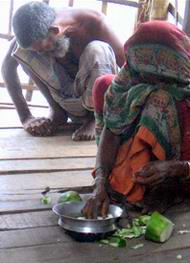 Masuma's home is a bamboo and polythene shack in one of the hundreds of slums colonising every square metre of unbuilt land in Dhaka, the capital of Bangladesh.
Masuma is an environmental refugee, fleeing from the floods which have always beset her homeland but which are predicted to strike more severely with climate change. She has found her way to the city from the rural district of Bogra - a low-lying area originally formed from Himalayan silt where the landscape is still being shaped by the mighty Brahmaputra river as it snakes and carves through the soft sandy soil. "In Bogra we had a straw-made house that was nice. When the flood came there was a big sucking of water and everything went down," Masuma says.
"Water was rising in the house and my sister left her baby upon the bed. When she came back in, the baby was gone. The baby had been washed away and later on we found the body," she recalls.
Sir Nicholas' approach is criticised by some economists who argue that as climate change is beyond human control we should continue to maximise economic growth so we will be able to afford to pay for adaptation in the future. In a recent article for the Spectator magazine, former chancellor Lord Lawson argued: "Far and away the most cost-effective policy for the world to adopt is to identify the most harmful consequences that may flow from global warming and, if they start to occur, to take action to counter them." (BBC, September, 2006)
Back to Content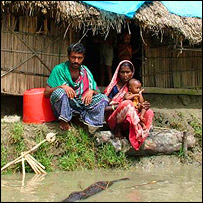 In pictures:
Your changing world
1.5. Bangladesh: The Worst Victims of Global Warming
Bangladesh: The Worst Victims of Global Warming
Bangladesh to lose 17 pc land Asia's largest rivers, the Ganges and the Bramaputra, join in the world's most extensive delta and flow into the Bay of Bengal. About 115 million people - nearly 816 per square kilometer - live in the low-lying delta of three major rivers, the Ganges, the Brahmaputra and the Meghna. The effects of a one-meter relative sea level rise predicts that 17.5 per cent of the country will be inundated, displacing 13 million people, about 11 per cent of the population. New threat We also know that as the world becomes warm, the weather patterns are likely to become much more variable around the world and people are going to be exposed to an increased frequency and increased intensity of extreme weather. Regions including Africa and South Asia - home to most of the 1.1 billion people who live without clean water - will be among the hardest hit by changing weather patterns, experts at the 4th World Water Forum. They blamed the threats largely on changes in the global climate. Bangladesh is a low-lying country in the world. There are salinity intrusions into larger areas due to climate change, and a rise in sea-water levels.The Stern Report commissioned by the British Government concluded that between 150 million and 200 million people could be displaced by climate change by 2050. The report concluded that unmitigated climate change could cost the global economy more than the ‘combined cost of the two world wars and the Great Depression’. 1.Dengue menace lurking in the wings |
Climate bell tolls Livelihood changes with weather
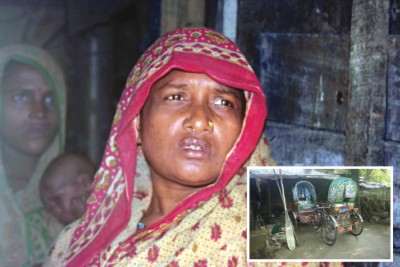 Inside her small dark, musty hut, Pia Rani looks like a haunted animal. Fear and insecurity etched in her desperate eyes; she is even hesitant to open the bamboo door just a crack to see her visitors.
"My husband is away. He has left the village," she then says quietly. "What else could he do?"
Well. What else could he do? The villagers agree. In fact, what should we all do? Follow Pia Rani's husband Ranjan Jaladash? they ask. At Chokoria's fishermen's colony, everybody is desperate to find a way out, to know what lays ahead for them.
This year, Ranjan tried and failed repeatedly to make a single successful trip to the deep sea. Each time he sailed out, the sea turned rough after a few days. The danger signals were raised. The waters roiled and darkened. The fishing trawler tossed madly. And Ranjan had to abandon his trip.
"With every trip he abandoned, our loans piled up," Pia says. "He borrowed from the mahajans. A lot of it. And then he just lost the battle."
Every trip involves a cost of around Tk 50,000 or more. And it is a stiff task to recoup the cost -- fishermen have to sell their catch to the mahajans [loan sharks] at a predetermined price, and the loans have to be repaid first. Whatever fish remain after the loan repayment, that is again divided in half by the mahajans and the fishermen.
"We buy diesel, food and ice to preserve fish, and then sail to the sea," says Amalesh, another fisherman. "Each trip needs about 14 days, and if we fail to complete, we cannot catch enough fish to pay off the loans, and make out a living. Ranjan could not pull it off and he abandoned his wife and children to go over to Kakdwip in India. He now works there as a hired fisherman."
Ranjan is not an isolated case. Like him, many fishermen are either abandoning the village to find work elsewhere or are changing the profession. The jaladash, or the serfs of the sea as they are known, are today finding themselves in a bleak situation. Suddenly the sea that has sustained their livelihoods for generations has become stranger to them. It is becoming rougher by the day, cutting their fishing days and trips. And with it goes the livelihood as well.
"The weather has changed. The sea has changed," says Sushil Jaladash, an old fisherman who has stopped going to the sea for the last two years. His white beard flutters in the gusty wind that blows strong in the Bangla month of Kartik. Clouds gather overhead. The old man gestures to the flying clouds getting darker.
"Whoever has ever heard of bad weather in Kartik?" he asks. "When Bhadro was over, we knew the sea would be safe. It no longer is. See, even in Kartik we had to abandon our trip today. The sea is changing."
And changes they talk.
"Waves have become larger," says Sushil. "And the sea is strangely warm. And storms have become frequent. Before, there used to be rain in depression and storms would pass over. Now it hardly rains and the storms have become stronger."
Experts also mention similar changes in sea behaviour. And they find a direct co-relationship between the sea behaviour and the climate change.
"This is probably the only direct evidence of climate change impact on Bangladesh," says Dr Ahsan Uddin, executive director of a research organisation, Centre for Global Change. "The sea is warming up and it has been warming up by .05 degrees Celsius every decade. This is leading to frequent occurrences of storms and cyclones. The fishermen community has become totally vulnerable to the climate change."
In 2007 alone, 83 warnings were issued by the met office.
And the result of the change is visible in the Jaladash neighbourhood. The shacks have broken down in many ways. The thatched roofs are half gone. The men and women are wearing tattered clothes. The children simply go naked. Two rickshaws stand in a corner of the village -- signs that fishermen are pulling rickshaws instead of fishing.
The latest victim of the climate change is too shy to appear before the crowd. After much persuasion he tentatively steps out of his house.
Soumendra Chakrabarty is just broke. The mahajan who gave him loans, has taken possession of his boat, as he failed to complete trips to the sea and repay the loans.
What will he do now? He has no answer. He looks blank. Just as Pia Rani and Ranjan and hundred other fishermen and their families at Taros Vanga village of Chokoria
(Daily Star, December 7, 2009).
Sunderbans (The largest mangrove forest of the world) suffers global warming impact
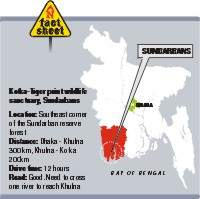 Climate change is taking its toll on the Sunderbans tiger reserve with rising sea level and erosion threatening its fragile ecosystem.
The rise of seawater in the Sunderbans, a world heritage site, is about 3.14 mm annually as against the global average of 2.2 mm.
As one moves eastwards towards Bangladesh the rise is even higher at almost 5mm in the centre and at Khulna in Bangladesh the rise annually is 10mm.
Expers say global warming raises atmospheric temperatures, which in turn, warms the world's oceans. Heat makes water molecules expand-called thermal expansion-causing sea levels to rise.
Climate change is taking its toll on the Sunderbans tiger reserve with rising sea level and erosion threatening its fragile ecosystem.
The rise of seawater in the Sunderbans, a world heritage site, is about 3.14 mm annually as against the global average of 2.2 mm.
As one moves eastwards towards Bangladesh the rise is even higher at almost 5mm in the centre and at Khulna in Bangladesh the rise annually is 10mm.
Expers say global warming raises atmospheric temperatures, which in turn, warms the world's oceans. Heat makes water molecules expand-called thermal expansion-causing sea levels to rise.
Over the past three decades, the world's oceans have warmed by .3 degrees Celsius on average.
The inter-governmental panel on climate change expects sea levels to rise by almost a metre by 2100.
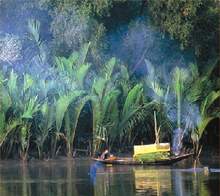 South Asia has been identified as one of the most vulnerable areas to sea level rise.
The Sunderbans are at the greatest risk as not only is it home to some of the world's most endangered species including the tiger, it is also home to 4.5 million people.
In the last two decades 6000 families have been left homeless by the rising sea, which has swallowed low lying islands.
Cyclones, tidal waves and tidal surge are increasing also both in frequency and intensity accelerating erosion along the 225 km coastal line.
"Earlier we have seen this happening but now it is more frequent. Just during the rainy season due to the Norwester the entire east coast was very badly affected, many embankments were broken aggravating erosion," said Professor Ananda Deb Mukhopadhyay, Chairman, Digha Sankarpur Devl Authority.
South Asia has been identified as one of the most vulnerable areas to sea level rise.
The Sunderbans are at the greatest risk as not only is it home to some of the world's most endangered species including the tiger, it is also home to 4.5 million people.
In the last two decades 6000 families have been left homeless by the rising sea, which has swallowed low lying islands.
Cyclones, tidal waves and tidal surge are increasing also both in frequency and intensity accelerating erosion along the 225 km coastal line.
"Earlier we have seen this happening but now it is more frequent. Just during the rainy season due to the Norwester the entire east coast was very badly affected, many embankments were broken aggravating erosion," said Professor Ananda Deb Mukhopadhyay, Chairman, Digha Sankarpur Devl Authority.
From the old pictures one can see that parts of the original boundary of the coastline are already under the sea. And the state's tourist sites at Digha and Sankarpur are getting affected.
"Complete beach earlier sand dunes are here. Here is intervention by fishery market. This is the backwater region and due to the high tide backwater region will go through and low tide it will come out. But if you intervene here the erosion will increase," said Professor Mukhopadhyay.
The rising sea levels have also caused an increase in the salinity levels, which in turn has caused a species migration inwards away from the sea.
 Mangrove species like the sundari from which the Sunderbans gets its name is also slowly disappearing.
"Particularly the sundari cannot stand high salinity so it is suffering the most along with that the fishing cat and the deer population. There has been a migration along the area of the tiger. They also don't like a lot of salinity so they are also migrating," said Professor Pranabes S Sanyal, member National Coastal Zone Management.
This precious eco system is Kolkata's last barrier against the sea its loss will lead to disaster (Source: NDTV, September 29, 2006).
Mangrove species like the sundari from which the Sunderbans gets its name is also slowly disappearing.
"Particularly the sundari cannot stand high salinity so it is suffering the most along with that the fishing cat and the deer population. There has been a migration along the area of the tiger. They also don't like a lot of salinity so they are also migrating," said Professor Pranabes S Sanyal, member National Coastal Zone Management.
This precious eco system is Kolkata's last barrier against the sea its loss will lead to disaster (Source: NDTV, September 29, 2006).
Back to Content
1.6.Flooded future looms for Bangladesh
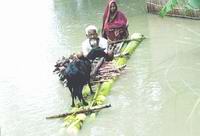 |
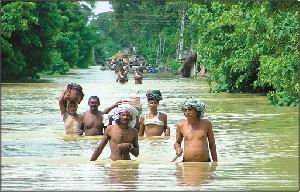 |
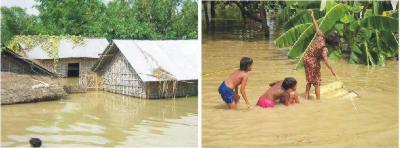 |
If climate change pushes sea levels higher, people in coastal areas in countries like Bangladesh could be forced from their homes. As part of the BBC’s Planet Under Pressure series, Roland Buerk visits a family living in the Ganges River delta
Most experts agree that global warming is a reality and that it will bring further rises in sea levels.
In the last century the world heated up by 0.6C, according to the International Panel on Climate Change (IPCC).
Sea levels rose by between 9 and 20cm and scientists predict further increases of 9 to 88cm by the year 2100.
The South Asian country of Bangladesh stands to be the worst affected.
It is situated in the low-lying Ganges River delta and is also one of the most densely populated countries on earth.
Char Bangla is one of thousands of islands in the mouths of the Ganges.
The land comes and goes with the tides and seasons as the silt is washed away and deposited by the river and sea.
Staying afloat
The people who live on Char Bangla are among the most vulnerable anywhere to a rise in sea level.
‘I have to work hard because of my misfortune,’ said Abdul Razzak. ‘There’s lots of suffering here. Sometimes the tide is four or five feet high. Then I can’t sleep because I have to stay standing up.’
The villagers have built up platforms of mud for their straw huts to try to keep them out of the water.
They have planted trees hoping the roots will bind the soil to stop it being washed away.
But over the long term their efforts will almost certainly be in vain.
Some estimate that the rise in sea level at the top end of the IPCC forecast is predicting will leave at least a fifth of Bangladesh under water.
And it is not just coastal areas that are under threat. Bangladesh’s rivers are expected to flood even more frequently.
‘It’s a flat, flat, flat country,’ said Dr Atik Rahman of the Bangladesh Centre for Advanced Studies who has investigated how climate change will affect the country.
‘The flow of water coming from the Himalayas - which is huge - depends on the differential of height.
‘When the sea level is higher, the flow of that water will be restricted. So when you hear now of Bangladesh being a flood-prone country - it will be a much more flood-prone country in future.’
Dr Rahman adds that after sea levels rise, salt in the ground water will become a major problem, with fields up to 40km from the new coastline rendered useless for growing crops.
International tensions
The irony is that Bangladeshis have contributed little to the pollution blamed for enhancing climate change, and which threatens to bring so much destruction to their country.
Like most people here, Abdul Razzak’s wife cooks on a wood-burning stove made out of clay.
But apart from that, the family consumes little energy.
They have no electricity and use candles for light. They get about by walking or in a boat powered by a single oar at the stern.
The people on Char Bangla are acutely aware that the ‘sins of the rich’ could be visited on them.
‘We are angry with the people who are doing this,’ said Abdul Razzak. ‘We are angry with the people building these factories that will make us sink into the sea.’
‘We have heard these kinds of things, the danger that is going to come. We are going to be washed away. But we are living by relying on Allah,’ said his wife Rabea Khatun.
‘What can we do?’, asked their neighbour Abdus Salaam Taluikdar. ‘We are angry but we’re trying to get on with our lives. We can do nothing, but everyone is angry.’
Dr Atik Rahman believes the richer countries have an obligation to help countries like Bangladesh which will suffer disproportionately from global warming.
‘No contribution, highest impact - that makes it a huge case of moral inequality against which the global citizenry, the global nation states, must take action. If not we’ll be calling it climatic genocide. That’s where we’re heading.’
Some predict that in the future millions of people in low-lying countries like Bangladesh will be forced to migrate.
But a movement of people on that scale will create its own international tensions.
The world will have to learn to cope with refugees from climate change (Source: New Age, 3 August, 2005)
1.6.1 Manhattan, Florida to go under water with Bangladesh and Male
The next president of the United States will have to face enormous task to fight against green house gases to stop rise in world temperature. On August 28, 2008, The Washington Post ran an article of two top researchers of the United States saying that due to climate change, Manhattan of New York City and Florida in the US would be under water while Bangladesh and Male in the next 7 years time. They felt that while the US has to take the lead in taking necessary action to prevent such a disaster, the present Bush Administration is totally ignoring it.
The two leading think tanks of the US, Carlos Pascual and Strobe Talbott, respectively the vice president for foreign policy studies and president of the Brookings Institution are the authors of the article.
The article stated that the world might have only seven years to start reducing the annual build-up in greenhouse gas emissions that otherwise threatens global catastrophe within several decades. That means that between Inauguration Day in January 2009 and 2015, either John McCain or Barack Obama will face the most momentous political challenge of all time. The Republican Candidate McCain and his Vice President pick Alaskan Governor Ms Sarah Palin (who was Miss Wasila of Alaska) are totally different from understanding the importance of the issue.
Reflecting a consensus of hundreds of scientists around the world, the Intergovernmental Panel on Climate Change (IPCC) has affirmed that greenhouse gas emissions are raising the earth's temperature. The article said: "The Earth is on a trajectory to warm more than 4.5 degrees Fahrenheit by around mid-century. Exceeding that threshold could trigger a series of phenomena: Arable land will turn into desert, higher sea levels will flood coastal areas, and changes in the convection of the oceans will alter currents, such as the Gulf Stream, that determine regional weather patterns."
This implies that Manhattan and Florida would be under water, while Nevada would have no water at all. Some Russians quip that they would welcome a more temperate climate, but they would probably be sorry to lose St. Petersburg. Countries such as Bangladesh and Mali do not have the resources to mitigate or even to adapt to the impact of climate change; millions would flee coastal flooding and the desertification of farmlands, creating instant "climate refugees."
The head of the Nobel Prize-winning IPCC, R.K. Pachauri, recently told the writers: "The cities, power plants and factories we build in the next seven years will shape our climate in mid-century. We have to act now to price carbon and create incentives to change the way we use energy and spread technology-and thereby avert nothing less than an existential threat to civilization."
Urgent and drastic action by the international community is required, and the United States must take the lead.
Americans produce more than four times as much carbon per capita as the Chinese; 12 times as much as Indians; and more than twice as much as citizens of Germany, France, Britain and Japan. Unless the United States acts first, it will have no credibility in persuading other countries to do their share.
To their credit, McCain and Obama support the creation of a cap-and-trade system that would limit national emissions. Trading among firms would put a price on carbon. That is an essential step toward changing industry behaviour, encouraging energy conservation and providing an incentive for new technologies. As the most powerful national economy, the United States can set an example for the world in harnessing wind and solar power; "sequestering" (or capturing) carbon from coal plants; and developing cellulosic ethanol and safe civilian nuclear power as alternatives to fossil fuels.
But the domestic obstacles to these and other measures are daunting. While some industries will prosper, other sectors of the economy, especially those that produce or rely on coal, steel and cement, will contract. Electricity prices will increase in the near and middle terms. Many workers and households will need help with the costs of transition.
Coping with the resulting economic and political hardships would be onerous even if the next president inherited forward-looking climate-change policies. But George W. Bush has pursued an "anti-policy," based on a combination of denial, procrastination and backsliding. His successor will have to make up for lost time while also dealing with a half-trillion-dollar federal deficit, a recession and a national housing crunch, a looming health-care crisis, wars in Iraq and Afghanistan, and diplomatic showdowns with North Korea and Iran.
The winner in November will need all the help he can get-including from his opponent, who will go back to the Senate as a major voice on this and other issues. The next president will also need support from the private sector, nongovernmental organizations, academia and-crucially-citizens who recognize the consequences if they do not consent to sacrifices and changes in lifestyle.
Many Americans will accept that logic, and make real changes, only if they believe greenhouse gas emissions will affect them personally. Today's adults, even if they will not be around at mid-century, must think about the fate of their children and grandchildren. Obama can look to his two daughters, and McCain to his four grandchildren. They are among nearly 75 million Americans-and 2.2 billion people worldwide-younger than 18. That generation will be in its 40s or 50s when one of two things happens: Either the temperature of the planet warms more than 4.5 degrees and vast regions slide toward being uninhabitable, or the wisdom of the next president and his fellow leaders around the world pays off in the ultimate reward-survival (M.Naser, Holiday, September 12, 2008).
1.7. Climate change fight 'can't wait'
The world cannot afford to wait before tackling climate change, the UK prime minister has warned. A report by economist Sir Nicholas Stern suggests that global warming could shrink the global economy by 20%. But taking action now would cost just 1% of global gross domestic product, the 700-page study says. Tony Blair said the Stern Review showed that scientific evidence of global warming was "overwhelming" and its consequences "disastrous.
International response
Environment Secretary David Miliband said the Queen's Speech would now feature a climate bill to establish an independent Carbon Committee to "work with government to reduce emissions over time and across the economy".
The report says that without action, up to 200 million people could become refugees as their homes are hit by drought or flood.
"Whilst there is much more we need to understand - both in science and economics - we know enough now to be clear about the magnitude of the risks, the timescale for action and how to act effectively," Sir Nicholas said.
Mr Blair said the consequences for the planet of inaction were "literally disastrous".
"This disaster is not set to happen in some science fiction future many years ahead, but in our lifetime," he said.
"Investment now will pay us back many times in the future, not just environmentally but economically as well."
"For every £1 invested now we can save £5, or possibly more, by acting now.
"We can't wait the five years it took to negotiate Kyoto - we simply don't have the time. We accept we have to go further (than Kyoto)."
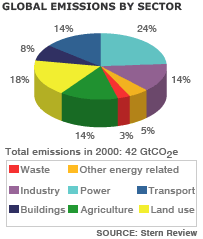 Sir Nicholas, a former chief economist of the World Bank warns that if no action is taken:
Objectives are:
1.7.Global fish stocks could be almost eliminated within 50 years
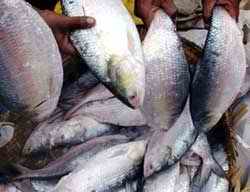 Global fish stocks could be almost eliminated within 50 years if current trends continue, says a major scientific study.
An international team of scientists, writing in US journal Science, said stocks could collapse within 50 years if commercial fishing is not curbed.
The report backs up what scientists round the world have known for years - that the majority of targeted fish stocks are in decline.
The ecosystem, of course, is all the life in the sea and its environment interacting. It's a web, the web of life, the food web.
And when you take away one part of that, the whole thing gets seriously distorted or can collapse.
And so it's not just whether there's going to be enough fish, although that's terribly important because 20% of the world's population depend on fish for protein, but also other things - recreation, tourist industry, but also things like sea defences, that depend on mangrove swamps and coral in parts of the world.
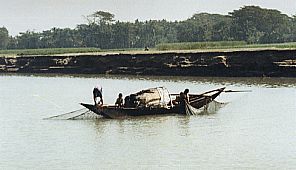 A warming climate and not local fishermen is to blame for the falling fish harvests in Lake Tanganyika, according to new research findings published in the British journal Nature.
Has 18% of the world's fresh water Yields 200,000 tonnes of fish annually Sardines down by about 50% since 1970s
The shortfall threatens the diets of the lake's shoreline countries of Burundi, Tanzania, Zambia and the Democratic Republic of Congo. The study was carried out by a team of researchers led by Catherine O'Reilly of New York's Vassar College.Dramatic Reduction of Pulses, Oil Seed and Fish
Lake Tanganyika, the second largest lake in the world, yields 200,000 tonnes of fish a year, an important source of food and revenue for the shoreline nations. The scientists found out that the harvest of sardines, the lake's main commercial fish, has declined by as much as 50% since the 1970s The UK Government is considering its response to the report, published in the journal Science, but it has ruled out a ban on cod.At the moment, this is one of the most comprehensive studies that's been undertaken so this is really a reasonable estimate of what we think will happen if we continue our current action. We need to have a series of measures. We need to think about marine reserves, or marine protected areas, because they been shown to really turn things around. In addition to this, it's not just fishing that's impacting [on] the marine environment. It's also pollution, it's climate change, it's ocean acidification, destruction of our marine habitats. So just focusing on the fisheries industry is not the way forward.
'Only 50 years left' for sea fish
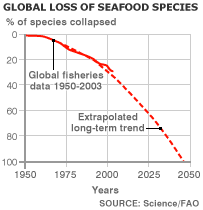 There will be virtually nothing left to fish from the seas by the middle of the century if current trends continue, according to a major scientific study.
Stocks have collapsed in nearly one-third of sea fisheries, and the rate of decline is accelerating.
Writing in the journal Science, the international team of researchers says fishery decline is closely tied to a broader loss of marine biodiversity.
But a greater use of protected areas could safeguard existing stocks.
There will be virtually nothing left to fish from the seas by the middle of the century if current trends continue, according to a major scientific study.
Stocks have collapsed in nearly one-third of sea fisheries, and the rate of decline is accelerating.
Writing in the journal Science, the international team of researchers says fishery decline is closely tied to a broader loss of marine biodiversity.
But a greater use of protected areas could safeguard existing stocks.
"The way we use the oceans is that we hope and assume there will always be another species to exploit after we've completely gone through the last one," said research leader Boris Worm, from Dalhousie University in Canada.
"What we're highlighting is there is a finite number of stocks; we have gone through one-third, and we are going to get through the rest," he told the BBC News website.
Steve Palumbi, from Stanford University in California, one of the other scientists on the project, added: "Unless we fundamentally change the way we manage all the ocean species together, as working ecosystems, then this century is the last century of wild seafood."
We should protect biodiversity, and it does pay off through fisheries yield
Experiments performed in small, relatively contained ecosystems show that reductions in diversity tend to bring reductions in the size and robustness of local fish stocks. This implies that loss of biodiversity is driving the declines in fish stocks seen in the large-scale studies. The final part of the jigsaw is data from areas where fishing has been banned or heavily restricted. These show that protection brings back biodiversity within the zone, and restores populations of fish just outside. "The image I use to explain why biodiversity is so important is that marine life is a bit like a house of cards," said Dr Worm.
"All parts of it are integral to the structure; if you remove parts, particularly at the bottom, it's detrimental to everything on top and threatens the whole structure. "And we're learning that in the oceans, species are very strongly linked to each other - probably more so than on land."
What the study does not do is attribute damage to individual activities such as over-fishing, pollution or habitat loss; instead it paints a picture of the cumulative harm done across the board.
Even so, a key implication of the research is that more of the oceans should be protected.
But the extent of protection is not the only issue, according to Carl Gustaf Lundin, head of the global marine programme at IUCN, the World Conservation Union.
"The benefits of marine-protected areas are quite clear in a few cases; there's no doubt that protecting areas leads to a lot more fish and larger fish, and less vulnerability," he said.
"But you also have to have good management of marine parks and good management of fisheries. Clearly, fishing should not wreck the ecosystem, bottom trawling being a good example of something which does wreck the ecosystem."
But, he said, the concept of protecting fish stocks by protecting biodiversity does make sense.
"This is a good compelling case; we should protect biodiversity, and it does pay off even in simple monetary terms through fisheries yield."
Protecting stocks demands the political will to act on scientific advice - something which Boris Worm finds lacking in Europe, where politicians have ignored recommendations to halt the iconic North Sea cod fishery year after year.
Source, R. Black, BBC, November 2, 2006)
Climate change is destroying tropical marine ecosystems
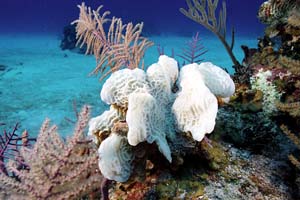 Climate change is destroying tropical marine ecosystems through sea temperature increase and ocean acidification. Scientists say 20 percent of the world's coral reefs have already been ruined and a further 50 percent are facing immediate or long term danger of collapse.
Yet, one of the reports published today shows that saving the world's coral reefs may still be possible. By fighting other stress factors such as pollution or overfishing impacting coral reefs, the reefs will be able to better adapt to climate change impacts, according to the report, "Coral Reef Resilience and Resistance to Bleaching."
Another report by the two organizations, "Managing Mangroves for Resilience to Climate Change" follows a similar strategy. To help mangroves and corals survive in the face of climate change, the two reports publish a series of strategies and tools to fight the other stress factors impacting on them
Climate change is destroying tropical marine ecosystems through sea temperature increase and ocean acidification. Scientists say 20 percent of the world's coral reefs have already been ruined and a further 50 percent are facing immediate or long term danger of collapse.
Yet, one of the reports published today shows that saving the world's coral reefs may still be possible. By fighting other stress factors such as pollution or overfishing impacting coral reefs, the reefs will be able to better adapt to climate change impacts, according to the report, "Coral Reef Resilience and Resistance to Bleaching."
Another report by the two organizations, "Managing Mangroves for Resilience to Climate Change" follows a similar strategy. To help mangroves and corals survive in the face of climate change, the two reports publish a series of strategies and tools to fight the other stress factors impacting on them
Rapid sea level rise, more violent tropical storms and changes in rainfall and salinity occurring as the planet warms are also affecting coral reefs and mangroves.
"We need to minimize human impacts such as pollution, overfishing or unsustainable coastal development. Then the coral reefs have a bigger chance of coming back after bleaching and of adapting to rising sea temperatures or more acid waters," said Gabriel Grimsditch of the IUCN Global Marine Program, one of two authors of the publication on coral reefs.
Other measures include protecting areas of particularly healthy sites that are resilient in the face of climate change. These sites may be able to help regenerate degraded coral reefs and mangroves in the future.
Monitoring of coral reefs before, during and after a bleaching event will help to raise awareness amongst managers and politicians, the reef report suggests.
Coral reefs only cover 0.2 percent of the ocean floor, but contain 25 percent of marine species globally. Coral reefs provide livelihoods to 100 million people and provide the basis for industries such as tourism and fishing, worth an annual net benefit of US$30 billion, the report states.
One hectare of mangroves is estimated to deliver products and services worth up to $900,000. Examples of these products and services include timber and wood chips, an environment for fish spawning, and habitat for economically important species.
But climate change is compromising these ecosystems' ability to deliver benefits to plants, animals and humans in the future.
"Rising temperatures and sea levels challenge reef managers to be flexible and adapt their approaches to make the reefs and mangroves under their care more resilient to climate change as new science and understanding emerges," says Rodney Salm, director of the Transforming Coastal Marine Conservation Program at the Nature Conservancy, and the other co-author of the coral reef resilience publication
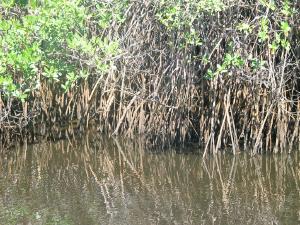 Contingency plans must be developed according to the nature of coastal areas which will provide for proper coordination at the regional, national and local level before, during and after a disaster, the delegates advised.
Tropical nearshore and coral reef fisheries are generally not well managed, the delegates said. They recommend supporting reform of fishery governance at multiple levels to harmonize policies to ensure consistency, sustainability and integration of fisheries management with other elements of tropical marine ecosystem management.
Long-term financial planning and monitoring for revenue generation, funds management, and expenditure should be fundamental to all coastal management activities, the delegates said.
"It is high time for action," says Lundin. "That is the clear message expressed by scientists at this symposium and around the world. IUCN therefore works to identify the best science and offer practical solutions to policymakers and conservation managers, which is the goal of these manuals."
Source: ENS, October 31, 2006).
Contingency plans must be developed according to the nature of coastal areas which will provide for proper coordination at the regional, national and local level before, during and after a disaster, the delegates advised.
Tropical nearshore and coral reef fisheries are generally not well managed, the delegates said. They recommend supporting reform of fishery governance at multiple levels to harmonize policies to ensure consistency, sustainability and integration of fisheries management with other elements of tropical marine ecosystem management.
Long-term financial planning and monitoring for revenue generation, funds management, and expenditure should be fundamental to all coastal management activities, the delegates said.
"It is high time for action," says Lundin. "That is the clear message expressed by scientists at this symposium and around the world. IUCN therefore works to identify the best science and offer practical solutions to policymakers and conservation managers, which is the goal of these manuals."
Source: ENS, October 31, 2006).
East Asian coasts face ecological disaster
Growing populations and booming economies are threatening fragile coastal areas in East Asia, and the region’s coral reefs could face total collapse within 20 years, according to a new United Nations study.
Although millions of people have been lifted out of poverty by economic development over the last 15 years, the impact of rapid growth on the environment has been severe, said the policy brief from the United Nations Environment Program, a copy of which was seen by Reuters on Monday. “Growing populations and their migration to coastal areas, dynamic economic growth, and rising global demands for fishery and aquatic products ... have combined to exert tremendous pressure on East Asia’s marine environment and coastal resources,” it said.
Fisheries, mangrove swamps, reefs, coastal wetlands and sea grass beds are all threatened, the report said. “Studies warn that at the current rates of degradation, the region”s coral reefs face total collapse within 20 years, while mangroves could be gone within 30 years,” it added.
Large areas of mangrove in Indonesia and Vietnam have been removed to make way for shrimp farms or to convert into farmland, the report said. “Decades of advocacy, political commitments and conservation efforts at the national and regional levels have not prevented the East Asian seas from degrading at an ever-increasing pace.” Some of the main causes of marine pollution in the region are from untreated sewage, and from rubbish and fertilisers—problems also faced around the world, an official said.
“Despite international agreements, we keep pumping raw sewage into the sea,” Veerle Vandeweerd, coordinator of the UN’s Global Program of Action for the Protection of the Marine Environment from Land-Based Activities, told a news conference (Source:Reuters,
The Financial Express, October 17, 2006).
Marine Environment Plagued by Pollution
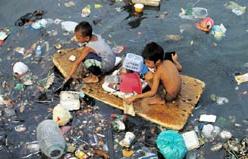 An estimated 80 per cent of marine pollution originates from the land and this could rise significantly by 2050 if, as expected, coastal populations double in just over 40 years time and action to combat pollution is not accelerated," said UNEP Executive Director Achim Steiner. "We have a long way to go politically, technically and financially if we are to hand over healthy and productive seas and oceans to the next generation."
UNEP's State of the Marine Environment report also notes rising concern over the increasing damage and destruction of essential and economically important coastal ecosystems, including mangrove forests, coral reefs and seagrass beds.
In many developing countries more than 80 percent of sewage entering the coastal zones is estimated to be raw and untreated, the report said.
An estimated 80 per cent of marine pollution originates from the land and this could rise significantly by 2050 if, as expected, coastal populations double in just over 40 years time and action to combat pollution is not accelerated," said UNEP Executive Director Achim Steiner. "We have a long way to go politically, technically and financially if we are to hand over healthy and productive seas and oceans to the next generation."
UNEP's State of the Marine Environment report also notes rising concern over the increasing damage and destruction of essential and economically important coastal ecosystems, including mangrove forests, coral reefs and seagrass beds.
In many developing countries more than 80 percent of sewage entering the coastal zones is estimated to be raw and untreated, the report said.
Increasing coastal populations, inadequate treatment infrastructure and waste handling facilities are all contributing to the sewage problem, the report said.
Fixing the global sewage problem could cost at least $56 billion, UNEP warned.
The report finds the number of coastal dead zones has doubled every decade since 1960. This rise is directly linked to the rise in nitrogen and phosphorous from agricultural runoff, sewage and fossil fuel burning.
The problem was once largely confined to developed countries but is now spreading to developing ones, the report said.
National and international efforts to control marine litter - much of which is not biodegradable - have been implemented, the report said, but the problem "has steadily grown worse."
Marine litter comes from an array of sources, including municipal, industrial, medial, fishing boats and shipping discharges.
Close to 90 percent of coral reefs in Southeast Asia are threatened by human activity and the region's mangroves - important for coastal defense and fisheries - are under assault from aquaculture ponds and agriculture.
Wetlands are being filled in across the world. Close to a third of North America's wetlands have been lost to urban development with agriculture claiming a further quarter, and some 50 percent of wetlands in southern and western Africa have been destroyed.
There is some good news in the report, which cites progress on cutting radioactive waste dumping as well as oil and chemical pollution.
The amount of oil entering the marine environment has fallen more than 60 percent since the mid-1980s, the report said.
Progress is mixed on controlling heavy metals, the report said, and sediment mobilization.
Some coastlines, once fed by regular amounts of sediments by rivers, are shrinking because the soils are being trapped by barrages upstream, UNEP said, while others are suffering for the opposite reason, as artificially high amounts of sediments are choking seagrass beds, silting up coral reefs and clogging up other important habitats and coastal ecosystems
The report notes several areas in need of "urgent attention," including the continued impact of dams, new streams of chemicals and the state of coastal and freshwater wetlands. It warns that global warming could cause sea levels to rise, increase the acidification of the oceans and bring a slew of other changes to the marine environment, particularly the Arctic.
The report also suggests efforts to improve monitoring and data collection on continents like Africa where the level of hard facts and figures on marine pollution "remains fragmented and woefully low."
(Source: ENS, October 04, 2006).
1.8 Offshore Nijhum island, Bay of Bengal: Overcoming climate change impact
 |
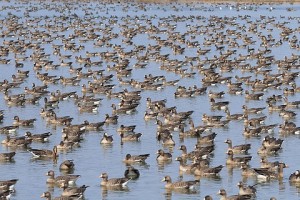 |
 |
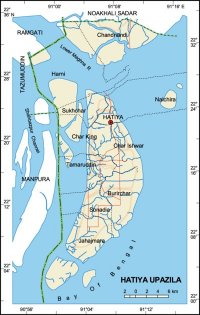 NIJHUM is an offshore island in the Bay of Bengal, located in the extreme south of Hatia island separated by Hatia channel. It is a scenic treasure trove having 20 kms long sandy and grassy beach. Accredited on the estuarine Meghna river and the Bay of Bengal, Nijhum is a virgin island constituted of intertidal mudflats and sandflats. The island is dissected by small creeks or canals and its centre part is under cultivation and human habitation. It is a cluster of several small accreditation mainly Char Osman, Char Kamla, Char Muri and Ballar Char.
It came under human settlement during 1969 and the Forest Department began aforestation in 1972 with mangrove species. Now it has a large deep green forest with native and early succesional tree species. This island was declared as a National Park in 2001 and now is one of the attractive tourist spots for its rich faunal and floral diversity. This island could be the next prime tourist spot after St. Martin's island.
The most important type of tree planted in the island is Keora, also known as Kerfa, which has fast growing roots holding the sandy soil. Kakra, Gewa, Hargoza, Khalisha and Bain are the co-dominant species of this forest. There are several patches of Hogla (a robust herb) throughout the area. The main attraction in this successional mangrove forest is the herd of about 5000 spotted deer. The natural beauty has been enhanced by monkeys, wild boar, wild buffaloes, fishing cat, snakes, turtles, tortoises, Bengal monitor, black lizard, yellow monitor, oriental small-clawed otter, clawless otter and a huge number of migrated winter birds.
NIJHUM is an offshore island in the Bay of Bengal, located in the extreme south of Hatia island separated by Hatia channel. It is a scenic treasure trove having 20 kms long sandy and grassy beach. Accredited on the estuarine Meghna river and the Bay of Bengal, Nijhum is a virgin island constituted of intertidal mudflats and sandflats. The island is dissected by small creeks or canals and its centre part is under cultivation and human habitation. It is a cluster of several small accreditation mainly Char Osman, Char Kamla, Char Muri and Ballar Char.
It came under human settlement during 1969 and the Forest Department began aforestation in 1972 with mangrove species. Now it has a large deep green forest with native and early succesional tree species. This island was declared as a National Park in 2001 and now is one of the attractive tourist spots for its rich faunal and floral diversity. This island could be the next prime tourist spot after St. Martin's island.
The most important type of tree planted in the island is Keora, also known as Kerfa, which has fast growing roots holding the sandy soil. Kakra, Gewa, Hargoza, Khalisha and Bain are the co-dominant species of this forest. There are several patches of Hogla (a robust herb) throughout the area. The main attraction in this successional mangrove forest is the herd of about 5000 spotted deer. The natural beauty has been enhanced by monkeys, wild boar, wild buffaloes, fishing cat, snakes, turtles, tortoises, Bengal monitor, black lizard, yellow monitor, oriental small-clawed otter, clawless otter and a huge number of migrated winter birds.
Tidal mudflats are very important habitats for water birds. Oysters of various nature and snails can be easily seen in this island. The water bodies are the ideal habitat for Hilsha fish, Zebra fish and Hamilton fish (Baila fish in local language). There is a large breeding colony of black-crowned night-heron, pond heron, grey heron, purple heron, cattle egret, little egret, lesser whistling-duck, bar-headed goose, cotton pygmy-goose, common shelduck, ruddy shelduck, tufted duck, water cock , and a wide variety of shorebirds, ring-billed gull, herring gull, noisy gull, sea terns, hawks, swallows, falcons, small cranes, local nightingales and king storks.
The environmental parameters with the direct influences on this island in terms of global climate change are sea-level rise, natural calamities like cyclones, rise in temperature and salinity. The species composition, natural regeneration, species richness, vertical and horizontal structure of this successional mangrove forest will undergo major changes under the predicted climate impacts. The World Wildlife Fund (WWF) has warned that within 60 years the mangrove forests will be inundated by the rising sea. The sea is rising more swiftly than the anticipation and may rise 11.2 inches by 2070. This would result in shrinkage of this island by 96% within half a century (WWF 2010).
A study has revealed that sea levels in the Bay of Bengal have risen much faster over the past decade. Recent satellite images show the New Moore Island or South Talpotti (the uninhabited territory south of the Hariabhanga river) has vanished due to sea rise. It is predicted that in the coming decade other islands in the Bay will follow South Talpotti beneath the waves (BBC, 24 March, 2010).
Sea level rise will cause a major threat to this successional mangrove ecosystem through sediment erosion, inundation stress and increased salinity landward. The predicted one-metre rise in sea level will destroy the whole ecosystem of this island. As sea level rises, the existing concentration of salinity and the distribution of freshwater in mangrove areas will be changed. The mangrove ecosystem will respond by changing in productivity, canopy closure, tree coverage and species diversity, or by migrating. Sea level rise will bring drastic changes in the livelihoods and socio-economic conditions of the inhabitants of these areas.
 It is likely that their valuable arable land will be lost. Even a limited rise in sea level will seriously affect the people through loss of land; accelerated erosion along the coasts and in river mouths; increased salinity, changes in the physical characteristics of tidal rivers and increased vulnerability to flooding. Communities living in this island will be climatic refugees increasing pressure on the main land.
The frequency of occurring cyclones increased by 26% over past 120 years in the Bay of Bengal, which may be increased further with the intensifying of El Nino in the upcoming days. Aila caused a mass devastation on this island with two-three metres high surges sweeping over the whole area. A tidal surge of 15-20 feet inundated Nijhum Island during Sidr. These cyclones uproot, topple stems, break off trunks and defoliate the canopy. Sediments carried by storm surges are deposited on the forest floor as the surge recedes, cause plants mortality by interfering with root and soil gas exchange, leading to eventual death of the plants.
It is likely that their valuable arable land will be lost. Even a limited rise in sea level will seriously affect the people through loss of land; accelerated erosion along the coasts and in river mouths; increased salinity, changes in the physical characteristics of tidal rivers and increased vulnerability to flooding. Communities living in this island will be climatic refugees increasing pressure on the main land.
The frequency of occurring cyclones increased by 26% over past 120 years in the Bay of Bengal, which may be increased further with the intensifying of El Nino in the upcoming days. Aila caused a mass devastation on this island with two-three metres high surges sweeping over the whole area. A tidal surge of 15-20 feet inundated Nijhum Island during Sidr. These cyclones uproot, topple stems, break off trunks and defoliate the canopy. Sediments carried by storm surges are deposited on the forest floor as the surge recedes, cause plants mortality by interfering with root and soil gas exchange, leading to eventual death of the plants.
Storm surges weaken the potentiality of natural regeneration by reducing the viability of seeds, seedling germination and seedling recruitment. Invasive plant species likes lantana has the ability to rapidly colonize disturbed areas, and causes slower-growing of native plant species. The cyclone damages or alters structural diversity and spatial pattern of forests. The density of mortality (>5 cm diameter at breast height) ranges from 14-100% (depending on the intensity) and averages 47.7%. The reductions in total basal area range from 9-100%. Mortality increases by 9% during post-cyclone 7-18 months. Inter-specific differences in susceptibility to wind damage appear to be a primary factor contributing to spatial patterns in mortality (Sherman 2001).
With the increase of salinity the tree mortality rate will be accelerated as the production of new leaves, leaf longevity and the leaf area, net photosynthesis rate, stomata conductance and transpiration rate of leaves -- all will be reduced. The deer, often in groups will come to the nearly locality by swimming rivers and canals to quench their thirst with sweet water. Many of the deer will die of drowning or caught by crocodiles and the people, or even bitten by dogs.
The breeding habitat of fishes likes Hilsha and other crustacean will be destroyed with the intrusion of salinity. They lay their eggs and stay up to juvenile stage in the freshwater. The leaves, stems, and roots of mangrove vegetations provide a vital shelter for predators and nourishment for young fish, shrimps, and crabs. Without this environment, only a handful would survive. Mangrove trees, a crucial component, provide shelter and nutrients to their ecosystems. They provide habitats to young fish, shrimps, crabs and mollusks. Hundreds of migratory bird species nest in mangrove forests.
Animals inhabit mangrove forests. The mangrove trees provide not only support to countless food webs; they are also indirectly responsible for the survival of the most primary planktonic and epiphytic algal food chains, which in turn provide carbon for the mangrove tree. Salinity is one of the most important factors of mangrove forest growth and distribution. 20-35% salt concentration is congenial for mangrove ecosystems. A salt concentration of 40-80% diminishes the number of species and their size and only a few species can exist and grow in 90% concentration (Hong 1993).
The mangrove ecosystem of Nijhum Island is a sustainable resource that provides huge number of people with food, tannins, fuel wood, timber, medicines and other ethno-botanical values. Mangrove offers protection of property and life from storms and coastal erosion. Sea level rise induced by global warming could alter substantially the status of mangrove forests, with serious consequences for coastal protection and resource management of this island.
Adaptive management can be effective to overcome the problems raised from climate change. Adaptation is often a traumatic process triggered by disaster rather than a gradual process of adjustment (Karas and Kelly 1993). However, the pragmatism of the people of Bangladesh in adapting to difficulties in the past with limited resources should prove of great value in the identification of appropriate adaptive responses. The nexus of pragmatism, education and community participation can provide an excellent base for efforts. The following measures could be taken to mitigate these problems:
1.9 Huge mangrove forests at stake
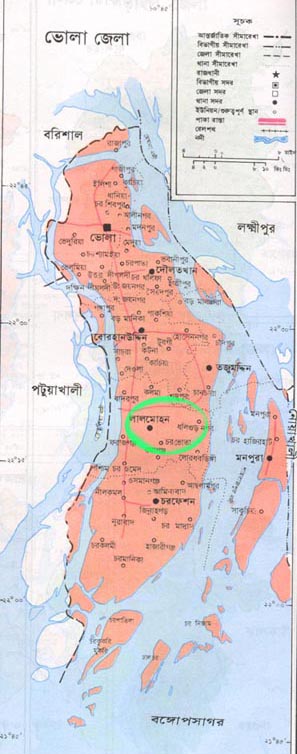 Thousands of acres of mangrove forests, created to shield lakhs from natural disasters in the chars (islands) in Bhola and Patuakhali, face serious threats with the district administrations leasing out the chars to landless people and shrimp cultivators.
At the district administration level, the process of land allocation under the national programme of rehabilitating landless peasants is completed without any consultation with the forest department. Since independence, the department has created 1.27 lakh acres of mangrove forest along the coastal areas of Bhola on the basis of a master plan.
Thousands of acres of mangrove forests, created to shield lakhs from natural disasters in the chars (islands) in Bhola and Patuakhali, face serious threats with the district administrations leasing out the chars to landless people and shrimp cultivators.
At the district administration level, the process of land allocation under the national programme of rehabilitating landless peasants is completed without any consultation with the forest department. Since independence, the department has created 1.27 lakh acres of mangrove forest along the coastal areas of Bhola on the basis of a master plan.
On June 23, over 200 people invaded Char Bestin mangrove forest in Patuakhali, chopped down more than 30,000 trees and cleared the area of thick vegetation to make a human settlement there. They claimed to have the forest allocated to them by the district administration several years ago. When Rangabali police intervened, the invaders retreated, vowing to establish their "rights" on the forest very soon.
On June 11, only hours after a Bhola court directed the authorities to abide by the forest and environment laws, groups of people chopped down thousands of trees inside a mangrove forest and a designated wildlife sanctuary for building a road in the remote island of Char Kukrimukri.
Lack of coordination between the district administrations and the forest department will cause further damage to the mangrove forests in the coastal areas, it is feared.
The district administration of Patuakhali has so far allocated land to thousands of poor people in the chars thoroughly afforested over the years. Following the Char Bestin incident, the district officials and Bhola Divisional Forest Office recently met to resolve the issue but failed.
Shah Alam Sarder, additional deputy commissioner (revenue) of Patuakhali, told The Daily Star that a team from the administration and the forest department would visit the coastal areas to assess the situation.
“We (the district administration and the forest office) have decided to work together to earmark the mangrove forests and also farm areas for the landless people,” Shah Alam said.
The mighty Bura Gouranga, an estuary of the Meghna and Tetulia rivers by the Bay of Bengal, is dotted with 50 chars having 1.27 lakh acres of mangrove forests. These dense forests stand as a great barrier between the Bay and the mainland of Bhola.
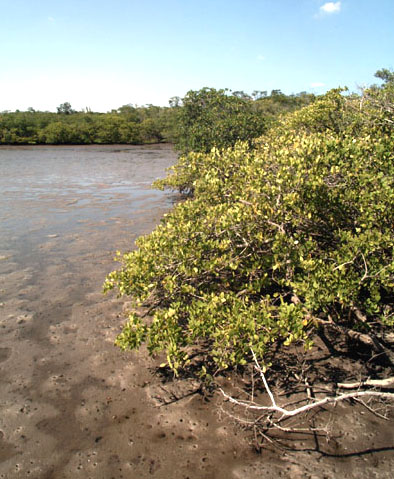 “Following several devastating calamities, there was a national consensus in the seventies that we require 3.60 lakh acres of mangrove forest in Bhola alone as an effective barrier to cyclones,” said Sayed Ali, divisional forest officer of Bhola.
Whenever a new shoal emerges, the nursery section of forest department plants 4,444 mangrove saplings on every hectare of land. The saplings include sundari, hartal, keora, shoila and kakra, added Sayed.
As per a 1977gazette notification, the forest department is the custodian of all shoals rising from the rivers in the coastal areas, Sayed said.
As soon as a char begins to appear on the river, the forest department immediately earmarks it for planting trees. The trees are mostly species brought in through a painstaking process of collecting seeds from the largest mangrove forest of Sundarbans and germinating those in the nursery.
“Following several devastating calamities, there was a national consensus in the seventies that we require 3.60 lakh acres of mangrove forest in Bhola alone as an effective barrier to cyclones,” said Sayed Ali, divisional forest officer of Bhola.
Whenever a new shoal emerges, the nursery section of forest department plants 4,444 mangrove saplings on every hectare of land. The saplings include sundari, hartal, keora, shoila and kakra, added Sayed.
As per a 1977gazette notification, the forest department is the custodian of all shoals rising from the rivers in the coastal areas, Sayed said.
As soon as a char begins to appear on the river, the forest department immediately earmarks it for planting trees. The trees are mostly species brought in through a painstaking process of collecting seeds from the largest mangrove forest of Sundarbans and germinating those in the nursery.
Interestingly, another land hungry quarter also gets busy with the appearance of shoals -- the surveyors of the local land office-- providing information to the district administration on the status of emerging shoals in the Bay or in the vast rivers flowing into it.
For instance, the surveyors go to an emerging shoal when it is still under about one foot of water and report back that the shoal is habitable. They draw a map manually and name the shoal, and then recommend allocating it for rehabilitation of the landless peasants.
“Very often, they furnish wrong information and get the district administration allocate the shoal to landless peasants on the basis of a list already prepared by the upazila level landless peasants' management committee,” said a forest department official requesting anonymity.
Each of the landless peasants, having an allocation of around two acres of land for living and farming, just wait for the shoals to become liveable. A landless peasant from Kochhopia, who was allocated two acres of land at Char Bestink, said he had to pay the surveyor Tk 10,000 to qualify for the allocation.
As the shoal slowly rises above the water, the forest department goes ahead with its usual plantation programme without the knowledge that the district administration concerned has already allocated the area for rehabilitation of the landless.
Sources pointed out that the onslaught on Char Bestin forest is a glaring example of how things could go wrong due to the lack of coordination
between the district administration and the forest department (Morshed Khan, 18.10.11).
2. INDUSTRIAL POLLUTION - Poor Suffers
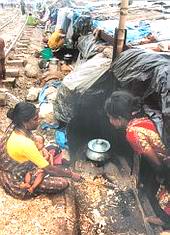 Pollution and human induced hazards are particularly serious in the developing countries because industrial production is heavily concentrated in one or two city regions or 'core regions' within each nation. The industrial areas in Bangladesh are situated in the midst of densely populated regions. There are many hazardous and potentially dangerous polluting industries situated in the cities of Bangladesh. In Dhaka at Tejgaon area, food processing industries are situated along the chemical and heavy metal processing industries. In Tongi a pharmaceutical industry is situated near a pesticides producing industry. Tannery industries of Hazaribagh are also situated in a heavily populated residential area. These examples are repeated in the cities of Chittagong, Khulna and other small cities of Bangladesh. The Government of Bangladesh has not shown much interest in environmental impact created by the industries, whereas government's concern to create jobs usually meant that when a new factory is proposed - by local, national or international business or agency - little attention is given to the likely environmental impacts.
There are many disasters which have an impact which goes far beyond a particular house or neighbourhood, as a result of industrial or other accidents. Bhopal shows an example, when an industrial accident in 1984 released methyl iso-cyanate, caused the death over 3000 with perhaps 100,000 or more seriously injured or poisoned. The situation like Bhopal threatens many places in Bangladesh.
Many urban dwellers live on sites prone to hazards - rarely the government trys to help reduce risks or to respond rapidly and effectively, if a disaster happens. Hazardous sites are often occupied illegally; the risk of eviction from such sites is small because of any commercial value or because they are publicly owned and the government shall not force their eviction for political reasons.
It is almost always poorer groups who suffer most after a natural or man-made disaster. They have lost their homes and may lose their source of income because they are relocated, usually under the direction of public or international agency, to a place distant from their job. And in some cases, they are forced to move to a new site, which means a large disruption to family, friends and contacts important to finding paid work.
American tort lawyers are notorious for their
contingency fees by which they retain
a sizeable portion of the settlements in favour
of their clients. They are, by the same token,
the most aggressive breed of the legal
profession and commonly secure verdicts
for huge sums of money.
They are experts
in conducting cases on tortious damage,
which involve discovery of mountain loads of documents, preparing testimony and
conducting bruising cross examinations.
With just reason, Union Carbide Corporation
(UCC) was fearful of facing a claim for damages
in the US courts.
Apart from having to
face the tort lawyers, the case would come
before judges who are used to managing
mass party actions efficiently.
Worst of all,
the company’s fate would be decided by a
jury of common people, who could be expected
to react to the magnitude of suffering.
The chronicle of Bhopal in the
courts is of a case doomed to
failure.
In step after step from that fateful night of 2 December
1984 onwards, the government,
legal luminaries and, even on
occasion, the Supreme Court of
India failed the victims of Bhopal,
and one could even say failed
the test of justice.
Bhopal is also the collective
failure of all of us – the central
and state governments, the Bar,
the Bench, commentators,
media, and the public. If half the
furore on display now had been
there earlier, it is likely that
corrective steps would have been
taken to rectify matters. The
implications of the Bhopal process
for liability in case of a nuclear
accident are obvious (EPW, June, 2010)
The chemistry of living death
The world's biggest industrial disaster has been rendered today its most trivial. Criminal corporate culpability and governmental concern for its poorest of the poor are the 2 elements missing in Bhopal a full decade aft methyl isocyanate leaked from a U Carbide plant and littered the city's streets with the dead, the dying am those destined to ebb in slow agony. Death can be bribed into postponing its grim reaping, but it requires money. The government has made sure that the disaster's victims don't have enough of it. If there is aspect of the disaster that is not co with a miasma thick as that stink smog 10 years ago, it is that the living today are worse off than the dead. Union Only a 6th of Bhopal's 600,00 registered victims have received the begging bowl amount called, with irony whatsoever, "compensation doesn't even begin to compensate. hospitalisation charges, soaring like pack of vultures. There are some lawyers who have grown fat and sleek in the labyrinths oflegality where Bhopal's victims are routinely led astray, but that is all. Meanwhile, the world's stockpile chemicals that have not been tested toxicity or contraindications increase by 3,000 every year. All of us are seething with chemicals of dubious it safety, chemicals that come from ostensibly benign things like lipsticks and preservatives. There is a Bhopal ticking away in each one of us. (Down to the Earth, Dec 31, 1994)
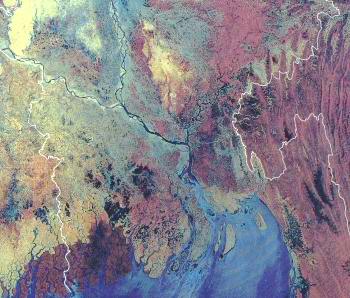 The Ministry of Environment and Forest, Government of Bangladesh (1991) reveals that industrial plants
are usually located along large rivers which dispose untreated wastes directly into the rivers, although the effluents contain 10 to 100 times
the allowable levels permissible for human health. Organometallic compounds have been increasing in commercial use over the past decade. Prime examples
of this involvement of organometallic come from the use of pesticides (organomercury and organotin compunds), gasoline additives (methyl- and
ethylleads) and polymers (organosilicon) etc. Runoff from agricultural lands and urban areas continues to produce pollution making most of the nation’s waterways unacceptable for fishing and swimming. Bacteria, siltation, metals and the nutrients phosphorous and nitrogen are the leading pollutants caused by runoff.
The Ministry of Environment and Forest, Government of Bangladesh (1991) reveals that industrial plants
are usually located along large rivers which dispose untreated wastes directly into the rivers, although the effluents contain 10 to 100 times
the allowable levels permissible for human health. Organometallic compounds have been increasing in commercial use over the past decade. Prime examples
of this involvement of organometallic come from the use of pesticides (organomercury and organotin compunds), gasoline additives (methyl- and
ethylleads) and polymers (organosilicon) etc. Runoff from agricultural lands and urban areas continues to produce pollution making most of the nation’s waterways unacceptable for fishing and swimming. Bacteria, siltation, metals and the nutrients phosphorous and nitrogen are the leading pollutants caused by runoff.
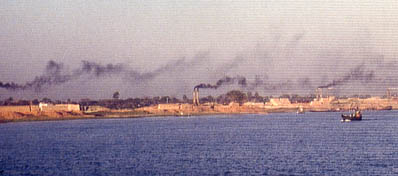
The worst environment-related omissions and commissions are taking place, surprisingly, not among ignoramuses but in perfectly knowledgeable circles. These are the handiwork of leaders in organised sectors whose ranks are growing thanks to the sidelining of environmental concerns before commercial considerations. The latest to figure on the list of major polluters are some 75 industries in Savar disgorging untreated waste into nearby water-bodies, and the omniscient brick-kilns -- 4000 in and around the capital -- which are belching sulfur for the people to breathe instead of required amounts of oxygen.
The offending industries are located in the Savar Export Processing Zone, ironically, the most high-profile industrial area. They were mandated by the licensing authority to be treating the effluents as a public health precaution before releasing these into Bongshi river and the adjoining Dholai beel and canal. The worst part of the tale is that such industries do have waste treatment plants but they are not using them to save money, or let's say, make extra money at the expense of public health involving well-being of some two lakh people. Whose responsibility it is to enforce the relevant environmental laws -- the ministry of industries, the department of environment or the EPZ authority? We would like to know. Can the EPZ authority absolve itself of the responsibility for not holding the industries accountable by merely pointing at the prospect of a central effluent treatment plant scheduled to be set up with World Bank assistance in a year's time?
Simultaneously, we voice our concern over the lethal air pollution issuing from a few thousand brick kilns in the suburbs of Dhaka. The raising of their chimneys has hardly helped matters, given the dangerous fuel mix the kilns use. The basic question is: why the kilns have been allowed to operate within one kilometre of human habitation when the relevant Act specifically debars establishing them within three kilometres of the habitat? The air pollution has had such a telling effect on life that not merely diseases have been spawned, even the livelihood pattern is changing.
Environmental pollution and the immune systemThe immune system protects the body against external attacks, i.e. pathogens such as bacteria, viruses and para- sites and also offers protection against internal attack particularly by tumour cells. The first line of defence of (he system against pathogens (which have penetrated the skin and mucous membranes) is the aspecific response Secondly, lymphocytes may develop a specific response against an antigen (foreign material). Suppression of the immune system (immune suppression) Substances which exhibit immunotoxicity in laboratory animals at high concentrations include: dioxins, PCBs. lead. cadmium methyl mercury organotin compounds, diethylstibestrol (DES), benzene toluene. xylene. nitrogen dioxide and ozone. UV radiation may also affect the human immune system For some of these substances clinical effects were found in humans which suggest a reduced resistance to infectious diseases (e.g. infections of the respiratory system in people exposed to PCBs and polychlorodibenzofurans after consumption of contaminated rice oil). In other cases immunotoxicity was indicated by changed immunological indicators. As the immune system of children is still developing white that of the eldely is deteriorating these groups have a higher sensitivity to immunotoxic substances The immune system is closely linked to the hormonal system and the nervous system. For this reason in addition to the direct effects of substances on the immune system there may also be indirect effects e.g. due to the stress related to pollution problems A psycho-neurological aspect is also known in connection with some allergic responses (eczema and stress). |
The hazardous substances used and expelled to nature by the industries are as follows:
arsenic - agriculture, phosphate manufacture, fertilizer production, leather tanning;
cadmium - leather tanning, metal plating, phosphate manufacture,
stell works, fertilizer production;
chromium - pulp and paper mills, fertilisers, leather tanning,
cement works, steel works, glass works;
copper - pulp and paper mills, fertiliser manufacture, chemical
works;
cyanide - iron and steel manufacture, electroplating;
lead - paint manufacture, battery manufacture, chemical manufacture, pulp and paper mills, fertiliser manufacture, petroleum refining;
mercury - paint and chemical manufacture, plastic and pharmaceutical manufacture, electrical goods manufacture;
manganese - fertilisers;
nickel - pulp and paper mills, petroleum refining;
titanium - paint manufacture, textile and paper production;
zinc - pulp and paper mills, fertiliser production, leather tanning.
"All the industries have effluent treatment plants (EPZ), but they do not use them as we do not monitor regularly"
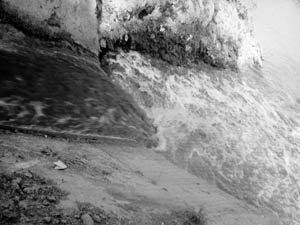 About 2 lakh people of 12 villages around the Savar Export Processing Zone (EPZ) face serious health risks due to tremendous pollution, as industries here dump their untreated liquid waste into surrounding water bodies, ignoring the government's environmental law.
Two decades ago, the villagers of this area used local water bodies, such as the Dholai beel, for drinking, cleaning and irrigation purposes. Today, however, that water has turned pitch-black, thoroughly poisoned from the liquid waste of the industries.
At present, about 75 different industries are freely discharging their untreated waste into the Dholai beel, Bongshi river and Dholai canal in Savar. These industries include electric supplies and electronics, footwear and leather goods, garment, dyeing, metal, paper goods, plastic goods and hardware.
EPZ authorities sources admitted the alleged discharging of untreated waste and said they would take measures to prevent it as early as possible.
The most affected villages are Modhupur, Santaki, Kanda, Kaika Bari, Basak Bari, Dagortali, Sukandi, Bashbari, Majibari, Namopara, Nayapara and Nalam, where as a result of the polluted water the cultivation of boro in winter gets hampered and fishing by the villagers in other seasons has came to an end.
About 2 lakh people of 12 villages around the Savar Export Processing Zone (EPZ) face serious health risks due to tremendous pollution, as industries here dump their untreated liquid waste into surrounding water bodies, ignoring the government's environmental law.
Two decades ago, the villagers of this area used local water bodies, such as the Dholai beel, for drinking, cleaning and irrigation purposes. Today, however, that water has turned pitch-black, thoroughly poisoned from the liquid waste of the industries.
At present, about 75 different industries are freely discharging their untreated waste into the Dholai beel, Bongshi river and Dholai canal in Savar. These industries include electric supplies and electronics, footwear and leather goods, garment, dyeing, metal, paper goods, plastic goods and hardware.
EPZ authorities sources admitted the alleged discharging of untreated waste and said they would take measures to prevent it as early as possible.
The most affected villages are Modhupur, Santaki, Kanda, Kaika Bari, Basak Bari, Dagortali, Sukandi, Bashbari, Majibari, Namopara, Nayapara and Nalam, where as a result of the polluted water the cultivation of boro in winter gets hampered and fishing by the villagers in other seasons has came to an end.
Abu Reza Khan, a member of the engineering board of EPZ, said, "All the industries have effluent treatment plants, but they do not use them as we do not monitor regularly." The operation cost of the plant is high. "It is mandatory for the industries to use the treatment plants and buyers quiz us sometimes about it," he added. "The World Bank is supporting the EPZ authorities to set up a central effluent treatment plant within one year, to divert sewage discharge from the affected water bodies," he said. In the meantime, the untreated sewage discharge has dramatically altered some of the traditional means of livelihood in the villages, preventing crop cultivation, harming cattle and forcing villagers to adopt new sources of income (The Daily Star, March 04, 2005).
Back to Content2.1 Mining boom affecting Indian tribes, environment, Poor people
While India has been steadily attracting foreign investment into its booming mining sector, the fact that the best prospects lie in tribal-dominated and heavily forested areas is cause for concern.
India is mineral-rich. Approximately 24 types of minerals, including iron, bauxite, copper, chromite, gold, lead, manganese, zinc and coal, are found in nearly 50 percent of its total landmass of 3.20 million sq km.
But the main concentrations of this mineral wealth happens to fall in the ecologically-rich, tribal-inhabited areas of south, central and northeast India that has suffered neglect say environmentalists and development activists.
More than 90 million tribal people in India
According to the 2001 census, there are more than 90 million tribal people in India, with large concentrations in the eastern and central Indian states, such as Orissa, Madhya Pradesh, Chattisgarh and Jharkhand. The human development report of the eastern Orissa state, the country's richest mineral-bearing state, for instance, is an abysmal low of 0.404. Less than 25 percent of the nearly 2.6 million people, over half of them tribals, displaced by mining from 1950 to 1991, have been rehabilitated.A well-known New Delhi-based environmental organisation, the Centre for Science and Environment (CSE), has now begun a campaign to address the deep and disturbing problems of environmental degradation coupled with the large scale loss of homes and livelihoods in India's rapidly ballooning mining industry, and in its latest mining policy.
CSE's 6th State of India's Environment Report, 'Rich Lands, Poor People - Is Sustainable Mining Possible?' disputes the government-industry argument that mining is good for growth and for employment through detailed studies on the impacts of mining in various states. The CSE report, released earlier this month, counters the recommendations of the national mineral policy 2008 which expects large-scale foreign investment and the introduction of the latest technology in India's mining sector.
The policy does admit that most mineral deposits are in forest areas and says a 'sustainable framework' should be worked out, along with rehabilitation for displaced tribal people, but it fails to outline how these will be accomplished. "Based on unrealistic assumptions, the policy fails to take into consideration the social and environmental problems happening due to mining. It is bound to promote large-scale exploitative mining and will, therefore, exacerbate conflict,'' says Sunita Narain, director of CSE.
India's policy on mining remained cautious till around 1997, but problems began surfacing when an economic liberalisation regime unplugged controls and allowed industry partial investment control in mining in 2000.
The situation aggravated when the government amended the policy in 2006 to allow 100 percent direct investment by foreign companies. Western mining interests jumped at the opportunity to get at impressive reserves for key minerals and a large, built-in market for them. Already India ranks among the five largest markets in the world for coal, steel and aluminium. International firms like De Beers and Broken Hill Properties, both with controversial human rights and environmental company practice records in countries like South Africa and Papua New Guinea respectively, have acquired huge prospecting rights in Orissa and Madhya Pradesh.
Rio Tinto, another large and controversial mining company, has diamond and gold prospecting rights in Madhya Pradesh. Alongside China's demand for iron and steel, fuelled by its furious pace of development and by its Olympics' setting demands, iron ore production in India jumped from 59 million tones (mt) from 1993-94 to 154 mt in 2005-06, bauxite from five mt to 12 mt in the same period, while coal-production increased from 267 mt to 437 mt. Similarly, chromite production grew from 1.06 mt in 1993-1994 to 3 mt in 2005-2006, and natural gas production almost doubled from 16,340 million cubic metres (mcm) in 1995-1996 to 31,223 mcm in 2005-2006.
Yet, this huge spiralling production has contributed a mere 2.5 percent to the country's GDP in the last ten years and yielded much smaller revenues for the government than it should have. In southern mineral-rich Karnataka state, for instance, royalties from mining have remained a static 0.7 to 0.8 percent of total revenues even while the value of these minerals have shot up manifold. Illegal mining, due to unimplemented laws and corruption has been identified as a major factor, as in the rest of India.
"We have huge problems in not granting permission to industry, our hands are tied, we cannot impose any standards we deem necessary", says the chairman of Karnataka's State Pollution Control Board, H.C. Sharathchandra. India's Air and Water (Prevention and Control of Pollution) Acts allow pollution control agencies to check only 'point' [or final] sources of pollution, thus bypassing most of the problems caused by mining.
Staff shortages, lack of training and capacity, along with physically small mine areas that do not allow mining overburden to be corrected environmentally are other problems, says Sharathchandra. One of Karnataka's leading publishers, K.N. Shanth Kumar, said what worried him was the "rapidly-growing influence of mining on the political sector of the country".
"The issue involves law enforcement not being able to do their jobs effectively,'' he said. CSE director Sunita Narain said her group is now looking to ''create a dialogue'' between the various stakeholders of mining in India. "Our idea is not to polarise the discussion, but to integrate industry into it,'' she said (Inter Press Service, Keya Acharya , Sept. 5, 2008). Back to Content
2.2 Toxic chemicals we're not aware of
Scientists have already linked artificial chemicals to a wide range of severe health disorders in wildlife as diverse as polar bears, fish, birds, and caiman. These problems include cancer, damage to the immune system, behavioural problems, hormone disruption and even sex-reversal. In humans, the last few decades have seen decreased fertility rates and sperm counts, as well as sharply increased rates of several allergies and diseases.
These chemicals are rarely labeled on a product. We cannot see whether they are present or not, let alone whether they are dangerous. In many cases, we don't even know how they might affect our health. A study by the European Chemicals Bureau showed there is insufficient public toxicity data on 86 per cent of the 2,500 chemicals used in the largest volumes in Europe. And the 100,000 chemicals on the European market before 1981 are not subject to the testing and labeling laws covering new substances.
Jill Evans, a member of the European Parliament who sits on the committee on the environment, public health, and consumer policy, describes (WWF Newsroom, April 21, 2004):
I have been involved in the current overhaul of European Union chemicals legislation. So I know the dangers we face from toxic artificial chemicals and that our planet is widely contaminated with them.
Nevertheless, I was horrified by the results of a test looking for known toxic chemicals in my blood. It's not just that I now know for sure that I am contaminated. What shocked me was the number of chemicals inside my body - and where they came from.
Seventy-one toxic chemicals were tested for. I am contaminated with 33 of them, more than anyone else tested in Wales. Some, like DTT and PCBs, have been banned for decades. Others come from things I'd never imagined might be hazardous, like my TV, sofa, and curtains.
There doesn't seem to be any particular reason why I am more contaminated than other people in Wales. And, although I had above-average levels of some chemicals, my results were not particularly unusual. This is the most worrying thing. We are all walking around with many different artificial chemicals in our bodies, and we have no idea what their long-term health effects might be.
I have a particular interest in the 33 chemicals in my blood. I've been unable to have children, and it's hard not to wonder whether chemicals in the environment are to blame.
These problems have coincided with a huge change in lifestyle that has seen us use ever more products containing artificial chemicals. Modern cleaning products, deodorants, computers, mobile phones, nonstick frying pans, canned food, soft furnishings - nearly every household item contains artificial chemicals, many of which can escape the product and are increasingly contaminating people and wildlife.
Synthetic chemicals - toxic to people and the environment.
It’s hard to imagine cleaning without an arsenal of sprays, concentrates and detergents standing at the ready. By and large these products work and work well, but they come with a hidden price tag in the synthetic chemicals that are often toxic to people and the environment.
Organic chemicals, including those in some polishes, mineral spirits, paint thinner and spot remover, can cause central nervous system damage. Alone in the USA approximately 500,000 tons of liquid cleaners are washed down drains annually and most of these products rely on petroleum-based chemicals. Some cleaning chemicals are known to be acutely toxic in large doses and others have been linked to reproductive illness, cancer, neurotoxicity and central nervous system depression. Chemical contamination can poison drinking water and kill wildlife. Phosphorous in detergents can disturb the chemical balance in sensitive wetlands. And the manufacturing process of many chemical products can create even more contaminants.
Back to Content2.2.1
Toxic aldrin in milk 89pc powdered milk adulterated
The sale of powdered milk has shot up on the market due to crisis of pasteurised milk.
Contamination has been detected in 89percent of powdered milk. Liquid milk of dairy farm also is not pure as pesticide aldrin has been found in it. Aldrin was found in pasteurised milk when examined in the laboratory at the Institute of Public Health (IPH) at Mohakhali in the city. Whereas use of aldrin was prohibited worldwide in a declaration two decades ago out of fear for different complicated diseases including cancer. Aldrin is being used also in pasteurised milk approved by government establishment BSTI. IPH sources stated aldrin has been found in five of the six prominent brands of pasteurised milk.
This pesticide is not destroyed in heat during cooking. As a result it spread to human body through foods. After entering in the body it destroys function organs in various ways and reduces the disease resistance power. This creates liver, kidney and breast cancer. World Health Organisation banned aldrin well over 24years ago. IPH director Dr Subimol Singha Chowdhury admitted that use of aldrin in packaged pasteurised milk of different famous brands has been permitted by BSTI.
In the opinion of people concerned, the farms which possess cattle also produce grass. Aldrin is sprayed at the time of cultivating grass. As a result, the grass is not attacked by pests. A laboratory examinee and quality analyst of IPH said aldrin is found in liquid milk produced specially in different farms at Sathia, Sujanagar of Pabna, Faridpur, Bhangura and Chatmohor, Tarash of Sirajganj, Shajadpur and Raiganj. However, this pesticide has not been found in the milk of any village cow. Persons concerned said instead of date fruits, the producers are mixing formalin, sodium, boric powder and soda to preserve milk.
To increase quantity of milk, use of water, starch, sugar and powdered milk is going on since long.
After collecting milk, in the past, the people concerned used to sell it on the nearby markets. But there is no such system now-a-days.
Rather, local agents of various dairy firms and milk processing companies go home to home to collect milk.
They mix various chemicals to keep the milk afresh for long time.
People concerned think that milk is being adulterated amid shortage of milk, businessmen’s intention to make more profit, competition among various companies, weak market management and inadequate cold storage.
A recent study on “Adulteration of raw milk in the rural Areas of Barisal district” shows that formalin is mixed with 10 percent milk, sodium carbohydrate with 20 percent milk during a period between milking and producing it in the market.
Besides, water is mixed with 100 percent milk, sugar with 26 percent milk, powdered milk with 14 percent milk and starch with 12 percent milk.
Prof ABM Faroque, a noted pharmacologist of Dhaka University, told daily sun that
“aldrin” is a chemical, which is widely used for killing pests on crops and cultivated grass.
And commercial dairy farm and people who are involved in cow rearing are providing these cultivated grass and straw to cows. “Cows eat those grass and straw which are mixed with different pesticides, including aldrin. Such pesticides are not destroyed years after years and aldrin is mixed with dairy milk in this way,” he added. Prof Faroque also said nobody is artificially mixing the toxic substance with milk but its side effects are comprehensive and it causes kidney and liver cancer, including respiratory tracked infection, among the consumers. On the other hand, powdered milk is full of adulterated and spurious substance.
In 2012, sanitary inspectors collected 18 samples to IPH. Of those, 16 samples were found to be adulterated. As such, 88.89 percent powdered milk.Powdered milk must have some components like milk fat 26 percent, paneer 5 percent and milk protein 34 percent. If it is found that the component is lesser than the required percentage, then it will not add any nutritional value to our human health.Sources at Bangladesh Standard and Testing Institution (BSTI) said various factors like milk fat, humidity, milk protein and hygienic atmosphere are taken into consideration to determine the issue of adulteration of powdered milk.
Dr Aktarun Nahar Alo of BIRDEM Hospital said people take powdered milk in order to get high level protein but a section of unscrupulous businessmen withdraw fat from such milk. Dr Subimol Sinha Choudhury said the samples of powdered milk sent by the sanitary inspectors from rural areas have been found to be adulterated. Besides, aldrin was found in liquid milk being sold on the market. He said aldrin is a banned item and is not supposed to be available in the market. He spoke on the need for conducting investigation into the matter.Sanitary Inspector Md Jinnah of Sirajganj Civil Surgeon’s office said they collect samples from various districts and send those to IPH. He said case is filed with the judicial magistrate’s court if the samples are found to be adulterated. Besides, the mobile courts launch drive and punish the accused person.
Meanwhile, it is alleged that liquid milk is being contaminated as the cows are being allowed to graze aldrin mixed grass (The Sun, 27.07.14)
AldrinAldrin is an insecticide that enters the insect's body (and in the environment) and quickly converts to Dieldrin. It is harmful and it is a persistent environmental contaminant that is found at 287 of the 1,613 sites on the National Priorities List (#ATSDR ToxFAQs).The US Department of Agriculture banned the use of aldrin and Dieldrin in 1970, but two years later the EPA reinstated the Insecticides the two to kill termites only (#ATSDR Public Health Statement). This usage continued until 1987, when the manufacturer voluntarily discontinued production. Chemical Description The scientific name for aldrin is 1,2,3,4,10,10-hexachloro-1,4,4?,5,8,8?-hexahydro-1,4-endo,exo-5,8-dimethanonaphthalene. The abbreviation for the scientific name of aldrin is HHDN. Technical-grade aldrin contains not less than 85.5% aldrin. The trade names used for aldrin include Aldrec, Aldrex, Drinox, Octalene (#ATSDR Public Health Statement). It is a white power with very little chemical odor. Pharmacology and Metabolism Aldrin can enter the body dermally, through the lungs when inhaled, orby ingesting contaminated dirt or food. Once aldrin is ingested it is converted in by the body into Dieldrin which is then stored in fat throughout the body (#ATSDR Public Health Statement). The body metabolizes the stored Dieldrin slowly, excreting it mainly through feces though this process can take years to totally rid the body of the Insecticides. Uses and Benefits Aldrin was used extensively from the 1950s to the early 1970s on crops such as corn an cotten and later used, until 1987, against termites (#ATSDR Public Health Statements). Health Effects Aldrin has been seen to cause severe health problems when ingested or inhaled in a significant quantity. Nervous system affects, including convulsions, headaches, irritability, and nausea, are witnessed in many people with extreme exposure to the Insecticides (#ATSDR Public Health Statement). Research on additional health problems related to aldrin is sparse. A few cancer registries have stated that there is not enough evidence to list aldrin as a carcinogen (#ATSR Statement on Public Health). How might exposure to it affect human health? Aldrin can enter the body either by inhalation of aldrin powder, ingestion of contaminated food or water, or by dermal contact with either aldrin or formulations containing it. Inhalation of air containing elevated levels of aldrin powder can cause a range of adverse health effects. These range from respiratory irritation and depression, headaches and dizziness at moderate levels through to chemical pneumonitis at high concentrations. Ingestion of aldrin may lead to nausea, vomiting and diahorrea. Dermal contact with large amounts of aldrin over extended periods of time can lead to dermal irritation. Pure aldrin generally causes mild erythema whereas commercial formulations may lead to more extreme reactions. The International Agency for Research on Cancer has designated aldrin as being not classifiable as to its carcinogenicity to humans. However, exposure to aldrin at normal background levels is unlikely to have any adverse effect on human health. |
2.3 Eating hot food in plastic plates links to kidney stones
 New research suggests that eating hot meals on melamine crockery could actually be harmful to health which is a favourite of parents and picnic-goers across the world, reports the UK-based online newspaper Mail Online.
Taiwanese researchers have found that hot temperatures increase the amount of melamine we are exposed to - and this can increase the risk of kidney stones, the report added.
New research suggests that eating hot meals on melamine crockery could actually be harmful to health which is a favourite of parents and picnic-goers across the world, reports the UK-based online newspaper Mail Online.
Taiwanese researchers have found that hot temperatures increase the amount of melamine we are exposed to - and this can increase the risk of kidney stones, the report added.
They studied two groups of people who ate piping hot noodle soup. One group ate from melamine bowls, the other from ceramic bowls.
Urine samples were collected before the meal, and every two hours for 12 hours following the meal.
Three weeks later, the volunteers consumed the same kind of soup but the type of bowl they used was reversed. Urine samples were collected again.
Total melamine levels in urine for 12 hours after eating the soup was 8.35 micrograms when the participants ate out of the melamine bowls versus about 1.3 micrograms when they ate out of ceramic bowls.
Lead researcher by Chia-Fang Wu, of Kaohsiung Medical University in Taiwan, said: 'Melamine tableware may release large amounts of melamine when used to serve high-temperature foods.'
He noted that both higher temperatures (from hot soups, for example) or more acidic foods can encourage melamine to contaminate food, especially in older or low-quality kitchenware.
But he added that the amount of melamine released into food and beverages from melamine tableware varies by brand, so the results of this study of one brand may not be generalised to other brands.
However the results suggest it is advisable to serve hot food on ceramic crockery, to be on the safe side.
They added that it's not yet clear what effect all of this might have on human health.
However, prior studies have linked chronic, low-dose melamine exposures to an increased risk for kidney stones in both children and adults, the researchers said.
The findings back up previous research that found a link between melamine and kidney stones in both children and adults.
Studies of melamine toxicity in animals indicate that ingestion can cause kidney stones, kidney damage and may induce cancer.
And in 2008, melamine-tainted baby formula (causing an especially high dose) was linked to six deaths and 50,000 hospitalisations related to kidney stones and kidney disease in China.
The study was published in the journal JAMA Internal Medicine (Daily Star, 23.01.2013).
2.4 Poisonous ‘nutrition’ in fish, chickenPoultry-fish feed creates fatal diseases in human body
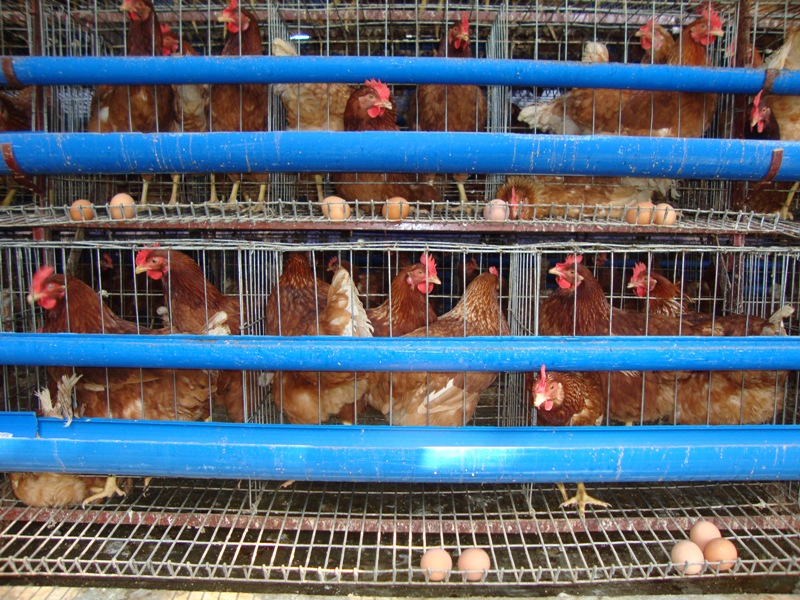 Researchers have been frightened after separately examining blood, meat, bone, liver, brain and skin of chickens which were fed poultry-fish feed. The results are available in tests after feeding this feed to the chickens for one month at the first instalment and for another month in the second instalment. Maximum quantity of chromium was found from the brain of these chickens.
The maximum tolerance rate of chromium in human body is 25 PPM or microgram per day. If it exceeds this limit, at one stage ,fatal diseases will be created. But in the tests, in the brains of chickens taking these feeds for one month 799 PPM chromium was found in per kg chicken brain while 4561 PPM chromium was found in chicken taking feeds for two months. Besides, 244 PPM and 344 PPM?respectively in meat, 557 and 328 in skin respectively, 1011 and 1990 respectively in bone, 570 and 611 respectively in liver and 718 and 792 PPM chromium respectively in blood were found.Research paper has stated that this level is intolerable for human body. Top level International Research Magazine IGCSIE IERD published a research paper in this regard in August.
The research was done by Dhaka University Chemistry department Professors Abul Hossain and Jubayer Hasan. Prof Abul Hossain said, “During the research, we have fed chickens these feeds bought from poultry feed factories in Fulbaria, Bangbazar, Chnkhar Pool area of the capital and the poultry feed of tannery area in Hazaribagh. Besides, we have got 14 thousand milligram chromium per kg from testing the hides and spraying chromium for preserving tannery hides. Similarly, 800 microgram chromium has been found in each kg of poultry fish-feed produced from tannery wastes.” Chemists said the toxic chromium above tolerance level is entering into the human body by eating chicken and egg. The chicken and eggs are normally boiled at 150-200 degree heat but the effect of toxic chromium cannot be nullified without boiling it at 2,700 degree heat. The presence of toxic chemicals is found in the fishes produced in the hatcheries.
A study of Food and Agriculture Organisation (FAO) of the United Nations titled ‘Improving Food Safety of Bangladesh’ shows the fishes are contaminated with toxic chemicals and antibiotic.Prof Dr. Shah Monir Hossain,
Senior National Adviser of Improving Food Safety of Bangladesh and former Director General of Health Directorate told this correspondent, “If people take fishes and chickens, which contain high level of antibiotic and poisonous chemicals, the harmful chemicals will spread in human body.”A dangerous scenario has come out through an investigation conducted by Nutrition Unit of Bangladesh Agriculture Research Council recently. <
The research paper revealed that although some farms are not using poisonous food but most of the farms are using it.
Utilising the process, revolution in fish culture has emerged in Bangladesh. In the same way, Bangladesh has been advancing in products of fishes and chicken. Country is meeting 70 to 80 percent nutrition demand from fish and meat.
Prof Dr. Abul Kalam Azad, Additional Director General of Health Directorate said, “Various foods are needed to meet nutritional demand of the people. Some chemicals might be present there. But the main factor is the level of amount.
It will bring harm for human body if the level of doze will reach in an intolerable level.
So the people may affect by dangerous disease for taking poisonous foods. The main cause for spreading cancer, heart disease, kidney and liver ailment are unsecured food and chemically-treated food items.
He also said, “According to WHO, the highest level of tolerable capacity of chromium in human body is 25 microgram everyday.
But European Food Safety Authority prescribes 10 to 70 microgram for the adult and .2 to 15 microgram for the children. According to experts, country’s people are not getting secured food for meeting their nutritional demand.
Dangerous poison has been spreading in human body from different foods prepared for fish and meat. Many farms are using poisonous chemical as feed for the fish and chicken.
Also the owners of the farms are applying hormone and antibiotic to the fish and chicken which is harmful for human body. A research conducted by Dr Md Monirul Islam, Director of Nutrition Unit of Bangladesh Agriculture Research Council found 4,971.15 PPM chromium in per kg which is prepared for fish feed and 4,205.70 PPM chromium prepared to feed chicken. A mobile court with a special team of RAB conducted a move at the hatchery farm on Friday last.
Dr Monirul Islam said, “During the examination we sometimes get such level of Chromium that is dangerous though its tolerable level is 25 PPM. We are now in a danger level in terms of getting nutrition due to Chromium-tainted fish and chicken or egg. This type of nutrition can also be termed as Poisonous Nutrition.”
He said they confirmed about the poisonous chemical (excessive amount of Chromium and Lead) through two sample tests on feed of fish and chicken on November 27. Executive magistrate of RAB mobile court A H M Anwar Pasha said during a drive a mobile court of RAB instantly awarded two years jail sentence along with a fine of Tk 2 lakh each, or in default three months jail sentence to two persons for making poultry and fish feed using toxic chemicals of tannery at the factory of capital’s Hazaribag Beribadh area 42/8/KA Sonatongarh Hypo Feed factory.
RAB-2 deputy director Dr Md Didarul Alam, who led the drive said RAB will continue its monitoring so that no one can make such toxic feed for poultry and fish in this area. The representative of Directorate of Livestock Dr Md Lutfar Rahman and others concerned were present. In the presence of magistrate and RAB, feed factory director Saiful said animal hides’ wastes are dried after boiling them in the roofs bringing from tannery. And those dried tannery wastes used to sell at Tk 17 per kg in the wholesale market.
Sometimes those were prepared as the poultry feed after making power. Asked about the reason why such tannery wastes are used for the poultry feed, Saiful said the poultry feed
prepared from tannery wastes is sold at Tk 30 per kg while poultry feed made from high quality food is sold at 45 per kg.
Thus a section of farmer use the poultry or fish feed made from toxic wastes of tannery for earning extra profit.Sources related to tannery processing said nearly 20 kinds of chemicals predominantly chromium are used at various steps of processing tannery. Although the surface of the hides is even, inner side of it is not like that. The inner side is cut by machine to make it even. The fragments extracted and produced from it is used to make poultry feed.
The extract is very much toxic for having high ratio of chromium which has detrimental effect on human health.
It is learnt from Department of Environment (DoE) officials, around 21,600 cubic meter toxic effluents are discharged by the tanneries at Hazaribagh everyday. The toxic chemicals include chromium, sulfur and ammonium. A number of 60 factories are producing 30 tons of poultry feeds everyday to be supplied to the poultry and fisheries across the country.Health experts said chromium causes diseases including cancer, ulcer and kidney disease. Excessive level of chromium also causes impotency, premature birth, birth of disable children, asthma and skin disease. Besides, those who are involved in processing of these tannery wastes are very likely to be affected by these diseases. The captured manager of Hypo Feed factory Saiful said the factory owner Khalil himself was affected by cancer as result of working here for long time.Directorate of Livestock sources said not all chicken, eggs and fishes are harmful. The level of chromium is lower in chicken and fishes in the farms where high quality feed are used. A study conducted by Bangladesh Agricultural Research Institute (BARI) proved that many factories were established in the country where quality feed are produced. So, it is not right to generalise that all the chicken and fishes are harmful as people may get panicked and that could hamper the industry (Daily Sun, 14. 12. 14).
Natural cleaning recipes:
All-purpose household cleaner: Add 1 teaspoon TSP (tri-sodium phosphate) to a quart of water. This solution works well on countertops, walls and other surfaces. |
 Natural Glue: Every one knows Tajmahal but do you know the secret of natural glue that held marble stones since hundreds of years?
 Soapnut-tree (English) Sapindus mukorossi, Sapindus emarginatus, Sapindus trifoliatus , Bara rita, Ritha (Bengali), Phenila, Arishta (India). The secret of the soapnut is as simple as it is effective: The nut shell contains saponin, which acts like soap as soon as it gets in contact with water. In fact the skin of the fruit is highly valued by the rural folks as a natural produced shampoo for washing their hair. They also use these for washing woolen clothes. This is why some botanists have named
 The near extinction of America's once vast herds of buffalo was, in part, linked to man assault against Indian tribes through their resource base. As war has become increasingly technologically advanced so its impacts on the environment have become more severe and longer-lasting. as the technology of weapons has advanced, so too has the technological level of the targets which are selected. This has increased not only civilian causalities but also the incidence of environmental destruction through the release of industrial chemicals. Perhaps more disturbing than the sheer destructive power of modern weapons is the long-lasting nature of their effects. Munitions such as Depleted Uranium (DU) shells used by anti-tank cannons and land mines have long-term effects on everything that comes into contact with them.
According to the UNESCO, in 1971 the world spent 7.2 per cent of its gross national product on arms, compared to 5 per cent on education and 2.5 per cent on health. Two days of global military spending (approx. $4.8 billion) is equal to the annual cost of the UN Action Plan to halt Third World desertification over 20 years.
The unparalleled destruction created in a short time span by toxic munitions, unexploded weapons, the physical and biological effects of damage to soil and landscape; and the human suffering resulting from the disruption of social systems turn today's war zones into ecological disaster areas. (B. I. Ahmed, 2003)
The world is now facing destruction of natural resources and ecosytem only by a few interested group, where as the vast majority want to live in peace and harmony to nature. We can do something, if we want!
Diesel Motor Vehicles - Mutagenic Chemicals
Diesel run motor vehicles, trucks and buses are rapidly increasing in Bangladesh. Particulate carbon in diesel exhaust is the most abundant component of atmospheric particulate matter that can cause visibility reduction, promote chemical reaction, and work as a carrier of mutagenic/or carcinogenic compounds. The organic matter extrable from diesel soot particles was first reported to be mutagenic in bacteria in 1978The diesel engine exhaust contains high concentrations of particles. These particles are of a readily repairable size and consist of carbonaceous soot and adsorbed organic compounds -.such as carcinogenic benzo(a)pyrene. It contains highly mutagenic chemicals including 1-nitropyrene (1-NP), nitroacetoxypyrenes, nitrohydroxpyrenes and other nitropolycyclic aromatic hydrocarbons (1-3).
EPA's publication of the annual U.S. fuel use by category estimates that 44% of mutagenicity emitted into the air was derived from diesel vehicles, 22% from gasoline vehicles, and 32% from residental heating (Lewtas and Williams, 1986). A Swedish Government official report (Motor Vehicles and Cleaner Air) describes, "In diesel engine alternative, carbon monoxide, hydrocarbon and nitrogen oxide are relatively low in comparison with an equivalent gasoline-engine alternative. In contrast polyaromatic hydrocarbon levels were the highest measured during the tests, while those of methyl nitrite were also high. The diesel emissions also proved to be of a higher mutagenicity than any other alternative tested.."
Air Quality
The most famous air pollution episodes in the past occurred in London; Donora, New York, Meuse Valley, Belgium. But unfortunately the cities of the developing countries from almost negligible air pollution have become now most polluted cities of the world. According to Asian Development Report 1998, Dhaka is the most polluted cities of the world, ambient air pollution of Dhaka city has made a world record, abominably, as a number one pollutant breaking earlier record of Mexico city. "Outburst of airborne disease", a medical study claims , "has swept the city dwellers in mass". It ranges from skin diseases to cancer. Numerous ailments as eye irritant, severe headache, amonexia, disruption of blood circulation, respiratory problem and even death are being seen as a result of present environmental disorder (Rahman, 1998).
The impact of air pollution on people in Kolkata and Delhi investigated by Twisha Lahiri, Chittaranjan National Cancer Institute in Kolkata, India . Her results should worry us: 56 per cent of people in Kolkata and 46 per cent in Delhi she studied, suffered from impaired lung function. These were non-smokers. When she compared these results to a "control" population -- from rural and suburban areas, not so exposed -- she found a palpable difference. This isn't surprising. We know that the air in our cities is foul. But what we also know is we are doing too little, too late, to tackle this problem (CSI, 2004).
Back to Content1. Air pollution costs Tk 124 billion Dollars(60 Tk = 1 US dollar) a year in Dhaka, Bangladesh
2. Dhaka, the most Polluted Cities of the World
3. Toxic fumes from brick kilns a threat to health
4. BANNING RICKSHAW: Rich Blaming Rickshaws for Traffic Congestion: The World Bank for Withdraw of Rickshaw
3. Ship Wrecking in Bangladesh
Sitakunda is the second largest ship breaking facility in the world, located about 10 km north of the port city of Chittagong in southeast Bangladesh. The ship breaking yards of Bangladesh supply 80-90% of the nation's steel. Ship breaking is a vital link in an eternal cycle of destruction and creation, the inevitable destiny of wood and metal after a lifetime of service. Here, these mighty ships are dissected and stripped of all valuable parts. The harvested scrap metal is then melted down and remolded into its various reincarnations. In its greatest resurrection, it is used to produce the strong corrugated iron rods that support the massive steel and concrete towers that have come to symbolize Bangladesh's steady economic expansion, an emergence of a new age.
Thirty-two separate ship- breaking yards are spread across 7 km of Sitakunda's coastline. In 2005, 135 ships, equaling a total weight of more than 1 million tons, were dismantled in Sitakunda. The shipyards employ, directly and indirectly, more than 300,000 people. They work in the most dangerous of circumstances. Most of the work is done manually or with the most primitive of tools. Safety precautions are never a consideration.
The ship breaking industry was born out of hardship and disaster following a cyclone in 1960 that destroyed property and killed thousands of people. The force of the storm beached the MD Alpine, a 20,000-ton Greek nautical giant on Sitakunda's virgin shores. As a testament to human endurance, residents used the sharp, twisted wreckage to ensure their economic survival. The growth of the industry was fueled by the destruction resulting from the 1971 war of independence, which left many ships unusable or in a state of disrepair. The struggle continues for the residents of Sitakunda. They still strive to do as much as they can with what little they have, in a dangerous and unforgiving environment.
The day before, we had visited an antique shop, five minutes away from the ship-breaking yard. Outside the shop, bright orange life jackets dangled lifelessly from a ceiling hook. The shopkeeper, a short, chubby man with a mischievous smile, eagerly welcomed us in. The interior of the shop smelled of brass polish. Paint peeling off the walls had formed giant scabs, exposing the coarse, dark gray cement that lay beneath. The rooms were filled with large, cluttered shelves of brightly polished gongs, clocks and telescopes, the relics of long-ago journeys, now forgotten.
Sitakunda was notoriously dangerous for those who relied upon it for their livelihood. Once in a while, stories of explosions and accidents would pierce through our insulated existence and reach us through the local media. In 2005, a mysterious toxic gas was released from one such ship, instantly killing three people and causing skin and respiratory problems in others who were exposed. That same year, an explosion aboard an old oil tanker killed three and injured 20 others.
According to estimates by local nongovernmental organisations, as many as 400 workers have been killed, and more than 6,000 seriously injured in Sitakunda over the last 20 years. A survey by Greenpeace and International Federation for Human Rights (FIDH) revealed that, on average, at least one worker is injured a day and one worker dies a week due to job related accidents in Bangladesh's many ship breaking yards.
The most devastating of such incidents occurred on May 31, 2000. 16 workers were burnt alive and 50 others were seriously injured by an explosion aboard a decommissioned Iranian oil tanker. Months later, I would read an article about the incident in the discoloured pages of a local news paper.
“The victims were identified as Azam, Giasuddin, Jamaluddin, Sumon, Hannan, Kuddus, Rafiq, Habibur Rahman and Hanif. The identities of the rest two could not be known.”
It was not the unusual use of the word “rest” that caught my immediate attention but the word “identity” and its profound implications. Without an identity, one is so easily forgotten. Without a name, one may simply disappear into the mist, without leaving the slightest impression upon the earth. The footprints of their treacherous journey surrender too easily to the ocean's relentless tides. Yet, despite the ocean's strength and persistence, it fails to cleanse the filth and grease from Sitakunda's defiled shores. It clings stubbornly to this land. The bond is too strong. It refuses to let go.
 |
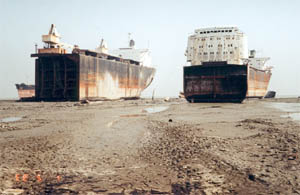 |
EPA (USA) has regulatory oversight with respect to the environmental aspects of domestic ship scrapping. Ship scrapping operations have become a concern for environmental regulators because they:
Generate large amounts of waste, including asbestos and PCBs, that potentially pose significant environmental impacts if managed poorly, and
Have demonstrated difficulties in complying with the environmental regulations that are applicable to their operations.
Your ship scrapping facility may be required to comply with various federal EPA laws and regulations. These include, but are not limited to:
Air pollution control regulations under the Clean Air Act (CAA) (40 CFR 50-99), including the National Emission Standards for Hazardous Air Pollutants (NESHAP)(40 CFR 61 Subpart M).
Water pollution control regulations under the Clean Water Act (CWA), including the National Pollutant Discharge Elimination System (NPDES) and storm water permit requirements (40 CFR 122); pretreatment requirements (40 CFR 403); and requirements under EPA's Discharge of Oil regulation (40 CFR 110) and the Oil Pollution Prevention regulation (40 CFR 112). As of December 1999, EPA had authorized 43 states and 1 territory to administer the NPDES permit.
STATE REGULATIONS
Safe Drinking Water Act (SDWA) regulations, including Underground Injection Control (UIC) requirements and public water supply (PWS) requirements (40 CFR 142 and 40 CFR 144-148).
Solid and hazardous waste management requirements under the Resource Conservation and Recovery Act (RCRA), including land disposal restriction (LDR) requirements. RCRA provides a comprehensive program to protect human health and the environment from the improper management of hazardous waste. RCRA Subtitle C regulations establish a "cradle-to-grave" system governing hazardous waste from the point of generation to disposal (40 CFR 261-270). Used oil is regulated under the Used Oil Management Standards (40 CFR 279). Although RCRA is a federal statute, many states implement the RCRA program. Currently, EPA has delegated its authority to implement various provisions of RCRA to 47 of the 50 states and two U.S. territories. Delegation has not been given to Alaska, Hawaii, or Iowa.
Requirements for PCBs under the Toxic Substances Control Act (TSCA) regulations (40 CFR 761).
Emergency Planning and Community Right-to-Know Act (EPCRA) regulations (40 CFR 355 and 370).
Comprehensive Environmental Response, Compensation, and Liability Act (CERCLA) regulations (40 CFR 302).
Occupational Safety and Health Administration (OSHA) OSHA's mission is to save lives, prevent injuries and protect the health of America's workers according to the rules and regulations of the Occupational Safety and Health Act (Act) of 1970.
Competent person.
Throughout many parts of the Shipyard Industry standards, tests and inspections are required to be performed by a marine chemist, a certified industrial hygienist, or some other "competent person." A competent person must be capable of recognizing and evaluating worker exposure to hazardous substances or to other unsafe conditions and specifying the necessary protection and precautions to take to ensure worker safety. Ship scrapping facilities must have a person who meets the "competent person" requirements (found in 29 CFR 1915.7) for performing testing in certain situations. The facility can also use a Marine Chemist to perform the same activities as a competent person. A Marine Chemist is a person who has a current Marine Chemist Certificate issued by the National Fire Protection Association.
State Safety and Health Programs.
States administering their own occupational safety and health program through plans approved by OSHA [Section 18(b)] must adopt standards and enforce requirements that are at least as effective as federal requirements. Of the states with approved plans, only five (California, Minnesota, Oregon, Vermont, and Washington) include some coverage for workers at ship scrapping facilities. Otherwise, in all other states, these workers are subject to the federal OSHA requirements.
Back to Content3. 1. Accidents
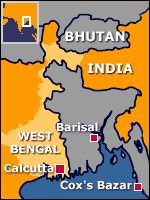 In Bangladesh there is any controlling authority or mechanism as above. On 9th May,2000 at shipbreaking Yard in Chittagong a huge explosion (Oil Tanker HV Dina) took place.A huge number of deaths occured. Local people reported that authority have carried seven to eight trucks full of death bodies. Officially the number of deaths is kept as low as possible. There are also many child labours aged between 10 and 15.
A worker earns Tk. 60 to Tk.100 as daily salary.(60TK. = 1 Us Dollar). Many sick laboures returned home without getting any payment. They do not know about hazardous poisons at shipyard.
In Bangladesh there is any controlling authority or mechanism as above. On 9th May,2000 at shipbreaking Yard in Chittagong a huge explosion (Oil Tanker HV Dina) took place.A huge number of deaths occured. Local people reported that authority have carried seven to eight trucks full of death bodies. Officially the number of deaths is kept as low as possible. There are also many child labours aged between 10 and 15.
A worker earns Tk. 60 to Tk.100 as daily salary.(60TK. = 1 Us Dollar). Many sick laboures returned home without getting any payment. They do not know about hazardous poisons at shipyard.
Bangladesh shipyard blast kills 11
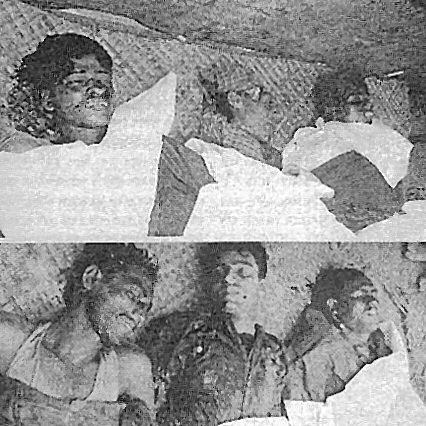
On May 3, 2000, BBC News describes:
At least 11 workers have died in an explosion on a disused oil tanker in the Bangladeshi port city of Chittagong. Police and fire fighters said some 40 workers were also badly injured. Police recovered some charred bodies from the big oil tanker that was in the country's largest ship-breaking yard along the Bay of Bengal.
Police say the explosion might have been caused by gas trapped inside a pipe in the ship. A wounded worker told BBC that he suddenly heard a big bang, saw black smoke and fell down. He was rescued later along with some others by the fire brigade and sent to hospital
Trapped
Police say that they are still searching for other people, who may have been trapped inside the vessel. Rescue officials at the scene were unable to say how many people were working in the ship when the accident took place.
Ship-breaking industry is a major source of steel for the country. It also employs thousand of workers and it has been alleged that most of them work without the necessary protection
An injured worker alleged that explosions often occur while breaking ships, but most them go unnoticed
Wednesday, 2 August, 2000, 07:36 GMT 08:36 UK, BBC World Service describes:
Two die from toxic gas in scrap ship
Chittagong July 13, 2006:Two labourers died after inhaling toxic gas at a ship breaking yard on the Sitakunda coast Wednesday evening.
According to the police, Jahangir, 45, and Abul Kalam, 50, fell unconscious while they were dismantling an oil tanker, MV Liano, at the H Steel Ship Breaking Yard in the evening.
They died soon after they had fallen unconscious inhaling the poisonous gas emitted from the oil tanker, the police added saying the fellow labourers had run away out of fear and no one had gone to rescue the two ill fated labourers.
The police recovered the bodies Thursday morning. The manager of H Steel, Md Haider, told New Age the two labourers had inhaled poisonous gas at the time of making holes into a tank with the help of gas cutter for releasing the stored water.
The water in the tank might carry poisonous gas that led to the death of the two labourers, he said adding the 7,500-tonne capacity oil tanker had carried soybean before it was brought for scrapping. According to sources in the ship breaking yard, the tanker carried toxic gas as it was not cleaned properly before scrapping (New Age, July 14, 2006).
Cylinder blast hurts 8 at Ctg ship breaking yard
.jpg) |
At least eight workers of a ship breaking yard were injured in a gas cylinder blast in Sitakunda upazila of Chittagong this morning. Identities of the victims could not be known immediately. A gas cylinder of Shital Entreprise ship breaking yard exploded around 8:00am, our correspondent reports quoting Saiful Islam, assistant superintendent of Chittagong police. Faulty cylinder might be the reason behind the blast, the ASP said (Daily Star, Sept 4, 2015).
Bangladesh becoming toxic dumping ground
A group of environmental organisations has called on the authorities in Bangladesh to improve conditions in the country's ship-breaking yards, which they say are the most dangerous in the world - both to workers and to the environment.
They say about 5,000 people have died in the yards in Bangladesh over the past 15 years. The groups also say that Bangladesh is fast becoming a dumping ground for old ships from Europe containing toxic materials
A spokesman for the Greenpeace organisation said Bangladeshi ship-breaking yards could face an international boycott unless they took steps to improve safety for workers and reduce damage to the environment.
Back to Content3. 2.Ship Wrecking in Bangladesh
Unregulated ship-breaking industryRecipe for human and environmental disaster
|
1.Catastrophe at ship-breaking yard, Chittagong, Bangladesh, September 18, 2003
2. Chittagong scrap ship gas leak wreaks havoc, June 9, 2004
3. 3 killed, 5 hurt in blast at Sitakunda scrapyard Death tolls may rise ,November 10, 2004 Back to Content
3. 3.South Asia's ship graveyard
South Asia's ship-breaking yards are expecting more business following the recent sinking of the single hulled tanker, the Prestige, off the Spanish coast. The outcry which followed the huge oil spill prompted organisations such as the United Nations and European Union to call for a ban on single hulled tankers to be imposed as soon as possible
They argue that the vessels are not strong enough to carry large amounts of toxic cargo in environmentally sensitive areas. That means that before too long there will be no option for these ageing vessels other than to turn them into scrap metal.
Over 90% of the world's annual crop of around 700 condemned ships now end their lives on the beaches of India, Pakistan and Bangladesh. Thousands of labourers are employed to take the vessels apart by hand for scrap metal. But many of them are working in dangerous conditions and environmental groups claim that the whole process causes too much pollution.
Dirty work
In the ship-breakers yard on Potenga beach in the southern Bangladesh port of Chittagong, nearly 20 vessels stand side-by-side in various stages of dissection, yawning to expose their cavernous holds, spilling pollution onto the tidal flats. The workers are exposed to numerous risks: falls, fires, explosions and contact with various kinds of toxic chemicals
"We know that its a dirty business," explains Mohamed Mohsin, managing director of one of Chittagong's largest ship-breaking companies, "but its work that has to be done, and no-one else in the world seems able to do it as competitively as us. "All too often the ships which my workers break contain toxic substances which harm my men," he told the BBC. "But if the ships aren't broken we don't get paid, so we have to do it."
Around 1500 workers in Mr Mohsin's Chittagong yard earn roughly $2 a day to tear apart the steel carcasses of condemned vessels. Most workers do not wear protective clothing. Many do not even possess gloves to stop their hands being cut by the huge lengths of sheet metal which are sent to scrap yards. Like other ship-breaking yards in South Asia, what little technology that exists is often rudimentary and unsafe.
There are reports of cable winches snapping and unexpected explosions. Everything in the Chittagong yards is done by hard labour and sweat
Low profits
The Bangladesh ship-breakers may be one of the lowest paid labour forces in the world, but the men say that they are willing to brave the dangerous conditions. "It's tough here," says 15-year-old Abdul Fazim. "We are not allowed to join a union and the hours are long. "But it provides us with an income when otherwise we would all probably be without work." Most shipyards operate on a narrow profit margin.
The ship's steel plating is made into low grade iron reinforcing rods which are used by Bangladesh's building trade. But despite international concerns about conditions in South Asia's shipyards, owners like Mohamed Moshin say that they are so cash-strapped that international finance must be provided to improve safety and stop pollution. "We simply cannot afford to improve safety and stop pollution until we receive more investment, and that has to come from richer Western countries," he says. And it is money that is at the root of the problem
The livelihoods of thousands of people depends on ship-breaking, a job too dirty and too costly for the developed world. It may be work that is underpaid and dangerous, but it remains the most cost-efficient way of disposing of the world's growing number of unwanted ships.
(Source: BBC, 10 December, 2002)
We appeal to the people of industrial countries to stop export of ship for disposal to the developing countries.
Powerful syndicate rules ship-breaking
Death toll mounts as scrapping goes on without detoxification
The entire ship-breaking sector of Sitakunda in Chittagong, which directly and indirectly involves over a quarter of a million people, is under the grip of a powerful syndicate that blatantly defies environmental, labour and maritime laws. The syndicate of owners of 20 yard, known as 'the 13 players' is so powerful that they enjoy 'undeclared immunity' from official actions in cases of negligent homicide, flouting labour and maritime laws and polluting the land and sea.
The ship-breaking sector in Sitakunda, that meets 80 per cent of the country's demand for steel, earning the exchequer annual revenue of over Tk 800 crore, has not been recognised by the government as an industry. The government does not want to commit itself to a sector riddled with so many anomalies, according to an official source in Chittagong.
There is a strict unofficial embargo on information regarding accidents and human casualties in the ship breaking yards. But it is estimated that over the last three decades, over 1,000 workers have died and over 10,000 others were injured and suffered partial or permanent disabilities in accidents in the yards.
The death toll rises every week due to increasingly hazardous ships arriving to be scrapped without going through proper detoxification, as required by the international maritime laws. Young Power in Social Action (YPSA), the only NGO working for the rights of the workers in the ship-breaking yards, in a survey revealed that on an average, one worker dies every week and another is injured every day at the scrap yards.
According to official sources, almost all the hazardous vessels, particularly oil tankers arriving at Chittagong port, contain highly hazardous substances and hidden gas chambers. It is very common to find the dying vessels laden with asbestos, oil sludge, lead, cadmium, arsenic, biocides and even radioactive substances.
It is the duty of the Department of Explosives inspectors to examine each ship and issue a certificate called 'Safe for Man Entry'. But sources in Chittagong said the owners have their own way of obtaining these certificates through 'package deals'.
Shamsul Alam, inspector of explosives Chittagong circle, denied allegations of package deals and said there was no way of overlooking deadly gases. When asked how two workers, Foreman Jahangir and Cutter Kalam, were asphyxiated to death on July 12 after entering a compartment of the MT Liano, certified and beached for scrapping at the yard of Intraport Marine Limited, the inspector showed the certificate, which clearly said that the particular compartment where the two workers died was 'not safe for heat work'. The certificate was only valid until the ship was beached.
"We issued the beaching permission but it was the responsibility of the owners to have the vessel inspected again by us. They simply ignored our certificate and let the workers inside," said Shamsul Alam. Zafar Alam, president of the Bangladesh Ship Breakers Association, blamed the government for the 'undesirable situation' in the ship-scrapping sector and said they have to operate under extreme odds.
"We have now and again asked the government to help us build infrastructure but nothing has happened, we have no recognition or guarantee of labour, even we had to buy the land for the access roads into our yards, we enjoy no tax-holidays or any other support from the state," Zafar Alam said.
Alam alleged the International Labour Organisation and the Ministry of Labour and Employment were recently given Tk 8 crore by UNDP to train labourers and to create awareness among them. "We wanted them to spend the money on training, development of sanitation, building a hospital, buying ambulances and installation of tube-wells but they never bothered to listen to us. Instead, they spent more than Tk 4 crore on consultancy, foreign trips, well-furnished offices, vehicles and conferences in expensive hotels," Alam added.
According to sources close to the ship-scrapping trade, the 'industry' has grown 'without any policy or monitoring' simply as per the wishes of the owners. Annually, over 150 ocean-going vessels, weighing between 10,000 to 500,000 tons are brought to Chittagong for scrapping.
In addition to a vast array of other items, up to 1.8 million tons of steel are retrieved from these ships annually, providing instant raw materials for re-rolling industries, small ship building and for the booming construction sector. In the most painstaking process of dismantling a huge ship piece by piece, around 35,000 mostly unskilled labourers toil day and night with bare hands in the most rudimentary way, where safety measures for them are virtually non-existent. The most blatant defiance of the law in the 20 ship-breaking yards over an area of 10 kilometres along the Bay of Bengal, takes place with these labourers. None of the yards maintain any registration of labour and owners decline to accept liabilities over their injuries or deaths.
Labourers from Barisal, Bogra, Rangpur, Magura, Jamalpur, Gaibandha and other impoverished districts of the country work in the yards, sharing crammed accommodations in the neighbourhood. In most cases, they have no access to potable water, sanitations or medical facilities. Interestingly, the yard owners never have any formal contracts with the labourers. Any attempt to form a Trade Union is dealt with harshly. For instance, in 1998 some workers went on a strike after forming a Trade Union under the banner of Bangladesh Samajtantrik Dal. But the owners and middlemen in the area ruthlessly quelled the movement by beating up the leaders and filing false cases against them. According to sources, the owners are happy to readily find influential local middlemen known as contractors controlling the labour markets.
"The yard manager calls up one of the contractors and tells him what has to be done. The contractor, in turn, fixes a price with the manager and gets the required number of labourers to do the job for about Tk 10 an hour," said a clerk at a yard, requesting anonymity. He added that in the whole process of labour recruitment there are no liabilities whatsoever on the part of the owners. According to insiders, when a fatal accident occurs, the first job for the officials is to take all measures to suppress the information. The local police station files an unnatural death (UD) case, as in the case of other accidental deaths or suicides. The thana nirbahi officer (TNO), who also enjoys magistracy power by right of his position, readily issues a certificate exempting the body from post mortem. The body is then sent to the family somewhere in the north of the country on a rooftop of a bus accompanied by one or two fellow labourers living in the same region. The family receives a meagre handout of cash ranging between Tk 5,000 and Tk 10,000 and the body of their loved one.
The yards remain totally off limits to journalists or NGO workers and thus information on accidents inside the compounds is never made available to the outside world. For instance, this correspondent was denied entrance to six ship-scrapping yards before he was allowed in by one of the yards.
According to a local journalist, news of a fatal accident that involves one or two workers' death hardly ever reaches the outside world. The owners of the ship scrapping yards are in trouble when news of accidents is leaked to the press. Public pressure compels the owner to compensate the victims properly. The president of the Bangladesh Ship Breakers Association claimed ship breakers always paid the victim's family more than anyone else did.
"The labour law requires the owners to pay the victim's family Tk 30,000 but we pay Tk 100,000," said the president. Zhantu Kumar Mazumder, field organiser of the YPSA, said the most difficult part of his work is to get information from the yards.
Faced with such difficult situation YPSA has formed three watch forums in Sitakunda area. In the three forums local journalists, students and selected members of the society have been incorporated separately. Some ship-breaking workers were also included in the forums. "We are already benefiting from the forums, the members are actively helping us in getting information on accidents and also building pressure on the employers for medical facilities and compensation," Zhantu said.
But the members of the forums and journalists in Chittagong were baffled recently when a worker at the Harun Steel reported to the forum he had witnessed two charred bodies inside a ship around midnight on July 6. Since July 6, members of the watch forums, journalists and YPSA officials frantically tried to find out the identities of the two ill-fated workers. It was not until July 15 that a local Bangla daily, Dainik Azadi, reported about the alleged deaths of the two men on July 6. The two workers were identified as Mohammad Malek, 32, and Mohammad Mizan, 28, but none could say where the bodies were sent (The Daily Star, July 29, 2006).Unchecked ship-breaking industry
When will the authority wake up to its hazard?Nobody in the relevant quarter of the administration seems to internalise the long-term effect of allowing the ship-breaking industry in Bangladesh to operate unregulated. It has failed to address the safety of the workers causing a thousand deaths and leaving ten times that number maimed. It demonstrates the sordid condition of this industry, although the government would not like to grant it the status of one.
Back to Content
In spite of the concerns raised by various quarters over the last several years, the operation of the ship-breaking yards continue in the same vein. And so does the loss of lives of the poor workers who, without the benefit of any government safety net, are held like bonded labour. There are no specific laws to ensure the minimum safety of the labourers who work under very hazardous environment, and whatever the laws that exist are disregarded by the unholy nexus between the government agencies and the syndicate that control this industry. It speaks volumes about the government indifference.
While not making light of the contribution of the industry in providing jobs over the past thirty years, more than thirty thousand of them, and providing for the subsistence of a quarter of a million and raw material for our steel mills, it cannot be a provider as well as a destroyer at the same time.
A particular reason that our shipbuilding industry has expanded so rapidly is the somewhat more stringent regulations in our neighbouring countries in this regard and the laxity in following whatever regulations are in place, in Bangladesh. Regrettably, it is because of the lack of proper regulation, poor working condition and lax oversight, that there have been repeated accidents, impacting both human life and the environment.
We feel that the trinity that is linked with this industry, the ship breakers, the shipbuilders and the government should be responsible to ensure the safety and security of the workers and keep the environmental safety in focus. We suggest that the government address the issue without delay by first and foremost checking the source of the hazard, the contaminated ships-for-scrap that are brought in unrestrained, then putting together adequate regulations to bring the industry under stringent control, and lastly, breaking the hold of the syndicate on the industry (Editorial, The Daily Star, July 30, 2006) .
3. 4. US under fire for old navy ships export plans
Environmental groups accused the United States on Wednesday of planning to resume the export of obsolete, toxic naval vessels to developing countries. The accusation came as 152 state parties to the Basle Convention on the Transboundary Movement of Hazardous Wastes held talks in Geneva, due to wrap up on Friday.
The meeting's agenda includes expanding existing guidelines to cover the dismantling of ships, which can be built using asbestos or other dangerous materials. The United States is not a state party to the 1989 convention. Environmental groups, Greenpeace International, the Basle Action Network and Toxics Link of India, told reporters that the US administration of President George W. Bush planned to launch a pilot project next year.
The project could involve the export of up to four vessels from the national fleet in a policy reversal from the former administration of Bill Clinton, they said. Under Clinton, the US introduced a moratorium in 1994 against toxic waste ship dumping, they said.
The new US law foresees the US navy also offering technology to interested shipyards for ship dismantlement and recycling, they said.
Jim Puckett of Basle Action Network told reporters they believed there were about 300 obsolete ships of the US National Defense Reserve Fleet left to rust in various sites.
"We want to make sure that countries such as India, China very strongly say 'no', we are not going to take these wastes from a non-party," he told reporters.
Marietta Harjono, of Greenpeace, said they were not trying to stop developing countries receiving clean raw materials for recycling, such as steel, from vessels.
"However, it is unacceptable that poor countries become the toxic waste handlers for the rich," she said in a statement.
Source: The Daily Star, 13. 12. 02
1. Bangladesh paying high price as dumping ground for toxic wastes
2. Ships polluting Chittagong port area
The World's Dumping Ground?
Less-affluent nations may be bearing the brunt as developed nations including the United States crack down on mercury pollution. India's Centre for Science and Environment reports that India--already known to have some of the worst rural and urban soil, air, and water pollution in the world--is rapidly becoming the site of choice for those looking to offload large stores of mercury. India is among the world's largest importers of substances for recycling purposes, and many of those imports, such as ships to be broken down, are contributing to a mercury pollution crisis. Imports of mercury/mercury compounds have increased almost sixfold over the past seven years.
Methylmercury, the most commonly found form of mercury in the environment, can permanently damage the central nervous system, lungs, and kidneys, and can cause fetal brain damage with no symptoms in the expecting mother (Environmental Health Perspectives, Volume 11,March 2, 2004)No policy yet on ship breaking
The importance of the potential ship breaking sector is declining fast for lack of policy to make it an industry. Besides, absence of specific rules has created a scope for violation of human rights and massive environment pollution in the coastal area to benefit only a vested syndicate, sources said. Experts emphasised a collective effort by the government and non-government organisations as well as local pressure groups to formulate a policy to make the ship breaking an industry. Some 20 ship breaking yards developed along some 8-km stretch of the coastal area from Sitakunda to Bhatiary, where some 70 companies were operative in the sector in the eighties, sources said.
Young Power in Social Action (YPSA), a social development organisation based in the coastal area of Sitakunda, in its survey revealed that ship scrapping trade was immensely contributing to the country's economy, earning annual revenue of over Tk 900 crore. It met around 90 per cent of the demand for construction materials, including rod, steel and iron and created jobs for around 2.50 lakh people in the eighties, the survey report said. The trade also helped some 20 forward and backward linkage industries to develop, centering it, the report added. But the sector mysteriously remained as an untouched and unknown one, it said. The number of operational companies in the ship breaking yards comes down to some 19 from 70. It can now hardly meet 55 per cent of the total demand of construction materials. Appointment of labourers with poor wages and vulnerable labour conditions featured in the ship breaking yards where access of general public was prohibited, YPSA sources said.
Poverty stricken people of northern districts, who comprised 75.85 per cent of the workforce, were deprived of labour facilities under an undeclared rule "no work no pay" in the yards, they said. YPSA officials said due to lack of specific rules, human rights is seriously violated in ship breaking yards when accidents cause huge loss of life frequently. Economist Professor Dr Moinul Islam of Chittagong University (CU) said contribution of ship breaking trade could be more than what was estimated in terms of annual revenue earning. But, non-recognition and criminal activities by a vested quarter are ruining this sector, he added. Md. Saiful Karim of Bangladesh Environmental Lawyers Association (BELA) said the absence of specific rules created scope for bringing ships in a hazardous state, obtaining certificates without survey and dismantling without making them gas or sludge-free properly. The Convention on the Control of Trans-boundary Movement of Hazardous Wastes and their Disposal, 1989 is also not being followed, he added.
Meanwhile, the participants at a roundtable titled, "Advocacy for a Public Policy to Ensure Human Rights in Ship Breaking Industry" on Wednesday emphasised a policy to free the sector from the clutches of vested syndicates. Young Power in Social Action (YPSA) and the Bengali daily Bhorer Kagoj organised the roundtable in collaboration with Manusher Jonno at the Chittagong Stock Exchange conference hall. The speakers said the sector has all the reasons to be recognised as an industry and run under the ministry of industry. But under the clutches of a vested syndicate it can not get the recognition of an industry, they added (Abdullah -al Mahmud, Daily Star, July 27, 2005).
Between the devil and the deep blue sea
Ship-breaking industry Crying for priority attention
Bangladesh has the second largest ship-breaking industry in the region after India. It employs over 20 thousand workers including child labour. The industry is run on private entrepreneurship and has a total investment of taka three thousand crore, yielding an annual revenue earning of about nine crore to the government exchequer. Of the country's total requirement of 24 lakh tonnes of iron 65 percent comes from this industry. The re-rolling mills in the country are offshoots of this industry
Despite its high potential, the industry is beset with innumerable problems that threaten its healthy development. For long 30 years ship-breaking has gone on without any firmly laid out policy framework. The employees have to work under insecure and hazardous conditions. The media on a number of occasions had reported of toxic material laden ships being brought into the country by private buyers for breaking. This has posed a threat to the people in and around the industrial belt that covers a 30-mile area of our sea coast. It has been pointed out that a dismal scenario prevails in this industry due to a lack of proper co-ordination between the stakeholders and the government. Just consider this, as many as seven government agencies are involved in the sector; yet, no ministry takes the responsibility of looking after it.
We, however, strongly feel that despite the multifarious problems the ship-breaking industry is facing today there is a considerable potential for its healthy growth. A national policy should, therefore, be formulated urgently aimed at smooth running of the industry through creating a healthy work environment and ensuring safety of the workers and people in the surrounding areas. Import of ships for breaking that are free from toxic or hazardous chemicals must be ensured as well. The government and the owners of the industry have to work jointly to lift the industry out of the morass it has got into (Editoial, Daily Star, September 15, 2006).The toxic waste dumped in Abidjan is more woe for a country ravaged by war
ABIDJAN, Ivory Coast September 11, 2006 (ENS) - The toxic waste tragedy in the Ivory Coast has now claimed six lives and injured some 9,000, health officials said Monday. Environmentalists called the events in the Ivorian city of Abidjan a sad reminder that the world is failing to implement and enforce the international law created to protect people from the global trade of hazardous materials.
Some 400 tons of the waste was then dumped in at least eight sites in the densely populated city. Fumes from the oily waste, in particular hydrogen sulfide, have killed and sickened residents of the West African nation's largest city.
A total of 538 tons of liquid waste was unloaded in August from a Panamanian-registered ship, according the port authorities. Environmental pressure group Greenpeace said the sludge was made up of 400 tons of oil refining waste, rich in organic matter and poisonous elements. The latter include hydrogen sulphide and organochloride, which cause nausea, rashes, fainting, diarrhoea and headaches.
The 1989 international hazardous waste treaty, known as the Basel Convention, was designed to curb the prevent the developed world from transferring hazardous wastes to the world's poorer countries. It was forged in the wake of several international scandals involving the dumping of toxic wastes in poor nations by industrialized countries.
Back to Content
But the accord does not prohibit waste exports to any location except Antarctica and several parties to the convention were quickly convinced it did not go far enough. In 1995, an amendment to the treaty was established to prohibit waste exports from developed nations to the rest of the world. It is now time for every nation to enforce those rules and end this environmental injustice once and for all.
The Basel Action Network said the situation in the Ivory Coast is only one example that this trend is already on the rise. This month another ship load of oily residue waste was exported illegally to the Philippines, according to the watchdog group, and seaports in Asia and Africa are daily being inundated with container loads of hazardous electronic waste as old computers, monitors, phones, and other cast-off electronic devices from rich developed countries.
This electronic waste is simply dumped or sent to primitive recycling operations that endanger workers and the local environment. In addition, old ships are exported to poorly regulated, dirty recycling operations India, Pakistan and Bangladesh.
3. 5. Ship breaking yard pollution threatens extinction of hilsa
Speakers at a roundtable yesterday said country's national fish Hilsa may go extinct in five years if ship breaking activities continue to degrade the environment. They said 10 different species of seawater fishes have become extinct and 21 have become rare in the country due to the environmental damages caused by ship breaking yards and warned that if these activities go on more species would join the list, including the national fish. They said these at a roundtable titled 'Ship breaking: Environment destroying and slavery activity' organised by Save Environment Movement (Paribesh Bachao Andolan) at the National Press Club in the city.
Speakers at the roundtable argued that activities that are doing more harm than good to the society and environment should not be dubbed and promoted as an industry. "How can you call something an industry where people are breaking ships on sea beaches without following any regulations or procedures? If some people gather a pile of cots on the beach and start breaking them would you call it a cot breaking industry?" said Bangladesh Environment Lawyers' Association (BELA) Executive Director Syeda Rizwana Hasan.
Ship breakers argue there are more than 2.5 lakh workers associated in the so-called industry and would become jobless if the ship breaking activities are halted, she said, but the labour ministry has said only around 18000 workers are associated with ship breaking activities, out of which only 3500 are permanent full time workers. "They [ship breaking company owners] are exploiting their workers. And exploitation does not equal employment," she said.
Also contrary to popular belief that ship breaking industry provides 80 percent of the required steel in the country, the ship breaking company owners themselves have said they provide around 25 percent of the total steel, which comprises around 6 to 8 lakh metric tonnes a year, added Syeda Rizwana Hasan. Chief guest to the programme noted cultural personality Syed Hasan Imam said industry is something that creates and develops, not something that destroys.
While there must be ways to conduct ship-breaking activities in systematic and environmentally feasible ways, the ship breakers would not adopt them as that might lead to less profits, he said. He called on the organisers to include workers of the ship-breaking sector in the campaign against the industry, as they are the one who are being exploited and are some of the biggest stakeholders in the issue.
Other discussants said the ship-breaking sector is not subject to any environmental laws or health and safety regulations for workers. They operate in a highly polluted coastal belt and the number of accidents and casualties at the yard is believed to be the highest in the region. They called on the authorities to ensure that the ships are cleaned and uncontaminated before they are brought in to the country for breaking and the breaking activities should be done in dry dockyards following all safety rules and regulations for the workers as well as the environment. A documentary on ship breaking activities directed by Yasmin Kabir was also shown at the programme.
Dean of the Faculty of Biological Sciences of Dhaka University (DU) Prof Dr Abul Bashar, Unnayandhara Trust Secretary and Save Environment Movement Member Aminur Rasul and its Chairmen Abu Naser Khan also spoke. (Source: The Daily Star, April 03, 2010)3. 6. New scrap shipyards near Sundarbans
The Sitakunda ship breaking yards have heavily polluted the land and air, as well as the bay, where fish species have been wiped out. Hundreds of people working in the yards, almost totally unprotected owing to an absence of safety gear, are exposed to toxins and fatal accidents.
Although the Sitakunda ship breaking yards in Chittagong continue to wreak havoc on the environment, the government nonetheless plans to allow new yards on the bank of the Baleshwar river in Patharghata upazila of Barguna district. A team of top officials from different departments, led by the additional secretary of the industries ministry, recently visited the area and initially earmarked 52 acres of land for setting up new ship breaking yards --- an industry categorised red by the Department of Environment, implying its highly hazardous nature.
"It is the prime minister's wish to set up the industry there and we have started the groundwork," said ABM Khorshed, additional secretary of the Ministry of Industries. "We have found the area suitable for ship breaking, and we are preparing a report which will be sent to the Prime Minister's Office within a week or two," he added. Khorshed said the team would need to collect local maps and check the depth of the Baleshwar river at its confluence with the Bay of Bengal. The five-member team that visited the area included the chief engineer of the Directorate of Shipping, managing director of Chittagong Dry Dock, director, technical, of Steel & Engineering Corporation, and a representative of Bangladesh Ship Breakers Association.
Ship breaking yards in Sitakunda continue to operate in unregulated fashion, and in the most rudimentary ways. Every end-of-life ship is 25 to 30 years old, and contains highly hazardous substances such as asbestos, PCB, PVC and lubricants.
Rizwana Hasan of the Bangladesh Environmental Lawyers Association has come down hard on the plan. As she says, "When the government has failed to regulate the existing ship breaking industries in Sitakunda, the expansion of this industry in another ecologically sensitive coastal area by the Sundarbans is totally unacceptable." "Does the government want to pollute the coastal eco-system and destroy the coastal forests? Has it not learnt from the polluted beaches, disappearing mangroves and heavily contaminated land and water of Sitakunda?" she asked.
Ronald Halder, a bird specialist and nature conservationist, said the Baleshwar river is the primary fishing zone for thousands of people in the area, and the largest in the country, and jeopardising the river will be a disaster for millions. "Moreover, the Sundarbans is near. Such a hazardous industry will threaten the entire eco-system there," he added.
Bangladesh, India, Pakistan and China are the top scrap ship importers of the world. Due to a lack of regulations, Bangladesh has become an international scrap ship dumping ground. If scrap ships continue to arrive at the current rate, the country within the next 20 years will be left with 79,000 tons of asbestos and 2,70,000 tons of polychlorinated bi-phenyl, both of which are non-recyclable hazardous wastes ( Daily Star, 10.10.11). Back to Content
4. POLLUTION
To a kilogram raw leather requires about 35 litres of water, 250 types of chemicals and toxic heavy metals like chromium, cadmium, arsenic and zinc etc. Some preliminary investigations on ground water in Hazaribagh indicate that it is highly polluted. Once the ground water is polluted, it is virtually impossible to purify it even in the highly technically advanced industrial countries. Rivers of Dhaka, Naraynganj, Chittagong, Khulna etc. are the receivers of untreated effluents. A rapid increase in motorized boats, disposal of hazardous wastes from boats and ships, and dumping of scrap from shipbreaking yards are other sources of water pollution. Contamination of water and land from hydrocarbon discharge from the shipbreaking yards has revealed to be particularly serious in the lower reaches of the Karnaphuli river, and in the Bay of Bengal. The huge marine deltas of Indus and Ganges-Brahmaputra (see also Chapter: Ecological Disastor in the Ganges-Brahmaputr-Meghna Delta) occupy three per cent of world oceans but receive nine percent of global runoff (Hinrichsen, 1990).
Untreated effluent from the leather indusrty (L), (R) PCBs from electrical transformers, sold as oil in the market of Dhaka and rural areas as "Maita Tel"The mangrove forest of Sunderbans (India and Bangladesh) is the largest mangrove forest of the world and covers more than 6,000 square kilometers in the tidal plain region. Defoliation and death of mangrove trees is reported to have been caused by oil spills, ballast water, bilge waters, shipbreaking operations and disposal of untreated chemicals, industrial and municipal wastes from Calcutta, Chittagong and Khulna industrial areas. Bangladesh obtains table salt mainly from drying sea-water in the tidal flat regions. Nobody knows the long term fate of millions of people with the day-to-day increase in the deposit of heavy metals and other pollutants in the Bay of Bengal. Dredging sediments are disposed in nearby river beds without monitoring contamination levels. About 1-2 million cubic meters of dredge spoil are dumped on land each year to maintain or develope inland water routes, ports and flood control and drainage projects. Where the dredging is near the effluent discharge from industrial areas the spoil may contaminate ground water and agricultural products.
Previously villages used to export to cities environmentally sustainable items. Now cities industries have replaced village cottage industries through damaging ecosystem all over the countries. Jobless handcrafts left no alternative than to took shelters in the dirty slums of the cities for survival.
Dhaka Courier(1997) describes :
We wonder whether Dhaka is the dirtiest, most mismanaged and polluted capital city of the world. It appears that there is no law and order, no discipline and decency in the public roads.. Dhaka is a city of melancholy contrast wherein a few people live and work in air-conditioned houses and offices, travel by expensive cars of latest model, hold meetings and seminars and have feast and festivals at luxurious hotels and majority of the people live in slums and pass their lives in absolutely poverty deprived of even basic civic amenities like water supply, sanitation and electricity...The Department of Environment (DoE) says a circular on May 4, 2002 outlines that a police officer can act as an inspector to arrest offenders and file cases for environmental offences related to polythene although the conservation law does not stipulate any role of the police.Lost in the labyrinth of law Polythene makes a comeback because of confusing cop role, weak monitoring and poor infrastructure
Additives used in high-impact plastics (PBDEs), foams, and textiles - A health concern
A class of compounds known as polybrominated diphenyl ethers(PBDEs)-flame-retardant additives used in high-impact plastics, foams, and textiles-has recently sparked concerns among environmental health scientists. PBDEs are part of a superfamily of related toxic compounds known as persistent organic pollutants (POPs).
Limited evidence suggests they may be associated with health effects including cancer, thyroid toxicity, and neurodevelopmental problems.Hooper, a research scientist with the Hazardous Materials Laboratory in the California Environmental Protection Agency, and Thomas McDonald, a staff toxicologist in the agency's Office of Environmental Health Hazard Assessment, discuss PBDEs and explore what prove to be many parallels between some PBDEs and other members of the POPs family [EHP 108:387-392].
McDonald suggest that the toxicity of PBDEs is likely to be most similar to that of PCBs, causing similar effects. , PBDEs are persistent enough to bioaccumulate in fatty tissues as they make their way up the food chain to humans, where they can be passed directly to nursing infants via breast milk.
1500-2000 textile dyeing and washing units
It is reported that there are around 1500-2000 textile dyeing and washing units, and a few hundred are in the pipeline. All of these industries are extracting ground water and releasing it to the surface water directly, without treatment. Only a few of them have effluent treatment plants (ETP), but they are operating partially or are out of order. As a result, surface water bodies are being contaminated day by day, and the ground water table is being depleted.
There are around 12-13 million people living in Dhaka city. The quantity of potable water supplied is around 47-48 million gallons per day, which covers only 70-75 percent of the population. Only 40 percent of the above is being supplied from surface water treatment plants, and the rest from different deep bore-wells located in different parts of the city. The entire population of the country (around 145 million), along with the capital city dwellers not covered by a reliable potable water supply network, use ground water as the only source of potable water.
There have been more or less 600-700 textile dyeing and washing industries set up around Dhaka, at Narayanganj, Tejgaon, Savar, Tongi and Gazipur area within the last few years, and some more are in pipeline. They are extracting approximately 25-30 million gallons of water everyday in and around Dhaka city; this is almost the same quantity being supplied to the city. The GDP contribution from the textile sector rose up to 70 percent in 2005-2006. Being a poverty driven country, we should consider both the prosperity of the textile sector as well as the water source and water quality of the country.
Scarcity of water is a common phenomenon in Bangladesh. In 2005-2006, there were several demonstrations and protests due to scarcity of potable water. The continuous drawing of ground water is responsible for the depletion. The situation is deteriorating day by day due to the increase in textile and other water consuming industries, and also because of population growth. Those industries are discharging their untreated waste water into the natural streams. So, the surface water body is now vulnerable, aquatic life is endangered and users are facing serious health problems due to contamination by hazardous chemicals from those industries. I tried many times to draw the attention of the regulating authority to impose a limitation on ground water use by any commercial user. At this moment we don't have any regulation on ground water use. Ground water is a natural resource. All natural resources of the country are owned by state and the people have the right to use them, but in a limited manner. Every country has it's own regulations on ground water, except Bangladesh.
It is not an unlimited resource, and continuous lowering of groundwater table day by day could cause geological imbalance and meteorological change in the country. All commercial users of ground water should be brought under metering control system, where payment would be exempted for minimum use. To do this we could introduce a separate act, say "Ground Water Control Act" as soon possible. The present caretaker government has recently taken action to bring all textile mills under legislation, and asked them to install ETP within six months. It is a historic step by the present govt., indeed, like their other initiatives, but it should be better planned. We did a study on this sector in 2004-2005, with the help of a Danish company, to identify the problems in wastewater treatment. We found a few major problems which might hinder the initiatives of the entrepreneurs to install ETP. They are: lack of space, high cost involved, long time taken for installation, lower technical sophistication, high operation cost, poor after-sales service, technically deficient operators etc.
Setting up an ETP is a multidisciplinary, costly and time consuming project, where as most of the service providers in our country are not qualified up to the required level. Most of them are working as local agents of the parent supplier company, without having sufficient infrastructure or experience. Local entrepreneurship for manufacturing ETP has not yet been developed in the country. So, if all the textile dyeing and washing plants decide to install ETP, a supplier gap will be created, which will help some middlemen. Ultimately, the clients will be cheated, and substantial amount of foreign currency will be drained out of the country through the import of poor quality ETPs. On the other hand, the textile plant owners are not technically sound enough to negotiate an ETP order with the suppliers. To overcome this, the present government should have an integrated plan with a practically viable timeframe, and form a technical committee consisting of relevant experts in ETP who will suggest a sustainable wastewater treatment option, since installing ETP will not be the only solution to water pollution control, it will also relate to ground water use.
It is evident that within 3-4 years all textile, and other major water consuming industries would need to recycle their wastewater for primary use, since they won't get water from the bore well. So they should install an ETP which could be modified easily for the primary use of water in future. That is why a cost effective, small, technically sophisticated ETP, with a provision for future recycling options, should be the only solution for the textile and other water polluting industries.
As I mentioned earlier, there are more than 1500-1600 textile dyeing and washing units in operation without ETP. The consumption of water in textile dyeing and washing process is too high, and an appropriate, cost effective recycling method could be an option for reducing the pollution level and water drawing rate. Arsenic is another threat to human life, which arises due to the use of ground water nowadays.
To get rid of these problems, introduction of easy to use, cost effective and small surface water treatment plants could be another option for reducing the use of ground water as the main source of potable water. As a matter of fact, Bangladesh is a tropical monsoon country, and there is abundant surface water throughout the country during the monsoon, when we could introduce rain water harvesting as well. On the other hand, surface water treatment is easy, and would also be a source of water for the textile and other water polluting industries. The government has adopted an environment conservation act, and a court to punish the polluters, but this is not sufficient to protect the surface and ground water of the country. Separate acts, like "ground water protection act" and "surface water protection act" should be introduced as soon as possible for the efficient control of those.
In the United Kingdom, all natural water and ground water is called "controlled water," and it is illegal to pump out, or mix anything to, controlled water without having extraction permission or discharge consent. They control it under "Control Water Directives" which is being followed by all EU countries. In addition to that, England has separate "Surface Water Act", "Ground Water Act," "Dangerous Substances Act," "Hazardous Material Handling and Storage Act" which control their surface and ground water. So, to protect the natural environment and endangered aquatic life, to condition lowering of ground water table, and to ensure a reliable potable water supply to the nation, finding an appropriate, sustainable and cost effective solution is vital for Bangladesh (N. Khan, Daily Star, May 12, 2007).Toxic textile waste polluting Louhajang river in Tangail
Toxic industrial waste pollutes water in Mymensingh
Deadly pollution of rivers endangers lives of thousands
1. Polythene banned on January 1, 2002 made a full comeback: Factories are paying the police to operate and market the products
Back to Content
2.Day in, day out with garbage
3. Non-existent affluent treatment plants
4. 1 Agriculture
Inefficient farming practices are helping to drive deforestation, pollution, ocean degradation and species loss, and constitute the most serious environmental threat in the world today.
According to World Agriculture and the Environment, a global survey by Dr. Jason Clay, head of the Center for Conservation Innovation at World Wildlife Fund (WWF), agriculture contributes to serious environmental, social and economic problems, particularly in developing countries. Clay offers detailed analysis of the issues and practices of some of the world's biggest crops, from coffee and orange juice to cocoa and tobacco. He concludes that agriculture -- the world's largest industry, employing some 1.3 billion people and producing about $1.3 trillion worth of goods annually -- uses more than half of the planet’s habitable area, including land that should not be farmed, and destroys some 100,000 square miles of forests and other critical species habitat annually.
Agriculture wastes 60 per cent, or 1,500 trillion liters, of the 2.5 trillion liters of water that it uses each year. Water resources are already being used close to or beyond their limit, particularly in the Americas, North Africa, the Arabian Peninsula, China, and India. The impacts of global warming are likely to further disrupt water supplies. Agriculture has had a larger environmental impact than any other human activity and today it threatens the very systems we need to meet our food and fiber needs. Government subsidies encourage intensive monoculture farming practices that use chemicals and heavy machinery that harm the environment.Aquaculture, the fastest growing food production system in the world, will repeat many of the same mistakes as agriculture. ost species are over-fished, the trend of concern in aquaculture is the growth of open ocean systems producing carnivorous fish. These fish require three to five pounds of wild fish to produce one pound of farmed fish.
Destruction of sustainable ecosystem for the finest kitchen of the Industrial Countries
Palm oil as the agricultural commodity with the biggest threat to the widest range of endangered large mammals. Asian elephant, Sumatran rhinoceros, orangutan, and tiger populations are all declining because palm oil plantations are destroying their habitats. Drastic fall in Chalan Beel fish production after the introduction of IRRI cultivation
Fish production in Chalan Beel has fallen by over 50 per cent during the last two decades. Officials in Rajshahi on 2 September, 2005 said that Chalan Beel, country's largest sweet water body with all fertile ingredients for the production of numerous fish species, started losing its natural capacity after the introduction of IRRI cultivation in the area. 'Fish production in Chalan Beel was remarkably big even during the early 1980s,' a researcher said, adding various natural and man-made interventions in this harbour of cheap protein brought down the annual catch to 54 per cent from the level in 1982.
13 major causes that were directly responsible for the continued decrease in the annual fish production in this area:
Deposition of massive silt on the bed of Chalan Beel, habitat degradation and its adverse affect on aquatic environment, flood control embankment, reckless use of pesticides, insecticides and chemical fertilisers in croplands, excessive removal of surface water and extraction of groundwater for irrigation, large-scale and systemic reclamation of land, decline in the flood plain ecosystem, diversion of water course, discharge of untreated effluents, dewatering parts of Chalan Beel and construction of cross roads and highways in the area.
Some 459 deep tube-wells, 28,983 shallow tube-wells and 3832 low-lift pumps have long been operating for agriculture land management in the Beel area, causing a sharp fall in the annual fish production. 'Besides, traditional small fishes are continuously disappearing due mainly to significant rise in IRRI-boro cultivation leading to abnormal degradation of their breeding and grazing fields,' he said. Various adverse affects had ultimately brought the annual fish catch from Chalan Beel down to only 11,000 tonnes (Holiday, September 9, 2005).
Back to Content
4. 1.1 Bangalees started the killing of the forest as they settled down here (Of forests and Kochu - arunplantation)
The arum (Kochu) plantation says it all. Or the new settlement a little away from the BDR camp in Marissa. Or the hills themselves. The story they tell is the same--it is one of mass scale destruction of forests in the Chittagong Hill Tracts (CHT). It could as well be called a genocide of trees. As our car entered Khagrachhari, the scenes hit us in the face. Whichever direction you look all you see is denuded hills, shaven clean of everything, like systematic ethnic cleansing. As if somebody was hell-bent on not leaving anything standing there.
In the dull monsoon light, the hills reminded us of shaven heads. Some hills are still to be cropped. But they will be soon as the work of the approaching loggers was visible. Some hills are half denuded; the rest waiting for the killers. Then we saw the arum plantation on a strip of a hill. A forest department staff was supervising the long patch of plants that we eat as vegetables. Where tall trees were supposed to exist in the reserved forest, one-foot tall deep green arum plants sway in the breeze. And we found similar plantations elsewhere in the CHT in the next few days as Dr Reza Khan, member of the World Commission on Protected Areas (WCPA), took us around to show the devastation in the hills. We were appalled. But not the forest department that is supposed to protect the trees.
“This is the best land for arum,” boasted a forest official in Rangamati when we asked him the reason for such ignorance of his office. “It brings in huge revenue. We should encourage such practices along with banana and pineapple cultivation.” But where are the trees? Where are the forests? And where are the animals and birds and butterflies that are supposed to live there?
“Nothing is left. Absolutely nothing,” he said. “All cut down by the Bangalees and the hills people. When you have no forests you have no animals.” He avoided talking about the lead role that the forest department took in the systematic devastation of the forests, about the mindless illegal logging with support of the corrupt forest staff, and the unacceptable forest management practices being done there that led to quick depletion of the forest.
But we find them out anyway. As we travelled the two districts--from Khagrachhari town to Massalong to Baghaihat to Baghaichhari to Pablakhali to Mainimukh to Rangamati town--we witnessed how the forest and its wildlife got the least priority in the thinking and actions of the forest department and the government as well. We found the indigenous people practising the Jhum cultivation on an unsustainable level, cleaning the entire hills. We found the hill people freely squatting on forest land, clearing off prime forests. And the Bangalees have done no lesser damage. Brought here in the 1980s to counter the insurgency threat of the Shanti Bahini, they have freely chopped off trees and turned prime forests into barren land. We found Jhunayet Ali from Rangpur in Pablakhali forest of Rangamati who has squatted in the reserved forest and at least five acres of land around him does not have one single mature tree standing. He even does not feel the loss of trees.
“We have to eat. Standing trees will not give us food,” he said as we pointed to his contribution to the disaster around. “What is the use if we do not use these trees. They are for us.” We found no forest control over the hills, no patrolling and no monitoring. It is today a free-for-all country. Come and clear away anything you like.
“In fact, the forest department was the main culprit to start off this devastation on the hills,” says Dr Reza Khan. “In the name of rotation cropping, they have introduced a strange kind of forestry. They plant trees for 20 years or even less and then one day they think the trees are long enough to bring in money. They clear off hills after hills and sell the logs.” “And the forest department often engages the locals to do the job in exchange for a piece of land to cultivate, Dr Khan refers to what we had seen earlier in the day. Right in the middle of the reserved forest, we saw fresh encroachment as patches have been levelled for rice cultivation. We saw numerous such encroachments, old and new, inside the ravines of the hills. Sadly, reserved forests are supposed to be pristine forests, not farmlands.
“The forest department also engages the locals to do their bit of plantation in exchange for farming right,” Dr Khan continues. “And once they get a hand on the forest, they keep pushing on and on until the whole hills are gone.” But why doesn't the forest department monitor such progress of encroachment? The answer came from a Bagaihat forester. “What can we do? We cannot visit the hills because we are attacked and kidnapped. We simply do not dare to go there. So, the forests disappear and we have no clue about what's happening there,” he admits to us.
And so as we travelled over 200 kilometres in the two districts of Khagrachhari and Rangamati, we hardly found two dozens of mature trees which are beyond the age of 40. From the distant, the hills look green not because of the existence of any tree but because of the overgrown undergrowth in the monsoon. And whatever trees still stand, they are hardly about 10-15 years old. “This is a hell disaster for birds and animals,” Dr Khan explains. “They have lost their habitat and so either they migrated to India and Myanmar or simply disappeared. That is what has happened to the white winged wood duck, which needed tall soft wooded trees for nesting. I had seen these ducks in the 1980s. They are no more found here. The same fate is awaiting the hornbills. Even in the 1960s, you could find Bengal Tiger here, the same kind that you find in the Sundarbans today. It disappeared. So are hundred other species of birds and animals. They are gone for ever.”
“First the Bangalees started the killing of the forest as they settled down here and found no other means of livelihood,” Dr Khan explains the deforestation process. “The forest staff joined in by using the settlers to chop off trees in exchange for bribes. And then the hills people put their stakes in the destruction. Today the indigenous people are the main destructors of the forest.” He recalls what he saw in 1997 soon after the signing of the peace accord with the Shanti Bahini which waged a bush war for more than two decades in the hills.
“It was an eerie sight as I saw hundreds of people chopping trees together all around. Chopping and taking away. Even the frail old women who could barely move were whacking at the trunks with machetes. It was a free take for all and everybody wanted to take away whatever they could. There was literally no checks, no controls, no forest department presence anywhere. It seemed that we were in a godforsaken country,” he says. And then we come across the strange introduction of alien trees--acacia, eucalyptus and teaks--all around that serve little purpose of having a forest. Miles after miles, the environment destructing acacia and eucalyptus trees are growing. They do not support any wildlife, and no plants and undergrowth can grow around them. They are planted just because they grow quickly and give the hills the phoney look of forests. They come to no other purpose than providing firewood. Still these foreign species are grown by the forest department. Teak that was brought to this country by the British has economic values for its wood, also does not support wildlife. And replacing the local species with foreign varieties has widespread ecological and biodiversity impacts. But what shocked us the most is the forest department's mindless pruning of the teak. They chopped off the trees and left only the short stumps about four feet high. New branches have sprouted from the stumps, new leaves have sprawled. But that's just about it. These trees have been made bonsais forever. “They will never grow more than 10 feet or so,” Dr Khan pointed out as we filled up our camera memory cards with hundreds of pictures of hundreds of hill patches where such grotesque practice has been committed. “They will become teak shrubs at best with no economic value at all. This is blue murder.”
On our way to Baghaihat from Massalong, we could see for miles the denuded hills looking like sprawling golf courses. In the monsoon they are capable of attracting acclamations from tourists for their green carpet like looks. But we knew they are the hollowed out souls of the forest that will soon be beyond any hope of rejuvenation because of fast soil erosion. When the tree cover is gone, the rain causes huge soil erosion, leading to landslides we could see all around--the unmistakable signs of red soil exposed after landslides. And we could see that the soil quality is deteriorating fast--when the topsoil is gone, exposed is the unfertile pebble like inner soil where trees will not grow again. And the erosion is causing another massive problem in the form of siltation. The rivers are being silted up and a little rain leads to flash floods. The Baghaihat people testified how the Kasalong River that flows by this municipality town easily floods over the banks because of siltation. At Pablakhali, we found the ravines that used to be full of water during the monsoon and irrigate the trees are dry now as water is slow to flow. And the biggest victim is the Kaptai hydro dam, which faces closure because of siltation. All the silts from the hills are flushed into the Kaptai Lake.
As trees are gone, the timber business in the hill districts has dipped and faces an uncertain future. At Rangamati, the saw-mill owners said they see a drastic fall in timber flow and quality. “Whatever timber we get now is half the size of what we used to get before,” said Rashid Hye, a timber trader in Rangamati. “The forests are gone. How can we get good quality wood?”
The very reason that the greedy forest staff, the settlers and the indigenous people started their onslaught on the hill forests is today causing not only the death of timber industry, but the demise of the forests altogether. Soon they would turn into complete sterile mounds of earth that produces nothing but shrubs. Where no animals but the Shaliks and crows live. And who would want a vast swath of land to be lying like that? None. So the developers might swoop on the hills soon, and flatten them down and make way for real estates (Inmam Ahmed, Daily Star, August 1, 2008).Use of hormones in banana orchards poses health hazard
I
Back to Contentndiscriminate spraying of harmful hormones and chemicals in banana orchards in hilly upazilas of Modhupur, Ghatail and Sakhipur continues unabated, posing a serious health hazard and causing environmental degradation. The hormones are usually sprayed to increase yield of banana, making it larger and ripen it quickly. Banana consumers have become vulnerable to different kinds of diseases including cancer.
Due to rampant use of harmful chemicals, environmental friendly worms and insects are also decreasing fast. About 2 lakh tonnes of bananas are produced in the three upazilas every year.
This year, 4,000 hectares of land were brought under banana cultivation in Modhupur, 2,500 hectares of land in Ghatail and 700 hectares in Sakhipur. During a recent visit to Modhupur, banana growers said they apply 'planofix' hormone during budding stage to get early yield and look those larger.
'Ethrel' hormone is applied to the fruits after harvest to ripen those early and look those yellow. The two types of hormones are very harmful to human beings. Even they cause cancer, experts said. When contacted, Agriculture Extension Department (AED) deputy director here Horipada Ghose said mobile teams comprising officials of upazila administration and agriculture department patrol the area to stop the bad practice.
Moreover, AED holds regular motivational campaigns to create awareness among farmers about bad effects of the hormones, he said. The Crime Prevention Company-3 of Rapid Action Battalion-12 led by Captain CAH Mahmud raided Modhupur banana market, the biggest one in the district last week. They caught red-handed five sprayers and 20 banana wholesalers when they were spraying harmful chemicals to ripen bananas. They damaged 1,000 bunches of bananas on the spot. Each of the sprayers were fined Tk 5,000 under Food Purity Acts. Later, 20 banana wholesalers were released after giving undertakings (Daily Star, October 10, 2008).
Diabetes and Drinking Water Exploring the Connection to NitrateNitrate is found in ground water of Bangladesh above standard in many wells and diabetic is very common.
Several recent studies have correlated nitrate in drinking water with the incidence of type 1 diabetes mellitus. Given a sharp increase in type 1 diabetes in the Netherlands, Jan M. S. van Maanen and colleagues attemped to clarify the possible nitrate-diabetes relationship. Their results show no convincing evidence that nitrate in drinking water at concentrations of 25 milligrams per liter (mg/L) or less is a risk factor for the disease, although a link at higher concentrations cannot be excluded
The human body transforms nitrate to nitrite. Nitrite may also react with amines in the digestive juices to form N-nitroso compounds. N-nitroso compounds have been shown to attack pancreatic cells in animals, causing diabetes. Studies in the United Kingdom and United States have linked nitrate in water to type 1 diabetes, while studies in Sweden and Finland have shown a dose-response relationship between type 1 diabetes and foods rich in nitrate, nitrite, and nitrosamines.
In the Netherlands the incidence of type 1 diabetes among children 0-4 years old doubled between 1990 and 1995, and the overall incidence in children aged 0-14 years increased 32% between 1980 and 1995, from 11.1 to 14.6 cases per 100,000. Nitrate concentrations in drinking water are tracked in every postal code in the Netherlands. In their ecological and epidemiological study, the authors sorted by postal code the cases of 1,064 children aged 0-14 years who had been diagnosed with type 1 diabetes between 1993 and 1995. They then compared the incidence of diabetes to nitrate exposure as indicated by the water records.
The study found a correlation between increasing age and the incidence of type 1 diabetes, but no convincing evidence of a link between nitrate exposure and diabetes. Study results do indicate a possible correlation between diabetes risk and nitrate concentrations above 25 mg/L, but the number of children exposed to these concentrations was so small that the results are not statistically significant.
World Health Organization maximum permissible level of 50 mg/L for nitrate in drinking water may not be adequate to prevent risk of diabetes
Anti-Insect Ozone
In attempts to control insects and the diseases they bring, farmers have relied on a variety of pesticides, many of which are highly toxic to humans. Meanwhile, insect resistance is growing. Replacement technologies are critical. Now associate entomology professor Linda Mason and colleagues at Purdue University are investigating ozone as one possible replacement.
According to the U.S. Department of Agriculture, insect damage to the nation's stored wheat crop costs some $500 million annually; Purdue's agriculture department estimates that about 5-10% of the world's food production is lost during storage each year because of insects, with some countries losing as much as 50%. Insects such as the lesser grain borer, the red flour beetle, and the rusty grain beetle not only devour vast amounts of stored grain, but add insult to injury by defecating on the kernels, triggering the growth of fungi and molds such as Fusarium and Aspergillus. Fusarium infection can cause illnesses from esophageal cancer to alimentary toxic aleukia, and the aflatoxins produced by Aspergillus can cause cancer and damage the brain, liver, and kidneys.
Ozone has been used to purify water, and the agricultural industry has used it to decontaminate perishable foods and disinfect manufacturing equipment, water, and packaging materials. Neither the volume nor the concentration used are high enough to contribute to environmental problems. The only breakdown product of ozone is oxygen.
Dhaka’s organic waste into fertiliser
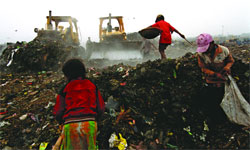
A small project to turn Dhaka’s organic waste into fertiliser is being feted across the world and is now earning millions of dollars for Bangladesh by reducing global warming. In the long run, Waste Concern aims to revolutionise the whole waste dumping scenario throughout the country. What once seemed impossible and began as a struggle, is now slowly transforming into reality and a bright future.
4. 2 Bhopal disaster- Hiroshima of Chemical Industry
On Dec 3rd 1984, toxic gas leaked from the poorly maintained and understaffed Bhopal plant owned by Union Carbide, killing up to 20,000 people and leaving 120,000 chronically ill to date. The survivors have never received adequate compensation for their debilitating illnesses. To this day the polluted site of the abandoned factory, bleeds poisons daily into the groundwater of local residents. Dow Chemical now owns Union Carbide. As this series of personal recollections reveals, it operates differently, but equally irresponsibly, in India and the US.
Twenty years on, the verdict on how the Indian state has responded to Bhopal should be unequivocal: not only did it neglect its responsibilities, it actively suppressed the rights of the victims. The state of public knowledge about the disaster and the best recourse available to the victims was summed up recently by a doctor who was on duty at a Bhopal hospital on the fateful night: "We still do not know what we could have done that day to save lives; we still are not aware of what we could have done in the months and years since" .
The disastrous state of preparedness, in both the city and the company running the lethal factory, was one hint of the many dimensions that the tragedy would acquire over the years. And to this day, there has been no enforcement of accountability on either the corporation for its crimes of culpability, nor on the regulatory authorities for their gross neglect of the potential hazards involved in the pesticides factory.(EPW, December 4, 2004).
When the lethal leak occurred, plant managers switched off alarms to prevent panic. In the ensuing panic, babies were crushed to death. Pregnant women miscarried. Children, nearer the ground where the gas collected, drowned in their own body fluids. Union Carbide advised the overwhelmed hospital it was dealing with a mere irritant, treatable with milk and eyedrops.
Toxic fumes leaking from the nearby Union Carbide factory were settling on the railway station. Nearly 3,000 people died on the night of the disaster. There have been at least 15,000 related deaths since, according to official estimates.
Amnesty International, in fact, recently confirmed what has been evident since the day of the disaster: “that there has been no systematic attempt by the Indian government to keep a record of gas-related deaths in the 20 years since 1984 ( Amnesty International, Clouds of Injustice, Bhopal Disaster 20 Years )
Almost everything about the catastrophe remains in dispute except these bare facts:
At about midnight on Dec. 2, 1984, Union Carbide's factory released a massive cloud of methyl isocyanate over the sleeping city. In 1989, Union Carbide settled a civil suit by paying the government of India $470 million as compensation to victims. That settlement was only the beginning of the complicated business of filing and validating the claims and counter claims on the money. It wasn't until July of this year that India's Supreme Court ruled that $330 million in remaining compensation should be distributed to the victims and no longer held by the Indian government, the Associated Press reported.
Meanwhile, Indian officials are pursuing criminal charges against the company's then-chairman, Warren Anderson, who is now in his 80s. No one has been criminally charged in the case. Environmental and human rights groups claim that 20,000 people have died from the effects of the disaster and at least 150,000 others suffer cancer, infertility, birth defects, mental illness and other problems. One reason the casualties continue to mount, they say, is because the abandoned factory site remains polluted with mercury, carbon tetrachloride and other toxins that are poisoning drinking water for at least 20,000 people.
Groups operating under an umbrella organization, International Campaign for Justice in Bhopal, plan vigils and other events this week to draw attention to their demands that Dow Chemical Co., which bought Union Carbide in 1999, be held legally accountable for the lingering problems (AP, 2004).
Almost 20 years have passed since the World's worst industrial disaster took place in Bhopal, India. To commemorate the anniversary and remind people about the environmental crimes committed by Dow we are running a series of features; part one 'Growing Up' follows two childhoods spent in the shadow of toxic pollution.
Bhopal 20 years later: the people are still waiting for justice
Now Bangladesht is confronting the arsenic poisoning of as many as 85 million of its 125 million people with arsenic-contaminated drinking water (The Independent, U.K., October 11, 2000). The scale of disaster in Bangladesh is beyond that of the accidents in Bhopal and Chernobyl (WHO, 2000).Survivors are pushing to take Bhopal
In a report released today, Amnesty International, the human rights group, details the slow progress in rehabilitating and compensating victims of the disaster and the failure of US and Indian courts to bring Union Carbide executives to justice.
Around 100,000 people are still suffering "chronic and debilitating illnesses" Amnesty said, noting that even 20 years later, many have yet to receive adequate compensation or medical treatment. "Today, 20 years after the disastrous gas leak at Bhopal, tens of thousands of people are still suffering the after-effects," Amnesty said in an 82-page report titled "Clouds of injustice". "Despite the determined efforts of survivors to secure justice, the large numbers affected have received inadequate compensation and medical assistance," the organisation said. "People already living in poverty face health problems that are shortening their lives and affecting their ability to work.
The accident, which was triggered by the leak of methyl isocyanate, a lethal gas, into the slums adjoining the plant, has killed another 15,000 people in the subsequent two decades, Amnesty estimates. The fatalities have been caused by respiratory problems, breakdown of immune systems, breast and cervical cancer and neurological disorders.
Bhopal has rightly been called the Hiroshima of the chemical industry. Bhopal not only represents the stark story of the human fallout from a chemical factory explosion but offers up important lessons about the culture of the chemical industry and its approach to security and public health.
Twenty years have passed, but today in Bhopal thousands of people remain sick from chemical exposure and more than 50,000 are disabled due to injuries. The amount of compensation Union Carbide paid to the survivors has not been enough to cover basic medicines, let alone other costs associated with disabilities and a lack of ability to work. The abandoned factory site remains essentially the same as the day that Carbide's employees ran for their lives. Sacks of unused pesticides lie strewn in storerooms; toxic waste litters the grounds and continues to leak into the neighborhood well water supply.
1.SAVE OUR GENETIC RESOURCE
Back to Content
2.Rice - IRRI High Yield Producing Countries in River Plain faceing Arsenic Contamination
3.Small is dangerous: the threat of nano-technology
4. Potential Hazards from Transgenic Crops
5. Fungal Infection From Boro Paddy (IRRI) Blinds Eyes
6. Arsenic and Uranium in Fertilizer
7. Green Revolution
8. Questioning the success of the Green Revolution
8. Agro-imperialism: Green Revolution to Biotechnology
9. Dams/Barrages Relation to Recent Arsenic Poisoning
10. Toxic canal water destroying ecology, posing serious health hazards
4. 3 Arsenic-compound spill affects drinking water for 80,000 in China
Beijing - A leak of an arsenic compound from a waste tank at a chemical plant in central China poisoned the drinking water of 80,000 people, with authorities Sunday issuing urgent warnings. The people of Chengguang in the district of Yueyang in Hunan province were warned not to drink water from the tap. 'People are worried,' a plant employee confirmed by telephone to Deutsche Presse-Agentur dpa Sunday.
'Many are buying large quantities of drinking water from shops. Others are going to stay with people they know in neighbouring villages who have their own wells.' Restaurants were empty as people were concerned about how safe the water was.
The pollution by arsenide, a compound of arsenic, was discovered Friday during a routine inspection of the water quality in the Xinqiang River, Yueyang's Environment Agency said. 'We found elevated levels,' the agency said.
The weekend's leak was the latest in a series of chemical accidents in China that are increasingly threatening China's rivers and water supplies for large cities. Since the initially covered-up catastrophe in the Songhua River in north-eastern China last autumn, in which the 4 million inhabitants of the city of Harbin had to go four days without water, environmental authorities have been keen to announce accidents early. ASIA PACIFIC NEWS, SEPTEMBER 10, 2006
4.4. Dhaka’s air pollution level highest in the world
Air pollution in capital city Dhaka raised higher than Mexico and Mumbai killing thousands of people prematurely each year, health experts say. According to the Department of Environment (DoE) the density of airborne particulate matter (PM) reaches 463 micrograms per cubic metre (mcm) in the city during December-March period - the highest level in the world. Mexico City and Mumbai follow Dhaka with 383 and 360mcm respectively, the DoE website says.
An estimated 15,000 premature deaths, as well as several million cases of pulmonary, respiratory and neurological illness are attributed to poor air quality in Dhaka, according to the Air Quality Management Project (AQMP), funded by the government and the World Bank. The Integrated Regional Information Networks (IRIN) quoting the World Health Organization (WHO) said vehicular air pollution is a major cause of respiratory distress in urban Bangladesh.
"If pregnant mothers come across excessive pollution, it may cause premature death of their children," said Prof Soofia Khatun of Institute of Maternal and Child Health. According to the National Institute of Diseases of Chest and Hospital (NIDCH), nearly seven million people in Bangladesh suffer from asthma; more than half of them are children. Cases of children suffering from bronchitis and chronic coughs have also shot up in recent years, it said.
Trace metal concentrations in street dusts of Dhaka city, Bangladesh
Street dust samples were collected from differing areas (industrial—medium traffic density, commercial—high traffic density, and residential 1 and 2—low traffic density) in Dhaka City, Bangladesh, and their major oxide and trace element compositions were determined.The results show significant concentrations of Pb, Zn, Cu, Ni, and Cr in the Dhaka dusts, and some variations among the four sample groups. The samples in the commercial area had Pb concentrations two- to seven-fold those of the industrial and residential areas. Contents of Zn, Cu, Ni, and Cr in the industrial areas were greater than those in the commercial and residential areas. Levels of Pb, Cu, Ni, and Cr exceeded the maximum permissible limits for common soil. Increases in these anthropogenic trace metals in the surface environment can most likely be attributed to rapid urbanization and industrialization and increased vehicle emissions to the atmosphere. Elevated Zn concentrations in an industrial area can be ascribed to discharges of industrial activities, while elevated Zn abundances in commercial areas probably originate from traffic sources. The street dusts contaminated with Cu, Ni, and Cr occur mainly in industrial areas. However, Pb contamination in the Dhaka dusts is probably caused by Pb particles from vehicle emissions. (Department of Geoscience, Shimane University, Matsue 690-8504, Japan,24 April 2006.
"Children breathe more air relative to their lung size than adults. They spend more time outdoors, often during midday and afternoons when pollutant levels are generally highest," said Khondkar Ibrahim Khaled, chief of Kochi Kanchar Mela, a children's welfare organisation told IRIN.
WHO air quality guidelines (2005) recommend a maximum acceptable PM level of 20mcm; cities with 70mcm are considered highly polluted. Airborne lead is the worst of the harmful PMs. "By penetrating the lungs and entering the blood stream, lead may cause irreversible neurological damage as well as renal disease, cardiovascular effects, and reproductive toxicity," Humayun Kabir, head of the medicine department of Barisal Medical College, told IRIN, adding: "Children are especially susceptible to impaired intelligence due to lead poisoning."
The phasing out of petrol-driven two-stroke auto-rickshaws in 2003 and their replacement with four-stroke versions, which use a much cleaner burning fuel (compressed natural gas), significantly decreased the volume of air contaminants. But, according to DoE sources, a sharp increase in the number of vehicles and construction sites in 2004-2008 led to a deterioration in Dhaka's air quality.
The density of airborne fine particulate matter 2.5 micrometers (one millionth of a metre) or smaller in diameter (PM2.5) in the city dropped from 266mcm in 2003 to 147mcm in 2004. However, AQMP statistics from 2007 show 191.83 mcm of PM2.5 (fine particular matter) in Dhaka's air. Airborne particulates are considered harmful when they are 10 micrometers (PM 10) or smaller in diameter. PM 2.5 is four times finer than PM10, hence more harmful.
According to the DoE, old, poorly serviced vehicles, 1000 brick kilns, dust from roads and construction sites, and toxic fumes from industrial sites are major sources of air pollution. Bangladesh Road Transport Authority (BRTA) said some 15,000 mostly reconditioned and second hand cars were sold in Dhaka in 2008 - up 46 per cent from 2007. "Even people in the middle income level can afford cars now," said Abdul Haq, owner of Haq's Bay. Source: The New Nation, April 04, 2009 Back to Content
5. SERIOUS THREATS TO PUBLIC HEALTH and ENVIRONMENT
Modern chemistry keeps insects from ravaging crops, lifts stains from carpets, and saves lives. But the ubiquity of chemicals is taking a toll. Many of the compounds absorbed by the body stay there for years—and fears about their health effects are growing.
David Ewing Duncan writes (National Geographic, October 2006):
Except for some pollutants, after all, every industrial chemical was created for a purpose. Even DDT, the archvillain of Rachel Carson's 1962 classic book Silent Spring, which launched the modern environmental movement, was once hailed as a miracle substance because it killed the mosquitoes that carry malaria, yellow fever, and other scourges. It saved countless lives before it was banned in much of the world because of its toxicity to wildlife. "Chemicals are not all bad," says Scott Phillips, a medical toxicologist in Denver. "While we have seen some cancer rates rise," he says, "we also have seen a doubling of the human life span in the past century." The key is knowing more about these substances, so we are not blindsided by unexpected hazards.
Last fall I had myself tested for 320 chemicals I might have picked up from food, drink, the air I breathe, and the products that touch my skin—my own secret stash of compounds acquired by merely living. It includes older chemicals that I might have been exposed to decades ago, such as DDT and PCBs; pollutants like lead, mercury, and dioxins; newer pesticides and plastic ingredients; and the near-miraculous compounds that lurk just beneath the surface of modern life, making shampoos fragrant, pans nonstick, and fabrics water-resistant and fire-safe. The tests are too expensive for most individuals—National Geographic paid for mine, which would normally cost around $15,000—and only a few labs have the technical expertise to detect the trace amounts involved.
The same can be asked of other chemicals I've absorbed from air, water, the nonstick pan I used to scramble my eggs this morning, my faintly scented shampoo, the sleek curve of my cell phone. I'm healthy, and as far as I know have no symptoms associated with chemical exposure. In large doses, some of these substances, from mercury to PCBs and dioxins, the notorious contaminants in Agent Orange, have horrific effects.
From the early 1980s through the late 1990s, autism increased tenfold; from the early 1970s through the mid-1990s, one type of leukemia was up 62 percent, male birth defects doubled, and childhood brain cancer was up 40 percent. Some experts suspect a link to the man-made chemicals that pervade our food, water, and air. There's little firm evidence. But over the years, one chemical after another that was thought to be harmless turned out otherwise once the facts were in.
It's now known that any detectable lead can cause neurological damage in children, shaving off IQ points. From DDT to PCBs, the chemical industry has released compounds first and discovered damaging health effects later.
PCBs, oily liquids or solids, can persist in the environment for decades. In animals, they impair liver function, raise blood lipids, and cause cancers. Some of the 209 different PCBs chemically resemble dioxins and cause other mischief in lab animals: reproductive and nervous system damage, as well as developmental problems. By 1976, the toxicity of PCBs was unmistakable; the United States banned them, and GE stopped using them
As unsettling as my journey down chemical lane was, it left out thousands of compounds, among them pesticides, plastics, solvents, and a rocket-fuel ingredient called perchlorate that is polluting groundwater in many regions of the country. Nor was I tested for chemical cocktails—mixtures of chemicals that may do little harm on their own but act together to damage human cells. Mixed together, pesticides, PCBs, phthalates, and others "might have additive effects, or they might be antagonistic," says James Pirkle of the CDC, "or they may do nothing. We don't know."Using chemicals and industrial dyes to look food fresh and tasty
Doctors from the University of California and the Boston Medical Center have released findings linking common chemical pollutants to at least 200 different human diseases. The study, which compiled data from hundreds of previous studies, shows strong correlations between various common pollutants and a wide range of diseases, including asthma, testicular atrophy, cerebral palsy, kidney disease, heart disease, hypertension, diabetes, dermatitis bronchitis, hyperactivity, deafness, sperm damage and Alzheimer's and Parkinson's diseases. Pollutants also were linked to 37 different types of cancers.
The human body is in constant conversation with this chemical milieu and some substances have turned out to be important contributors to disease," says study co-author Ted Schletter of the Boston Medical Center. He points out, though, that pollution usually acts as a trigger on a person's genetic predisposition to developing a particular disease, and not usually as the cause of the disease itself. Blood tests conducted throughout the U.S. and Europe show that the vast majority of residents of industrialized nations are carrying several of these pollutants--such as mercury, dioxin, and PCBs--in their bloodstreams at any given time, making exposure virtually unavoidable. Health and environmental activists believe the study's findings warrant the release of information by manufacturers on the potential risks associated with use of their products.(The Environmental Magazine, Earth Action Network, November 23, 2004)It may be news to many that wrapping of ready to eat food in newspaper, packets made from cement bags, and examination scripts can pose great health risk. Chemicals in the ink contained in newspaper printing and examination scripts and cement dust are harmful to the human body. The hygienic condition of the places where paper bags are made and the substance that is used as glue to make these bags deserve to be looked into with equal ferocity. In first world countries use of such bags to wrap food items is totally banned.
Urea in biscuits!
It is not only textile dye and burnt Mobil oil that bakery product producers use to adulterate their products. Urea fertiliser is also used in biscuits and bread to make them whitish and crispier for a longer time, it was revealed when the mobile court yesterday recovered urea fertiliser from two bakeries in old Dhaka. A mobile court yesterday raided two bread and biscuit producing factories in the Lalbagh area and found a huge amount of urea fertiliser used in the bread and biscuits. The court first raided Titas Bread and Biscuit factory in Rajnarayan road in Lalbagh and found a pile of urea fertiliser, which they claimed contains ammonia. The workers of the bakery told the court that they use the fertiliser to make the biscuits and bread crispy and whitish. The court later raided the factory of Master Food on the same road and found similar chemicals used in their products "I was just shocked to see the urea used in the bakery products. I had no idea that the situation is really so bad," said Md. Rokanuddoullah, the magistrate of the court ((Daily Star, August 11, 2005)..
Hazardous chemical in sugar
A serious threat to public healthSo-called "condensed sugar" with sodium cyclamate is being sold in the market, according to reports. Formerly known as D-sugar, it is selling under a brand name called "gold". The product is currently available at drug stores and grocery shops. The so-called sugar highly injurious to health is now being consumed among others by people suffering from diabetes and high blood pressure. Cyclamate being 50 percent sweeter than regular sugar, is used in a number of bakery products and ice creams. No less than the Head of the Department of Pharmacy at the University of Dhaka has confirmed that intake of sodium cyclamate may even cause such deadly disease like cancer of the lungs, liver and the kidney. Therefore, the US Food and Drug Administration (FDA) had permanently banned the use of sodium cyclamate as early as in 1983. Sale of D-sugar had also been banned by the Drug Administration of the country in 1982, but to little avail. Although from time to time due to periodic raids conducted by law enforcing agencies against adulterated foods there was a lull in the sale of the product; but for all practical purposes, its import continue unabated. Against this backdrop, we urge the administration to investigate the matter fully in the light of newspaper reports and take stern action to eradicate sale and import of the product in any form. Clearly, the periodic campaigns against food adulteration have not been able to produce the desired result here. (Daily Star, October 26, 2007)
A World Bank study estimates that at least 15,000 people have died of diseases caused by air pollution in four major cities — Dhaka, Chittagong, Khulna and Rajshahi — and an estimated 6.5 million people suffer from acute respiratory infections. The Asian Development Bank puts the economic cost of such deaths and illnesses at US $800 million a year.
Exhaust from diesel buses and other vehicles contains polycyclic aromatic hydrocarbons (PAHs), which some studies have linked to increased risk of certain cancers.
Plastic trash bags and many other common plastic products can contain toxic organochlorines - known to cause developmental and neurological problems
Children, with their developing bodies and brains, are far more vulnerable to ingested toxins than adults. For example studies in the USA found that levels of chlorpyrifos, an organophosphate that has been used widely in the United States, are about twice as high in children as those found in adults. A total of 89 of the 116 tested chemicals were found to be present in at least some study participants, but CDC officials cautioned that just the presence of a chemical does not indicate a threat to human health. Risk assessments for many of these chemicals are not know for humans, but this study provides a vital tool for scientists to determine how dangerous some of the chemicals are to human health.
Hormones and pesticides are used for modern fish and animal farms in Bangladesh/India. Most people have some knowledge of hormones and how they affect the development, growth, reproduction and behavior of human beings but few know about environmental hormones and how they can in some circumstances fool the body into believing they are the real thing.
1. Environmental Hormones and Pesticides
2. Indian eggs contain toxic elements:Smuggled in unchecked and consumed widely in country; a major source of health hazard
3. Looming Danger of Bird Flu
4. Extentive use of pesticides in edible items causing health hazardsAccording to the Department of Fisheries, as many as eight species of fishes have become extinct and the existence of nearly 42 species is threatened in Bangladesh’s rivers due to pollution, the loss of habitat and excessive fishing.
In the last century, five out of 650 bird species in Bangladesh were wiped out, and many fear the rate of extinction will accelerate in the years to come, especially because of the loss of habitat. In and around Bangladesh’s capital Dhaka, the Environment Department found nearly zero levels of oxygen in the rivers Buriganga, Shitalakhya and Turag in recent times.
According to the Dhaka Water and Sewerage Authorities, the ground water table — the source of drinking water for one third of this city’s 10 million people — has become contaminated with harmful bacteria.
It tastes better than bottle mineral water
A glass of tap water has beaten bottled mineral waters costing thousands of times as much in a blind taste test by some of the most experienced palates in Britain. Experts including a leading sommelier and a wine critic put a glass of Thames Water's standard tap water at third equal in a tasting of 24 different waters. The water, from a tap in South Kensington, London, costs less than 1p a litre but was rated higher than mineral waters costing £50.
Asia Water WireRecently, reports appeared in the press about unclean bottled water. The first page photo and a report in the leading daily paper of the country showed a street urchin filling thrown away platic bottles of different brands of water that are sold in the market. In recent years, the demand for bottled waters have much increased as a result of the rising health consciousness of people.
People are found no more willing to drink tap waters at hotels, restaurants and snack shops. They demand bottled water considering the same to be pure. But in many cases they are drinking really impure waters as the above report clearly established.
Sweetmeats are in great demand and a vast number of people consume the same every day. Most of the sweetmeat producers use cheap powdered milk. Such milk are hazardous for impurities or radioactivity. But the sweetmeat producers buy such milk for making abnormally high profits with no pinch on their conscience about what health hazards people would be exposed to from consumption of sweetmeats made out of such milk. In other cases, cow's milk from the countryside are seen sent to Dhaka on country boats. But waters from the heavily polluted Buriganga river are seen mixed with such milk. The use of sub-standard powdered milk is also extensive in the tea stalls. Consumption of such milk can also lead to health problems for the common tea drinkers.
Cooking oils, specially soybean oil, are mass consumed food products. But in many cases heavily adulterated such oils are found selling in the market. The consumption of food cooked with such oils can create serious gastro-intestinal diseases.
Poisonous food
These days the topic of food adulteration (which actually means poisoning of food) is widely reported in the newspapers. As a result, some actions have been taken against errant individuals but these actions are certainly not enough. Actually adulteration is a mild term to express what the unscrupulous businesspeople are doing. They are poisoning the food by mixing dangerous chemicals to make these look attractive for the gullible and ignorant customers. A few months ago an exclusive report published in The Independent revealed that some traders are mixing formaldehyde ('Formalin') with fresh milk to give it longer shelf life. DDT is sprayed on dry fish. More recent reports say that poisonous substances are being mixed regularly with everyday food items like fish, meat, vegetables, fruits, pulses and eggs. Experts believe that this can have disastrous health consequences for those who take these foods, which basically include almost everyone.
That water is mixed with milk is an open secret as is the fact that buffalo meat are being sold as beef. Everybody seems to have accepted these as unwelcome facts of life. But mixing dangerous chemicals is something that is most pernicious and a one hundred per cent criminal act. In Bangladesh one has to learn to expect the unexpected. Hardly anybody knows for how long such practices have been going on. Many of these chemicals are carcinogens and the health risks are, to put it mildly, serious. It sems that some people will stoop to the lowest level to make some quick bucks. While we do not deny anybody's right to make money, nobody can be allowed to do so by endangering public health. The strictest punishment need to be meted out to them. But it seems that more often than not the perpetrators go scot-free. The law itself is archaic and lax. And that has made them bolder and they are inventing newer ways to dupe the public.
The concept of health standards in most restaurants is virtually non-existent. People have the right to eat safe and clean food. Unfortunately, this most basic of rights has become a privilege of sorts in Bangladesh. We do not know how many people have become affected by eating adulterated foodstuff but the numbers are surely quite high.
We urge the concerned authorities to take strong action against those involved in this heinous practice. Random checking need to be carried out in the markets as at present. The mobile courts are doing a marvellous job by exposing the kind of dangerous foods that are being served in restaurants and students hostels. The ongoing exercise must continue (Editorial, The Independent, August 2, 2005).Tuberculosis, already a major killer disease in Bangladesh, might turn into an uncontrollable and mostly fatal epidemic if HIV spreads throughout the country, fear experts, because those patients with HIV who are infected by TB may die since their immune system is more or less ineffective.
Use of toxic chemicals in foods continues
The use of extremely harmful chemicals for ripening fruits continues unabated, as is evident from a photograph published in this newspaper yesterday. It shows how bananas are soaked in toxic chemicals in utter disregard of the law and the physical well being of the unsuspecting consumers. Obviously, the consumers do not know that they are actually ingesting poison with the delicious fruit.
Adulteration of foods and use of non-food grade colours, substandard materials and poisonous preservatives have been going on for a pretty long time, as no sustained effort was made to eliminate the evil practices that pose a direct threat to public health. The anti-adulteration drive in the city led by a magistrate about two years ago brought forth some mind-boggling facts about the health and hygiene standards maintained in our hotels and restaurants and the incredibly sinister practices in preparing and marketing foods of different kinds. The drive looked like producing some truly positive result, as the real offenders, at least a section of them, started to feel the crunch. But the campaign was short-lived which has apparently allowed the unscrupulous traders and businessmen to restart their business of producing and marketing foods unfit for human consumption.
While some of the evil practices continue round the year, the illegal business seems to gain momentum during the season of mangoes and other local fruits. The methods adopted for ripening mangoes include use of a chemical that causes great harm to the consumers.
Sadly enough, nothing is actually happening secretly and the market inspectors or the law enforcers cannot claim that they do not know what is going on. It seems society at large has developed a kind of insensitivity to issues like this. Millions of consumers are being pushed towards death while the issue is not seen as anything more than a minor irritant. Only that can explain why traders using toxic preservatives and ripening chemicals go unpunished. The question arises, for obvious reasons, whether concern about public health really means anything in practical terms. The campaign against adulteration and all such practices should not be a seasonal affair, if we really want to stop the activities that amount to slow-poisoning the consumers. The law has to be enforced strictly without wasting any more time. It is a question of saving unsuspecting people from the hands of ghastly elements out to make undue profits at the cost of fellow humans (Editorial, Daily Star, June 26, 2008).River water in sealed bottles for sale
Unscrupulous traders in old Dhaka area engaged in filling up thousands of empty plastic water bottles with plain river water and selling those among the unsuspecting buyers especially targeting the people who travel by launches from Sadar Ghat. "As there is no pure drinking water in launches so I purchase water bottles from the vendors at a cheap price believing that it is safe," said Abdur Rahim, a passenger of a Barisal-bound launch.These businessmen run their trade from behind the scene and operate through smart marketing staff.
The untreated river or tap water-filled bottles are seen stacked in front of the fake traders' shops, resealed and sold in the market as the original brands. Some of the traders said they buy each empty bottle at 20 poisa. According to another source, these water bottles are sold in Sadarghat area where people come from outlying districts by motor launch. They carry on their business with impunity regardless of the fact that such bottled water may pose a serious health hazard (The Independent, November 24, 2004).
Pepsi puts India in spotlight over pesticides claim
NEW DELHI, Sept 10, 2006:–US cola giant PepsiCo has put the head of its India operations in front of TV cameras as it opens a new front in its drive to counter charges of high pesticide levels in its colas, says AFP. A just released ad shows PepsiCo India chairman Rajeev Bakshi walking a young man through a plant purification process and saying the colas carry his "personal guarantee" they are safe "for you, for me and for my children." "Our consumer research and feedback indicated consumers wanted the company to directly reassure them our products are completely safe," Bakshi told AFP. The ad is the latest tactic in Pepsi's fight-back since a New Delhi environmental group last month released a report claiming high levels of toxic chemicals in 57 drink products from 25 Indian Pepsi and Coca-Cola plants.
The allegations were splashed on newspaper frontpages and prompted southern Kerala state to ban Coke and Pepsi while five other states barred them from sale in schools and government offices. A national ban was demanded by the federal opposition while protesters went on cola-bottle smashing sprees. The cola rivals, which account for 99 percent of India's huge soft drinks market, have insisted through newspaper ads and public statements that their locally bottled drinks meet international safety standards. The Indian government has since said the report by the Centre for Science and Environment was "inconclusive" but the state- level bans on their products remain in place amid continued consumer wariness.
Bottled water, a natural resource taxing the world's ecosystem Even the life-saving oral saline can be dangerous for life
Even the life-saving oral saline can be dangerous for life as unscrupulous people are producing saline in unhygienic environment violating the safety standard and posing serious threat to life. Due to lack of vigilance, the workers of some saline producers do not put on gloves while packaging. Some of these companies do not even have licence from the Directorate of Drug Control. A mobile court yesterday raided the ARA Enterprise in Motijheel area and found its products--ARA tasty saline and ARA oral saline--being packed with naked hands. "I am shocked to see the way they prepare the saline," said Magistrate Md Rokanuddoula who led the mobile court. The mobile court, however, did not charge the company any fine instantly. "Only fining is not enough for them. I directed the Sutrapur Police Station authorities to file a case against the owner [of ARA Enterprise] under the Special Powers Act-1974," the magistrate said (Daily Star, August 7, 2005).
A year-long, coordinated and scientific drive should be carried out to ensure safe food for the citizens," Environment and Forest Secretary Jafar Ahmed Chowdhury said at the meeting. The meeting suggested revision of the existing laws and rules, including the Bangladesh Pure Food Ordinance, 1959, the Dhaka City Corporation Ordinance, 1983, and the Dhaka City Corporation (amendment) Ordinance, 1994, to make the drive against adulterated food more effective (Independent, August 7, 2005)..
Contaminated Wasa water
Dhaka Water and Sewerage Authority (Wasa) and the Department of Environment (DoE) have detected coliform, a bacteria in groundwater pumped up by the Wasa, which experts say is 'alarming' for public health. Managing Director of Dhaka Wasa ANH Akhter Hossain told the Star City that groundwater of Old Dhaka, Kamrangirchar and Narayanganj becomes tainted in dry season as it gets in touch with the surface water already contaminated by coliform. "During the dry season the ground water level goes down and polluted water from adjacent rivers like Buriganga, Shitalakhya fills the vacuum. This is the way how the coiform reaches the ground water," he explained. "We have already found coliform in the groundwater of Old Dhaka and Narayanganj. The bacteria are not supposed to be there." Hossain said. "Sewerage lines often get linked to water lines causing the contamination. The age-old water pipelines sometimes leak," he said.
Highly contaminated water supplied by Dhaka Water and Sewerage Authority (Wasa) has caused jaundice, typhoid, and other diseases to several hundred residents of Gulshan in the last few months, complain the locals. In one housing complex at Road- 99, House-15B, 24 people have contracted jaundice, 18 people including some expatriates had typhoid while some others complained of severe irritation in bowel, said SM Hasan, the secretary of the Ideal Home Owners Association, who himself has been suffering from Irritable Bowel Syndrome (IBS)( The Daily Star, January 26, 2005).
Typhoid spreads evoking fear of bad water system
Unhygienic condition - deadly poisons
Have we ever reckoned that we are feeding ourselves and our children poison in the name of pizza, hotdogs, burger, sandwich, patties, samosa, fried chicken, noodles, ice-creams, chocolates, cakes, etcetera from which they will hardly recover or escape? And that the expecting mothers will have physically handicapped mentally retarded or autistic babies?
Are we quite aware that every moment and day we are being subjected to invisible but severe attacks with incurable stomach or gastrointestinal diseases, our vital organs like kidney and liver are being damaged, deadly poison enters our bloodstream leading to the growth of cancerous cell, and we are slowly, silently heading to a near-certain, painful and premature death?There is no arrangement for pure drinking water in most of the hotels and the people who take food in these hotels are attacked with water born diseases.
An elite restaurant in Gulshan famed for South Indian delicacies is where aristocrats lunch and dine. It was also discovered that the kitchen is very dirty in an odorous environment. Fried poisonous oil is used in food, poisonous chemical makes the sauce and jelly and rotten shrimps and prawns are delivered to the eateries in the serene dining halls. In another most leading fast food centre in this area, the stale food with rotten stuff is served with coloured spices. The same condition also applied to other joints in Narayanganj, Mirpur, Savar, etcetera. A famous Chinese restaurant is also a culprit in this respect. The mobile court immediately found out that stale food is not thrown away but carefully kept for consumption of the unsuspecting customers. The scene in Chittagong is no bette.
Meanwhile the dangerous picture that emanates from the print and electronic media confirms that different poisonous spray including DDT are used in all varieties of fishes, from kaachkee to Rui-Katol, so that fishes look fresh. Formalin (formaldehyde) which is used to prevent rot in humans and beasts is also injected into the fishes (this is also mixed with fresh milk by traders to give it longer shelf life). Heating has no effect on these poisonous chemicals; these cause illness that defies a normal treatment. In fact, poisonous substances are being mixed regularly with everyday food items like fish, meat, vegetables, fruits, pulses and eggs.
Saturated fats used for making soap and detergent are heated in pans and then rubbed over the meat to make it look attractive. Dry fish contains fungus and is treated with harmful colour, rat-killing powder and disinfectant spray. Vegetables like green peas are coloured by harmful colours and dyes and chemicals, potol, brinjal are treated with chemicals used in tanneries and textile machines and worm-killing sprays. Tomatoes look red with calcium carbide. Mangoes and bananas are ripened also with these harmful stuff. In about 95 per cent cases, noodles, biscuits, breads, cakes, etcetera are made with uneatable atta (brown flour) and white flour, rotten eggs and dye to make them look and taste crisp. The inner environment of such factories is dirty and totally unhygienic. Out of a total of 272 salt producing joints, only 4 or 5 have iodised salt, the lack of which makes unborn babies highly vulnerable to various illnesses and handicaps.
Dalda, ghee and butter oil are prepared with the help of an unknown plant seed 'rongodana', palm oil, spoilt milk, chemical, artificial dye, cow fat, intestines of goats and cows, soap-making oil and rotten banana. About 92 per cent of the soyabean and mustard oil are adulterated and so are 100 per cent dalda and 94 per cent ghee. "Baghabari ghee" is made in lanes and bylines and slums of the city. Such fake factories abound in the old town. There is no relation between pure ghee and what passes for it and butter oil in the market. Likewise, there is no connection between cow milk with powdered milk or condensed milk. Date-expired milk powder, a jute chemical in reality brought from India via Benapole land port has been also discovered in the old town. The chemicals used in all these are also of low quality.
The water is kept in filthy drums. The hotel boys distribute water dipping their dirty and uncleand hands in the drums. The tubewells plates, glasses, tea cups, bowls, spoons, utensils and tables-chairs of these hotels always remained filthy. The hotel boys wipe the cookeries with dirty towels or napkins, which are also used for wiping tables and chairs. The utensils used at the restaurants are exposed to flies and insects. Kitchens of some hotels and restaurants are dirty and full of bad smell.
It the sweetmeat houses, 95 per cent of rosogolla, chamcham, shandesh, lalmohan, etcetera which have no relation with cow-milk or chaana but are prepared with imported chemicals, known as ' powdered milk.' The Bonoful outlet in Jatrabari is one instance. Ice creams like Igloo have no expiry date on the labels. Mineral water is WASA water, intelligently packaged and skilfully marketed. One such outfit was detected at Mahakhali by the mobile team. Chittagong hotels are awash with fake, adulterated contaminated and low quality food. Packaged foodstuff contain no weight, expiry date, price tag or a BSTI seal. And the picture elsewhere is no better.
According to the rules, the civil surgeon is supposed to inspect all restaurants once in a month and he is to fine the restaurants for violating the health code. There is no record that the civil surgeon fined any restaurant during last 20 years whereas all most all restaurants are violating the healths codes. But the civil surgeon in the district denied the allegation and said that he is assigned to do it, but cannot do so because of the poor manpower in the department. Back to Content
Untreated waste from yarn dyeing mills poses health hazard
Back to Content
Toxic water released from several yarn dyeing and processing mills in Belkuchi upazila of Sirajganj district is polluting the local environment, causing untold suffering to thousands of people and posing serious health hazard.
Influential people set up the mills in an unplanned way without any treatment plant and drainage system, by managing some unscrupulous officials of the relevant sections, said local residents. Over 100 yarn dyeing and processing mills at different villages including Tamai, Shohagpur, Garamashi, Chala, Chandangati and Mukundagati have no treatment plant and they were set up without permission from the authorities concerned, locals said.
Eleven of the mills owned by Aziz Sarker, Hiron Munshi, Labu Shaikh, Anwar Hossain, Badol Khan, Abdul Kader, Hiron Sarker, Babu Salam, Rejaul Karim, Khokon and Abdul Motin at Tamai village are posing most serious threats, they said. Toxic chemicals like sulphuric acid, acetic acid, hydrogen-per oxides, caustic soda, bleaching powder, silicate, glace and colours are used in these mills to treat the thread or cottons. After releasing from the mills, the untreated water is mixed with ponds and marshes in the area and creates serious health hazards.
An acute crisis of pure and clean drinking water is prevailing in the area as toxic wastes from the mills are mixed with the under ground water, turning water from the tube-wells yellowish. Many people are being affected with skin diseases, diarrhoea, dysentery, eye infection and nausea due to use of the water (The Daily Star, March 01, 2008) . The same picture appears everywhere in Bangladesh where textile effulents contaminating water bodies and posing serios threat to human health.
5.1. 50 tonnes of medical waste dumped a day Poses serious health risks in Dhaka, promotes unscrupulous trade
A man, left, collects used blood bags and syringes dumped in front of Suhrawardi Hospital; A pile of medical waste, right, on the premises of Pangu Hospital (National Institute of Traumatology and Orthopaedic Rehabilitation) in Dhaka. A lack of coordination among health agencies and hospitals, combined with outdated waste management policies, contributes to the open dumping of medical waste at city hospitals, posing a threat to public health and creating a secondary market in reused medical waste. It is a disturbing daily routine. Abdul Motaleb, 28, rummages through piles of medical waste in dustbins in Shyamoli every day, his slipper shod feet submerged in bloodied gauze, syringes, and dirtied latex gloves. On a recent afternoon he cleaned out the tube of a blood bag, blowing into it with his mouth to force the blood out the other side. For his labour he earns 80 or 90 taka per day, selling the plastic items and syringes to wholesalers in Dhaka.
This thriving trade in reused medical waste, evident at dustbins throughout the city, symbolises the negative side effects of the city's waste disposal policy, which lacks provisions for separating and properly disposing of medical waste. Figures on the amount of medical waste produced in Dhaka City are difficult to come by, but some sources roughly estimate that city hospitals produce approximately 50 tonnes of medical waste every day, most of it openly dumped in dustbins on the street. Health experts say such indiscriminate dumping poses a serious health risk to the public. "This is an important issue, and we are considering it as a hazard for the environment and also the spread of diseases," said Abdul Hamid, the director general of Health Services.
Sources say all city hospitals dump some or all of their medical waste in dustbins, where it is left to fester in the midst of the public. Dhaka Medical College Hospital (DMCH), for example, lacks the facilities to incinerate most of the medical waste it produces every day. Two of its three incinerators are broken, meaning the hospital can only incinerate 35 kgs of the total 150 kgs of medical waste produced each day. The rest is dumped in dustbins in the area, said a hospital official in charge of waste, requesting anonymity.
From the street the medical waste becomes a reusable commodity, sold to middlemen and wholesalers after being collected by tokai (street urchins) like Ayesha, who was cleaning a used syringe at a dumpsite in Shyamoli, near the Orthopedic Hospital, on a recent afternoon. Nearby, a man named Farook Mohammad was busy breaking apart a syringe, placing the needle in his mouth and pulling off the plastic rod. Then he cleaned a tube from a blood bag by beating it against the wall, sending blood splashing out from the other end. Ayesha, who says she earns up to Tk 50 per day, sells her findings to various wholesalers, like the one just across the street from the hospital, whose small stand is overflowing with piles of plastic bottles and other refuse. The wholesaler who gave his name as Mohammad said he collects between 80 and 100 kgs of waste every day from street suppliers, 20 to 25 kgs of which is medical waste. This he sells to bigger wholesalers, who in turn sell it again, and so on and so forth up the line.
The ultimate destination of these items remains unknown, but sources said they are most likely reused, perhaps burned down and turned into other plastic items. Whether or not they end up back in the hospitals could not be ascertained. Hospital officials say they have neither the capacity nor the responsibility to properly dispose of medical waste. "The main responsibility for waste is through the municipality. We have no arrangement to dispose of the waste ourselves," said Prof Dr Md Siraj-Ul-Islam, Director of the National Institute of Trauma & Orthopedic Rehabilitation in Shyamoli. "Though we want to separate out the infectious and non-infectious waste, we cannot dispose of it ourselves."
Prof Siraj added that the Ministry of Health and the Dhaka City Corporation (DCC) should work together to develop a system for medical waste. Until then, he said, hospitals have their hands tied. "We can do our part, but the next phase should be developed by the municipality." Others agreed that better coordination among the city corporation, the ministries and the hospitals is crucial for improving the situation. "The coordination is not up to the mark in the present stage," said Dewan Md Shah Alam, deputy chief conservancy officer of DCC.
The dangers posed by medical waste stem from a legal deficiency, Shah Alam pointed out, describing that waste collection operates according to an ordinance from 1983, which makes no special provision for collection of medical waste, even hazardous and infectious waste. All the waste is collected in the same manner, dumped together and not properly sorted, he described. The law needs to be updated, he added. "Now we are thinking about a separate policy for medical waste."Shah Alam said efforts are being made in that direction. The city corporation recently asked all hospitals to purchase special plastic bins for proper sorting of hospital waste. Currently the measure is only a recommendation, not a mandatory provision, he described, which is why medical waste is still being dumped openly on the street. "People are not so aware of medical waste yet," he said. But the city corporation intends to enforce it eventually, Shah Alam said. "We are pursuing the hospitals if they fail to do it in a time. We want to take action against them" (D. Khan, Daily Star, August 5, 2005).
More than 600 clinics and hospitals exist in the city, which generate an estimated 200 tonnes of waste a day, of which 20 per cent is highly infectious, according to a survey called "UN Tackles Dhaka’s Medical Wastes" carried out by Lawson in October 2003. Dewan Md. Shah Alam, chief executive officer of DCC, told these correspondents that there was no policy to dispose of clinical waste in a systematic and sanitary manner while no survey was done to measure the volumes of clinical waste by the government.
All the surveyed Health Care Establishments (HCE) generate pathological wastes, used syringes, broken bottles and glass, clothing materials stained with blood, and papers. The survey reveals that even body parts are dumped on the streets by HCE. The present practice of improper handling of generated hospital wastes in the city is playing a contributing role in spreading various fatal diseases. The surveyed hospitals generate 6.4 tonnes/day (6392 kg/day) of wastes, of which only about 5.2 tonnes/day (80.77 per cent) are non-infectious wastes and about 1.2 tonnes/day (19.23%) are infectious. It is found that DMCH alone generates more than half (58 per cent) of the total wastes. The average waste generation rate for the surveyed HCEs is 2.63 kg per bed/day (Independent, August 11, 2005).
Medical Wastes recycled at deadly risk
Back to Content
5.2. River Pollution
This aerial photo shows how rows of brick kilns on either side strangle the Dhaleshwari river flowing between Narayanganj and Munshiganj
DISTURBING FACTS are:
8,000 grabbers identified so far 1,000 acre land grabbed 60 percent pollution caused by industries 82 percent human excreta from city directly discharged in rivers Rivers almost biologically dead
The government over the years has allowed industrialists to pollute the rivers, canals and wetlands in and around the city to such an extent that surface water turned pitch black in several spots. Pollution has set in on the Buriganga, Shitalakhya and Balu rivers and made it almost impossible to treat the water. The Water and Sewerage Authority (Wasa), is supplying stinky water by purifying it with chlorine and ammonia sulfate.
The military-backed caretaker government had earlier directed industrialists to install 'effluent treatment plants' (ETP) at their respective industries by October 31 last year. But most of the industrialists have defied the directive and the government also did not take action against any of the violators. Even the Department of Environment (DoE) does not know much about it."We even don't know how many industries are active in and around the city as no survey has been conducted in recent years. We don't have sufficient manpower or funds to monitor industries," said a high official from DoE asking not to be named. Besides industry-generated liquid and solid waste, most of the human excreta directly goes down the rivers through underground pipeline as nearly 70 percent houses are not connected to the excrete treatment plant in Pagla.
A DoE source said around 350 dyeing, tannery, chemicals, paper and food processing, and other industries are polluting the water severely. Waste from these industries is connected with the sewerage system that directly goes into the rivers around the city. In fact, the rivers have become a dumping ground of all kinds of solid, liquid and chemical waste of bank-side population.
According to the Environment Conservation Rule, 1997, every industry should have in-house ETP. Otherwise, they would not get environmental clearance from the DoE which is mandatory to obtain power and gas connections. The DoE has the authority to implement the law but shortage of manpower prevents it from taking action. "We have only two inspectors to cover industries in 16 districts. They also don't have vehicles for field-level inspection. How can you expect the inspectors will work properly?" said Neyamatullah Bhuiyan, director, DoE Dhaka Division.
According to statistics from DoE, the number of polluting textile mills is 365, tanneries 198, pharmaceutical units 149, engineering workshops 129, chemical and pesticide factories 118, jute mills 92, rubber and plastic units 63, food and sugar 38, paper and pulp 10, cement and fertiliser five each and distilleries four. In 2001, a report from DoE said Hazaribagh tanneries, an export-oriented cluster of industries, produce about 20,000 cubic metres of toxic waste laden with chromium and at least 30 other toxins every day. These toxic waste flows untreated into the Buriganga through the Rayer Bazar sluice gate.
The report also said the waters of Buriganga became so polluted that it is impossible for any aquatic life to survive there. The government following the report took an initiative to relocate the tannery industries in Savar but the move has been stalled since then.
The waters of the Shitalakhya have meanwhile also become severely polluted. Institute of Water Modelling (IWM) and Aqua Consultant and Associates surveyed and tested the water of Shitalakhya in 2006 and recommended relocation of water intake point of Wasa from Sarulia point of Demra as the water over there is severely polluted. But still the government allows the industries to pollute the water of Shitalakhya and Wasa is also supplying its water. Talking with city dwellers from different areas including Basabo, Goran, Mugda, Narinda, Jatrabari, Maghbazar, Tejgaon, Hatirpul and Mirpur it was learned that they often find bad odour in the water.
"Sometimes the water smells like soil," said a Mirpur resident, while another from Hatirpul said the supply water sometimes stinks like decomposed rats. But the Wasa officials said the stink is a result of chlorine and ammonia sulphate used to treat the water. The total population in Dhaka city grew from 0.1 million in 1906 to 12 million in 2008. Industries and houses have also mushroomed but the city authorities could not prepare and implement a long-term plan to keep the water bodies free from pollution (P. Roy, Daily Star, March 20, 2008).I will be back to play with water in Buriganga River
Ooph! I could touch and feel the Buriganga River which flows through the capital Dhaka on its way to the Bay of Bengal. I could have bath and play with the water in the Buriganga as so many people I have seen taking bath there. I love to spend my pleasant time in that river with rising sun as well sunset enjoying ample activities going on the river every second.
Sorry to say that I was compelled to return from Sadarghat with bitter feelings, when I went there for the first time last January during Eid. I was stunned to see that river, the lifeline of Dhaka people, which is turning as sewer. While returning to my residence, on the whole way, I was thinking how Dhaka people are tolerating this degradation of the river. Why are they so neglectful and ignorant though they are suffering much? I heard a lot about the " Buriganga Bachao Andolan", still it seems that some more Andolan are needed. These were the general questions, that struck my mind immediately.
As I landed in Dhaka on the last day of October 2005, I had a strong desire to see the historic Buriganga River and spent some time enjoying its beauty and witnessing its relationship and contribution to Dhaka people.
Finally, the day came when I had the chance to see the huge business activities on the banks of this river. It was the occasion of Eid and the Buriganga river turned into the most crowded business place with the deal of hundreds of thousands of cows and oxen. That was the Kurbani Eid; people were busy buying and selling cows and oxen. I saw there thousands of oxen had been shipped to Dhaka and the bank had been flooded with the vast ocean of people as temporary livestock market was set up there.
I was accompanied by one of my students, Oviek, who was busy capturing those activities in his camera. When I tried to touch water, I became so fascinated; but the water condition compelled me to stay away. It was really unbelievable. Suddenly, I realised why my students - mostly photojournalists - used to talk about the pollution of the Buriganga in my class. When they raised the issue of the Buriganga river, I assumed that the situation of the river was becoming awful but I noticed that it's not only alarming but beyond that. Whether we accept it or not, the fact is, once upon a time, the river was the main source of drinking water for the inhabitants of Dhaka city.
Again, last February, for the second time, I got an opportunity again to see Buriganga river closely. Though I am scared to touch the water as it is almost black with foul smells, I spent three days there for the documentary on the pollution of Buriganga and health hazard. It was a workshop on Television Documentary conducted by International Centre for Journalists at Drik.
During the videography, our group discovered several sources of pollution, i.e. sewer, medical wastes, oil leakage from ferryboats, industrial wastes including chemical wastes from tannery and so on. The most bizarre scene was that people were still taking bath in the Buriganga and brushing their teeth without hesitation, though no conscious person should touch the highly polluted water as it is difficult to even breath there due to very foul smell.
While making a documentary, we were capturing all these activities as well as laundering and fishing. No doubt the river is the main place in Dhaka for river transportation but you can see there early in the morning a number of fishermen engaged in fishing. When we talked to them, a fisherman named Radheshyam was told us that the Buriganga is the main source for fishes, consumed in Dhaka city. According to him, nowadays it is very hard to meet the demand of fish in the city due to river pollution. While the fisherman was showing his concern over the decreasing number of fishe due to river pollution, I couldn't help thinking about the health hazard as well as the environmental problem. How could one be healthy taking those fish from the badly polluted river? Those who do not eat fish also can't say that they are not affected by this river as they are directly or indirectly related with this river. How can one shut one's eyes on this critical problem as it has become a serious threat to the environment?
Interestingly it is not only the fish, most of the vegetables are washed in it before taking them to the market. And the clothes you are wearing could be washed in that river if you gave it to the laundry.
According to Dr. A. Quaiyum Laskar of Salimullah Medical College located on the Buriganga riverbank, many people are affected by polluted water and yet there was no research on it. He added, "Most of the rich people who suffer from waterborne diseases, go to private hospitals and those who are directly affected by the water of this river are mostly poor people who cannot afford to go to a hospital; even then every day we have a large number of patients suffering from diarrhoea, skin problems, eye irritation etc.
Shakila, who was washing plastics in the river, had the problem of skin rashes in her hands and legs since five years. She is still under treatment. "I know, if I keep myself away from this dirty water, I will have no more rashes," she said, "but then who will feed my family." Fifty-year-old Kashem, who works at Sadarghat, one of the main ferry terminals of Bangladesh, told us that he suffers from diarrhoea frequently due to the polluted water. There are many girls like Shakila and Kashem, who do have no other choice but to work on that dirty river for a little earning.
Adverse effects of the polluted Buriganga is not limited within those people who are directly related to the river, but the whole also the residents of Dhaka who are suffering, directly or indirectly
Last but not least, I have to say there is no choice but to save the river at any cost. As a well-wisher of Dhaka, I would like to say, I will be back again to satisfy my desire to play with clean and pure Buriganga water.
Saraswatee Karmacharya is a Nepali journalist who is also a member of World Water Forum Journalists (WWFJ), Holiday, June 16, 2006.Fishes become rare as Buriganga continue to get polluted
Dhaka canals exist only in documents The Death of Canals
In fact, experiments done by the donor agencies have killed many canals. Prescribed and funded by World Bank, ADB and Japan International Cooperation Agency (JICA) four major canals -- Dholai Khal, Shegunbagicha Khal, Paribagh Khal and Dhanmondi Khal (now Panthopath) -- were converted to box culverts in the mid 1980s. Such conversion has virtually killed these canals, since the Drainage Department of DWasa is not equipped with machinery to clean the huge length of box culverts. As a result, the city centre faces terrible water logging.
The World Bank will never do such experimentation in any western country," says historian Professor Muntasir Mamoon, "Because of such activities we have lost many canals. Personally, I saw canals at Shegunbagicha, Paribagh, Kantaban, Shonargaon, Ramna, Shahbagh, Motijheel, Nawabpur and many other areas. Besides working as the storm drainage systems, these canals used to be waterways. In fact, they were the connecting routes of the rivers. Big boats used these canals as channels to move from one river to another." "However, at present most of the canals are gone and on the verge of extinction. Canals, which still exist, are being used to drain out domestic and industrial sewage, since we have no effective drainage system in the city. As the city dwellers are the worst victims of these problems, they should create pressure on the government to solve this crisis."It is an all too familiar scene every rainy season. Even the most modest downpour leaves the city paralysed as clogged drains overflow and flood the potholed roads. We don't often think about why this is so as the struggle of getting to our destination negotiating the flooded roads preoccupies us. But, once upon a time even the heaviest rainfall would not become such a watery nightmare. This is because we had canals back then. Canals are not normally what Dhaka dwellers think about. But as the rainy season comes on with its usual vengeance, they are the most important water bodies we should be worried about.
Canals of Dhaka used to be the connecting channels of the rivers surrounded by the greater Dhaka district. Even now whatever is left of the canals are used as the primary drainage system for Dhaka. But most of these canals have vanished due to a variety of reasons: unplanned urbanisation, encroachment, lack of co-ordination between the government agencies and lack of maintenance to the system. The few canals left are on the verge of extinction as they have lost their flow, blocked by either roads or unauthorised structures. As a result, each year, the city dwellers face acute water logging during the rainy season. These canals are used to drain out millions of cubic metres of domestic and industrial sewage to the surrounding rivers from the centre of the city. Which is why the rivers are also badly affected. The environmental degradation of the canals makes sure that people living besides the canals live in misery with the onslaught of breeding mosquitoes and odious stench since residents continuously dumps solid wastes into these canals.
Whenever the monsoon approaches, many areas of Dhaka go under water. Since the canals-- the primary drainage system of the city-- are blocked, they cannot carry the huge volume of storm water generated during the monsoon. Thus almost one-third area of the city including Motijheel, Shantinagar, Rajarbagh, Mouchak, Najimuddin Road, Jigatola, a few parts of Dhanmondi, Kazipara, Paikpara, Bijoy Sarani and others go under water.
Turag almost grabbed
The Turag flowing along northern vicinity the capital is virtually disappearing from the map thanks to indiscriminate encroachment on the river for years. If the trend continues further, the river would become history for the future generations. After a break of two years, the encroachers are back to business with the new Awami League government assuming power in January. It seems now there are no authorities to bar these people from encroaching the rivers around the capital.
Although the AL pledged before the national elections to bring "changes in political culture and prevailing ill practices", no change is apparent in the culture of river grabbing. Different vested quarters including influential locals, political leaders, housing estates, government officials, refuelling stations, private universities, sand traders and religious groups have grabbed the banks of the Turag over the years.
Once an affluent 100-metre-wide river has now turned into a narrow canal to only 30-40 feet in width in some places as grabbing still continues in full swing. Originating from the old Brahmaputra river, the Turag, main tributary of the Buriganga on the northern side of the capital, has a length of 78 kilometres and 23 kilometres of it flows along the city.
The river is now being sacrificed to 'development' as both the banks have been grabbed for constructing buildings. Besides, its waters are contaminated by lethal effluent, making it one among many rivers in the country to face environmental devastation.
With huge encroachment on both of its banks, the Turag in Tongi, Kamarpara, Ashulia and Amin Bazar points looks so pathetic that anyone might surely think the river would die any time, if not dead already. Not only the banks, the riverbed itself in the upstream near Ashulia and Birulia has also been grabbed by the encroachers, who have erected huge structures at various points.
The Conservation of Playing Field, Open Space, Garden and Natural Water Body Act, 2000 enacted by the previous AL government clearly prohibits filling up of water bodies and terms it a punishable act. Unfortunately, the authorities seem reluctant to enforce the law. At least nine fresh patches on the bank of Turag are now being filled up between the Tongi Bridge and Ashulia just within a couple of kilometres.
Bringing soil by sand-carrying large cargo boats, the encroachers are filling up the river thanks to the 'circular waterway project' of Bangladesh Inland Water Transport Authority (BIWTA). The BIWTA authorities have spent Tk 36 crore to implement the first phase of the project to maintain navigability of the river which is in fact facilitating encroachment.
During a recent visit to the river, many 'ownership' notices were seen that read "owned by purchase". The notices were erected in places where the waters reach during high tide, very much within the river periphery. In several notices the so-called owners have mentioned references of their land documents even from the surveys during the British and Pakistan rules, though all encroachments have occurred since independence in connivance with the land office. The grabbers briefly went on back foot when the military-backed caretaker government came to power and cracked down on them. But they resumed grabbing since the end of 2008.
None of the government agencies including the BIWTA, Water Development Board and law-enforcement agencies now seems to be able to take any meaningful action against the encroachers (Daily Star, May 21, 2009).Pollution kills Dhaka's rivers River Pollution Crisis in Bangladesh Dhaka, the second dirtiest city in the world - 19 April 08 India's Changing Rivers Threaten Environment The death of India's beaches Back to Content
5.3. Toxic Chemicals In Foodstuff
Chemical-soaked mangoes
People frantically trying to pick as many mangoes as they can at Dhaka City Corporation's Jatrabari garbage dump as a tractor takes a pause from crushing them yesterday. A mobile court dumped the chemical soaked mangoes there for destruction after seizing those raiding a wholesale fruit market in South Jatrabari earlier in the day. (Daily Star, 2010-05-06)
Use of toxic chemicals for growing vegetables and ripening fruits qare serious health hazards in Bngladesh. Unscrupulous businessmen use chemicals to lure consumers into buying their products They use 39 to 42.5 percent ethylene in Tangail for seasoning vegetables and ripening fruits. This practice puts public health at risk.
Bangladesh Paribesh Andolon (Bapa) and other organisations raised their voice against the use of toxic chemicals at a rally at Farm Gate in the city before submitting a memorandum to the director general of the Department of Agriculture Extension (DAE). In the memorandum, they demanded restrictions on import of poisonous and harmful insecticides, inclusion of civil society members in the policy-making committee to control its use and import, and awareness campaign for the farmers, traders and consumers. At the rally, the speakers said people eat more vegetables in this season as various vegetables are available only in winter. But the vegetables and fruits tainted with toxic chemicals were causing serious health hazards to the consumers, they added. The environmental activists carrying placards gathered in front of the DAE office at around 10.30am to register their protests against the use of toxic chimcals (The Daily Star, January 06, 2004).
To keep fish fresh, many unscrupulous traders use formaldehyde which is normally used to preserve the dead bodies. Even eating rice is now a threat to public health as farmers are using too much insecticides and chemical fertilisers during cultivation. Such fruits and vegetables are causing various diseases, including cancer, diabetes, high blood pressure and heart diseases, but the unscrupulous traders do not take this into account as they are busy earning a huge profit by using such harmful chemicals (Daily Star, October 5, 2004).
Existing legislation, regulations and standard of food are not adequate and must be updated,” the UN organisation said in its report titled ‘Strengthening Food Control in Bangladesh. In a conference on food safety held in Kathmandu in March 2004, adulteration of food in Bangladesh was stated as “most severe” in South Asia. Adulteration rate in Bangladesh is 45 to 50 per cent, in India 10 per cent, Nepal 15 to 18 per cent and in Sri Lanka 20 to 30 per cent, according to a study report prepared by two NGOs — South Asia Watch on Trade, Economics and Environment, and CUTS Centre for International Trade, Economics and Environment (New Age, November 2, 2004).
Brick dust is mixed with chilly powder and a poisonous yellow colourant is mixed with turmeric powder to make it more yellow. Water and salt are also mixed with these spices to increase weight. Mangoes, jackfruit, lychees, watermelon, pineapple, papaya and bananas are artificially ripened using a carcinogenic chemical called ethylene oxide. In bananas, another chemical called Calcium Carbide is used which happens to be a sprayed Acetile-gas that releases heat, says Dr. Golam Mowlah, Ph.D., the Professor and Director General of Institute of Nutrition and Food Science, Dhaka University.
Meanwhile, an unscrupulous section of businessmen have been using harmful chemicals for making the green tomato ripe to catch higher prices in the market. Expert said the chemical named ‘carbide’, being smuggled into Bangladesh from India, is dangerous for human organs like kidney and lever.They, however, underscored the need for immediate measures to check smuggling of this harmful chemicals to resist the evil practice of making green tomato ripe (The Bangladesh Observer, December 8,2004).Dalda,a vegetable based fat used for cooking is an example of one of the worst cases of adulteration. "Our stomach's temperature is 37 degrees Celsius and the melting point of dalda is 54 degree Celsius. Thus there is no way that dalda can be absorbed by the body.
Use of hazardous chemicals in mangoes, melons, pineapples, guavas, papayas and tomatoes.
The use of toxic chemicals to enhance the look of fruits and vegetables was a case in point as "unscrupulous businessmen use chemicals to lure consumers into buying their products." If, as the report says, toxic chemicals were used to make a quick buck and without knowledge of how to use these chemicals scientifically” this is a serious charge that cannot be taken lightly. Moreover the apprehension of a truckload of toxic chemicals at Benapole (India-bangladesh border). "Unscrupulous businessmen use chemicals to lure consumers into buying their products." If, as the report says, toxic chemicals were used to make a quick buck and without knowledge of how to use these chemicals scientifically” this is a serious charge that cannot be taken lightly. Moreover the apprehension of a truckload of toxic chemicals at Benapole that was apparently intended to be used for such purposes makes the situation urgent. The agriculture ministry formed three committees to investigate into the malpractice, based on the report. One committee will look into the farmers' awareness in using toxic chemicals and the second will survey places where the practice frequently occurs.
Carbide is used to ripen green fruit like bananas and papaya. A DCC official said not long ago 22 cases were filed against those mixing carbide powder with fruit. But they all went free after paying the fine. In fact, he said, "We have almost stopped filing cases against food adulterators. Now we are trying to motivate people not to buy adulterated food. If the law is not amended, it will not be possible for us to stop adulteration. Artificially ripened fruits have a deceptive look. Fruits matured with carbide are more attractive than natural ones." But food containing carbide can cause serious health hazards like cancer. Toxic dyes intended for dying fabric are also being added to popular sweetmeats.
An official of Dhaka City Corporation's (DCC) health department said, "Most offenders can get away by paying only fines. If we do not update the law, we would not be able to check adulteration." In other words the Food Act framed in 1959 is far too lax to be able to prevent traders from selling these adulterated foods. But in view of such widespread adulteration, the government has now decided to frame a policy in six months time to control the indiscriminate use of toxic chemicals in growing vegetables and ripening fruits. After formulation, the policy will be submitted to the concerned ministries for approval. As none of these toxins have been approved by the World Health Organisation for human consumption, although this action may be overdue, we should feel gratified that at last something will be done to stop the practice (The Bangladesh Observer April 21, 2004)Unabated sale of adulterated food items in Rajbari alleged
RAJBARI, July 1, 2006:—Various kinds of adulterated food items have been being sold at the markets and village hats of four upazilas in Rajbari district while the hotel customers are suffering from different kinds of abdominal diseases like stomach pain, gastric, ulcer, constipation diarrhoea, and dysentery. The food items are named as hot pettier, chicken, burger, vegetable role, butter bon, chhamcha and hot not that are sold especially at Rajbari town. Baliakandi, Goalondo and Pangsha upazila headquarters including remote areas of different villages. According to allegation most of the restaurant of hat and bazars are flooded with adulterated commodities. Authorities are not active enough to take necessary steps against this illegal trading. The circle who are avoiding duties and callous activities of local administration and BSTI make people frustrated.
This spandel oil is generally used to cleanse machine parts which is very harmful for human body. People are buying these oil everyday thinking these adulterated oil as pure oil. Grinds of glass is being used with urea fertilizer and sand are being mixed with sugar. Mass people cannot deter the cheating. Besides, the essentials like salt, spice, pulse are also being sold after adulteration. Low-quality wheat and pum oil and rotten eggs are being used to produce biscuits and cakes publicly. Most of the breads become out of use after two days and fungus grow on it. But breads produced before a week are also being sold freely in all hats and bazars, in Rajbari.
Back to Content
Many items those rotten breads are being used to produce toast biscuits. Harmful colour is being mixed with sweet and several ice-cream (The Bangladesh Observer, July 2, 2006).
Harmful chemicals being used to ripen fruits in Tangail
Unscrupulous people are doing such unethical with a motive to earn a good profit. They usually apply chemicals to ripen pineapple, banana, papaya, lemon and others fruits here. Farmers in Modhupur, Ghatail and Sakhipur upazilas allegedly apply ETHREL 48 SL, plant hormone spray of Indonesia, imported by Bayer Crop Science Ltd Bangladesh, COM-TOM 40 SL of China imported by Anika Enterprise and some other chemicals to ripen fruits. They also use the chemical to keep the fruits fresh. Farmers also use 'Crops care' plant hormone spray and 'Ripen' for rapid growth of fruits.
According to chemists, doctors and agriculturists, fruits become poisonous and consumption of such fruit is harmful to health, especially for children. Dr Abdul Hamid a retired physician opined that, a healthy person may be affected by different complicated diseases like kidney, liver and sex related problems due to intake of such poisonous fruits (Daily Star, December 8, 2004).
Food shops are using fabric dye instead of food colour in brightening the iftar items
The makeshift markets of traditional Ramadan food offered the usual fare as also the specialities in appetising iftar items on the first day of the month like every other recent years. But most of the items this time came 'coloured' to attract the buyers, the sellers say. Even the usual, though almost obligatory, items like piaju, beguni and potato chops were pigmented, so to speak, during the sales rush of the afternoon run-up to breaking fast, and the purchases galore. Asked about why they add pigments to the items, which are certainly not healthy, Karim Miah, a vendor on Nazimuddin Road, put the onus on the buyers saying the colour attracts more buyers.
In most cases, the colours were added to the besan or flour paste or the jilapis, the coil-like sweet. Colours are also added to spices, especially to ground chilli as also turmeric and coriander powders. Consumption of such food is posing serious health hazards - instant sickness to long-term infection - to the people living in the capital and elsewhere in the country. Unscrupulous traders are adulterating almost all kinds of food and readymade food-items. Even green vegetables are not spared adulteration, according to eye-witnesses. The agencies responsible for monitoring and checking adulteration have utterly failed to do their job. Some dishonest officials of the agencies concerned are allegedly sparing the guilty traders after taking bribes.
Artificial colours and chemicals are also applied to fruits and vegetables to make them look ripe and fresh. Sources say artificial colour is applied to tomato, bitter gourd, bean, cucumber, banana and sweet gourd to make them look fresh. New winter vegetables, including potato and beans, are widely being adulterated with artificial colours.
Usually the ethylene group of chemicals is applied to vegetables and fruits by the suppliers from different districts. It makes them look ripe and attractive.
Waxing rice to whiten is a common practice, said a rice seller. Urea fertiliser is mixed with puffed rice to make it whiter, he added. Experts say these chemical substances can adversely affect health, starting from mild intestinal upset to severe allergic reaction. Some of them may even cause acute poisoning, and chronic exposure to some may lead to cancer, they believe (A. Juberee, October 17, 2004.).
Adulterated foods like milk powder, semolina, cooking oils, flour and salt have for long flooded the markets of the port city which provide the supplies to the rest of the country. A number of syndicates are involved in this dishonest business and have been making big money at the cost of people's health.
Seven or eight cartels have been found to be importing sub-standard milk powder and selling it, after mixing it with flour and some chemicals, making it dangerous for human consumption. Such adulterated milk powder is widely used to make sweets and other milk-based products. Bakeries and restaurants also use such milk powder. According to a physician, a large number of children have been found to be suffering from skin diseases, diarrhoea and jaundice after consuming such milk powder (The Independent, October 18, 2004)..
Food - Worst Contamination
THE food we eat everyday are exposed to contaminations of the worst kind. Nowadays, toxic substances are being used to preserve fruit, fish, milk and vegetables with abandon. These are instances of direct use of toxic substances in foodstuff. There are other cases in which substances hazardous to human health are not directly applied to foodstuffs, but put indirectly in the food chain.
A report carried by the Saturday issue of this paper brought to the fore such a case in which a toxic substance that has the potential to cause cancer, more particularly, to affect vital organs of the body such as the kidney and liver, is being released into our food chain by a section of unscrupulous traders. The substance is chromium, used in the chemical to tan animal hides. The report says that dishonest traders who deal with poultry and fish feed collect tannery waste mostly from the Hazaribagh area in the city where the tanneries are concentrated. They then boil and dry the chromium-rich tannery waste and sell it to the poultry feed and fish meal traders, who mix it with other ingredients and market it.
As a result, the carcinogenic component of the poultry feed enters the food chain through poultry and fish meat as well as eggs. Laboratory tests conducted in 2007 at Dhaka University and the Bangladesh Council for Scientific and Industrial Research (BCSIR) on samples of poultry products gathered from eight different districts showed that those contained chromium above acceptable limits.
This is yet another dangerous element added to the long list of poisons that we have already been consuming along with our foods. It could be further learnt that the practice of using poisonous tannery wastes in the poultry feed and fishmeal is going on for about 10 years.
Seeing that the number of patients suffering from various kidney and liver-related diseases is on the rise, the connection between the use of toxic substances in foods and increased incidence of these diseases cannot be dismissed out of hand. Furthermore, in the report, a senior doctor and head of the epidemiology department of the National Institute of Cancer Research and Hospital (NICRH) also echoed the view that the number of cancer patients is rising every year. However, the figures obtained from hospital records on the admission of cancer patients do not imply that the higher incidence of cancer is directly linked to the consumption of poultry meat, egg and fish. In fact, the connection is statistical in nature. However, it cannot be denied that the adulterated and poisoned foodstuff we are consuming in greater amounts these days are leaving their damaging impacts on our vital organs. Owners of some larger poultry farms, however, have assured the public that their poultry meat is safe because they do not allow any kind of contaminated feed in their farms. But how would the consumer public know for sure that the grocery shop situated on the lane adjacent to their living quarters or the hawker knocking at the door of their apartment are selling poultry meat, fish or eggs free from the tannery product containing carcinogenic substance? Worse still, what other options are open before the helpless consumers than to shrug all misgivings aside with an air of resignation and buy whatever the hawker or grocer offers?
People have virtually resigned to their fate and consume fruits, vegetables, fishes, poultry meat, egg, you name it, all containing a whole range of poisons from formalin, carbide to chromium and so on. These are but all about the toxic ingredients already reported in the media. But there may be other no less dangerous elements, which a section of dishonest traders might be forcing us to take unknowingly.
The government from time to time mounts anti-adulteration campaigns through mobile courts, which punish traders caught in the act of selling or stocking spurious and adulterated foodstuff or cheating customers in different ways. Unfortunately, like the recalcitrant river grabbers, the fraudulent section of the traders, too, resume their dishonest practice as soon as the magistrate of the mobile court leaves their premise. The government has meanwhile enacted laws to protect consumers. There are pro-consumer rights bodies and other civil right groups. But people are still helpless before the power of the evil rackets that are poisoning us deliberately with their deadly merchandise.
The quarters that poison our foodstuff are few, while those who carry out their business with fairness and goodwill constitute the overwhelming majority. The common consumers cannot distinguish between them. So, it is important to identify and isolate these few black sheep of the business community. It is the business community that can do the job of isolating them better than the law-enforcers or any other quarter in order that the dealers in death can be brought to justice.
From that point of view, the practice of using toxic tannery waste as poultry feed or fish meal and the business thriving on it should be considered an illicit trade, because it constitutes a grave threat to public health. The government should immediately look into the matter to assess the threat the reported trade poses and take necessary action against it.
The matter needs to be handled carefully without causing any panic so that it does not affect the business of the billion-dollar poultry industry. And in this case, the leaders of this sector of the industry should lend a hand to the government and the public to stop the dangerous trade. (Syed Fattahul Alim , Daily Star, July 26, 2010)Widespread use of chemicals in Modhupur orchards Poses health hazard, harms ecology
Widespread use of harmful hormones in orchards, especially those for pineapple and banana in hilly Modhupur and Ghatail upazilas in Tangail district, is posing serious health hazards for human. The practice is also causing serious damage to environment and biodiversity.
The two upazilas produce around 1,50,000 tonnes of pineapples a year but famous Modhupur pineapple is losing its taste as different kinds of harmful hormones and chemicals are used to increase the yield, ripen the fruits early and make them look larger. Consumers of fruits treated with hormones and chemicals become vulnerable to different kinds of diseases including cancer. Environment-friendly worms and insects are also decreasing fast as a consequence of rampant use of the chemicals.
In Tangail district, pineapple was cultivated on 7,650 hectares of land including 6,510 hectares in Modhupur upazila and 1560 hectares in Ghatail upazila this year, said sources at Tangail AED. Banana was cultivated on 7,203 hectares of land including around 4,000 hectares in Modhupur upazila and 2,500 hectares in Ghatail upazila. During a recent visit to Modhupur upazila, this correspondent talked with local pineapple and banana farmers and agriculture officials.
Most of the pineapple farmers of Modhupur are very poor and they cultivate fruits borrowing money from local moneylenders, said pineapple grower Annengsan Keang, who is an indigenous Garo man of Bhaduria village in Modhupur upazila. It requires three years to get pineapple yield but the plants grow quickly and the fruits get larger if hormone is used during the budding stage, he said. Local pineapple and banana growers said they use 'planofix' hormone in their fruits during the budding stage to make the fruits larger and get yield early.
Besides, 'ethrel' hormone is used after harvest to ripen the fruits and make them look yellow. The farmers use excessive amount of these hormones in fruits, experts said, adding that the two types of hormones pose serious heath hazard as they can cause cancer in human body (Daily Star, July 30, 2008).Food poisoning from edible Oil(?)
The almost epidemical spread of acute intestinal problems, manifested as diarrhoea and vomiting, have puzzled people and doctors, who suspect it to be food poisoning due to contamination of a common food item. According to hospital reports, over 80 per cent of hospital admissions of children are because of diarrhoeal diseases. The number of adult patients is also significant.
Doctors suspect that contamination of a common food item, consumed by both the poor and affluent, is the reason behind this outbreak. Edible oil is their principal suspect. "More than 80 per cent of my hospital and private patients are suffering from acute diarrhoeal disease," said Prof M Abid Hoissain Mollah, professor and head of the department of paediatrics of the Dhaka Medical College. Professor Abid said he receives at least 10 phone calls everyday from his private patients for consultation on diarrhoeal attack or vomiting.
"Most of the children are suffering from acute diarrhoea while others are passing stool mixed with blood, "he said Some of the diarrhoeal cases may be because of schigella, which comes from water, but most are due to food poisoning. Doctors are finding no clue from the patients' histories as to which particular contaminated food is responsible for food poisoning. Fresh foods prepared at homes are also causing problems, said some parents,
Dr Ragib Monjur, who is in charge of the intensive care unit in Central Hospital, said a common food source consumed by both the poor and rich is definitively being contaminated. He suspects edible oil because during summer it is very difficult to differentiate adulterated oil from the pure one as all are in a molten state.
"Fish and fruits are other possible sources of contamination," said Kazi Faruk, general secretary of the Consumers Association of Bangladesh. He blamed administrative inertia for failing to prevent food adulteration. Fishes are kept fresh by the application of formalin while traders are artificially ripening fruits by using carbide in excessive amounts (Das., K. K., 2004).
Bakers are still using burnt lubricants and unsafe chemicals
Back to Content
Despite a series of drives on city bakeries and confectioneries, bakers are still using burnt lubricants and unsafe chemicals in chanachur and bread, and also mixing rotten products with good ones. When members of the mobile court, led by magistrate Rokan Ud Doulah, reached Chistia Bread Industries in Mazar Sharif Road of the Postogola area, they observed a seriously unhygienic environment, a source present with the court said. "We saw the workers were making the flour for the bread without gloves and their sweat was dripping in to the flour. Their clothes and hands were also very dirty," said the magistrate. The court also found unsafe chemicals without labels in the factory of Chistia bread. The court realised Tk 100,000 from Md. Abu Shama, manager of the factory. The court also fined the bakery Tk 10,000 for not mentioning the weight of the product on the packet (Daily Star, September 9, 2005).
Iodine deficiency grips people
Sources said about 65 per cent people in Nilphamari district have been suffering from iodine deficiency related diseases. A survey conducted by an NGO recently revealed that more than 65 per cent people in the district do not consume iodised salt. As a result, a large number of people have been suffering from goitre for a long time. The survey report said, people in all the six upazilas of the district consume non-iodised salt, as it is available at a low price compared to that of iodised salt.
Different NGOs, working to motivate people for consuming iodised salt, could not make any headway in their effort as the owners of almost all the shops in the hats (weekly village market) and bazars of the district have been selling non-iodised salt under the very nose of the law enforcement agencies (The Independent, October13, 2004).
0.7 million Blind People in Bangladesh
According to WHO, one person in the world goes blind every five seconds, while a child goes blind every minute. There are 45 million blind people in the world now and 135 million with low vision, comprising a total of nearly 180 million people with some degrees of visual impairment. Ninety per cent of the world’s blind people live in developing countries. People in the developing world are 10 times at risk of going blind than people who live in the industrialised countries.
There are about 40,000 blind children in Bangladesh and more than two-thirds of blindness in children could have been prevented, 36 per cent of the cases is still treatable, which means over 12,000 blind children can see the light of the world through cataract surgery. About 32 per cent of the cases went blind due to corneal scarring caused from vitamin A deficiency, which means over 10,000 children went blind because of lack of primary health care and community awareness.
At present there are about 50 million blind people worldwide and in every five minutes one person is becoming blind. Bangladesh is an overpopulated country with an estimated 0.7 million blind people. Major causes of blindness are Cataract, Glaucoma, Diabetic Retinopathy, Refractive error etc. It is certainly possible to reduce the prevalence of blindness through creating mass awareness and community participation.
It has been estimated that about 500,000 children become blind globally every year, mainly from corneal scarring due to vitamin A deficiency, measles and the use of harmful medicine. Much of this blindness could be prevented if the underlying causes could be addressed through PEC, ie, immunization to prevent measles infection, promotion of food supplies and proper nutrition, the availability of essential drugs to reduce dependence on harmful traditional remedies. The most common cause of blindness is cataract, a condition in which sight can be restored by surgery. Individuals requiring cataract surgery need to be identified and referred, an action which also comes within the purview of PEC.
There are 12000 children blind in Bangladesh due to cataract. If any white reflex seen at pupil during birth or within few years of birth of an child, one should consult an eye specialist without delay. This white reflex is seen not only due to cataract, but there might be some other reasons. One of them is Retinoblastoma which is an ocular cancer. It affects not only the eye but also threatens life (Dr. Rabiul Hussain, October, 2004).
There are 625 ophthalmologists and 618 mid-level eye care personnel in the country. In 2003, the existing forces operated upon 1.20 lakh eye patients. The speakers said although 80 per cent of the eye patients live in rural areas, the ophthalmologists are in town-based, said experts in a recent function, pointing out 350 of them live in Dhaka while 134 in Chittagong, 73 in Rajshahi, 50 in Khulna, 40 in Sylhet and 7 in Barisal. They observed that the rural communities do not have sufficient socio-economic and logistic support to access in services and they have been leading a miserable life and "begging supports to others."
Back to Content
Quality of food
Engr. Q. Enamul Huq, Canada reports (Daily Star, September 27, 2004):
Being a citizen of Bangladesh, I felt it is my humble duty to remind the government that for any government in the world, it is a sacred responsibility to ensure that the quality of food and drinking water is good and healthy for the people. But during my recent visit to Bangladesh, I was really shocked to see that the quality of different food items including atta/maida (flour), edible oil, etc. along with drinking water has gone down to the lowest ever level . It seems that there is no agency in the government to look into it or to take any action. While in Bangladesh, I could not eat Roti or chapati because every time I bought atta in packed condition or loose condition, I got very bad smell in it and my stomach was often upset. A couple of days ago, I read in some newspaper that police have seized a huge quantity of rotten wheat at Syedpur railway yard which was imported by some unscrupulous flour mill owner. It is obvious that the mill owners are always active to earn a sky high profit by importing all rotten food grains from abroad. Importation of rotten rice can be detected easily as it comes to the market without any processing. But rotten wheat cannot be easily identified by the consumers after it is milled and sold in packets as atta or maida.
Why the government cannot ensure marketing quality wheat in open market and let the people choose the grains before they buy it. After all, it is their food and they can expect better quality of food on payment. Why should they be kept blindfolded and atta or maida be sold in packets where any rotten materials can be marketed,But how can you stop such actions, when the controlling authority is corrupt?
In Indian Coca-Cola, the presence of pesticides was 45 times, in Fanta 43 times, in Mirinda Orange 39 times, in Limca 30 times, in Pepsi 37 times, in 7-Up 33 times, in Blue Pepsi 29 times, in Mountain Dew 28 times, in Thumbs Up 22 times, in Diet Coke 14 times and in Sprite 11 times higher than the EU standard. Pradip Saha (CSE, 27. 05. 04) said that all samples of Pepsi and Coca-Cola, which were tested in CSE and public laboratories in India, were found to have deadly pesticide residues. He said that the pesticides, which were found in those soft drink samples, were DDT, Lindane, Chlorphyrifos and Malathion, which pose long-term health hazards.
During the mid-nineties, arsenic contamination of groundwater emerged as a threat and in an international study that was released last September, officials said 60 million people, nearly half of Bangladesh's population, are drinking contaminated water. This means tens of thousands of villagers are dying slowly from arsenic poisoning. The situation is made worse by the fact that most of its victims do not complain about their symptoms and until it is detected through screening, they are unaware they are suffering from arsenicosis. But only those who live in areas that have been surveyed come to learn of their plight, the rest remain in darkness
Seminal risk in poultry and fish feed
Extensive use of chemically treated tannery wastes to produce feed for fish and fowls containing chromium and lead in dangerous levels may have entered our food chain as far as our consuming protein, an otherwise a vital ingredient of human nourishment, goes. This evil practice dating back to a decade has been putting public health to serious carcinogenic hazards to liver and kidney causing incalculable damage to human organs.
Tannery wastes that should have normally been disposed of through standard effluent treatment to keep the environment clean, turn into a lucrative business for a whole range of vested groups gravitating around it. They collect these on payment to tannery owners, supplying them to feed factory owners who then process it into poultry and fish feed who in turn sell these off to poultry and fish firm owners. The feed so produced costs cheaper than imported feeds, that being the stimulating factor for the vicious business.
The point needs hardly any elaboration that the exponential expansion of the poultry and fish industry has been a great boon as a source of protein for a vast majority of people. If the growth and nourishment of children and protein consumption generally from eggs, meat and fish is fraught with such dangers then we are lacking in the basics of providing safe food, thereby adding a new dimension to food security.Now that a study by Dhaka University and Bangladesh Council for Scientific and Industrial Research (BCSIR) has established higher rate of chromium in eggs and poultry meat than the tolerable level, and the media has taken issue with it, it's highly imperative for the government to set up a committee for scientific inquiry with the following suggested terms of reference:
(A) determining how serious and pervasive the practice is and to what extent has it damaged public health and is capable of doing so further; (B) if the findings are found to be dreadful formulate immediate steps to ban the practice; (C) if, however, the scientific appraisal does not point to serious risks, then devise ways and means to prevent the practice posing any serious threat to public health; and (D) make it mandatory for the feed manufacturing factories to adopt hazard-free feed processing modelled on best practice methods applied in the region itself. It is not a tall order but an essential one to redeem (Daily Star, Editorial, July 25, 2010). Are Farmed Fish Fit Fare?
FISH CULTURE
The Coastal Area of Bangladesh is now dominated by rich traders from the cities.The large landowners, and city based non locals mainly dominate shrimp culture in the southern districts. The poor farmers who used to grow rice are forcefully dislocated. The poor children and landless farmers collects wild shrimp fin with very fine nylon net all over the coastal area of Bangladesh and thus destroying all other bio diversity of coastal fauna (Photo: left). Naturally prawns migrate from rivers to coastal waters to breed in the saline water, on the other hand Hilsha fish, most popular fish of Bangladesh,enters from coastal water to river for breeding. Once the mighty coastal Mangrove Forest is now cleared (Photo: right). Ecosystems are threatened by fast-changing biotic communities, wetland and mangrove forest losses, environmental degradation and now destructive fishing practices.
Bangladesh exported 6,903 metric tons of shrimp, worth Tk. 904 million. This rose to 18,665 metric tons amounting 4,373 million in 1987-88. Another report estimates exports of 4,386 metric tons in 1983-84, which reached 23,530 metric tons in 1992-93. Recently the amount is estimated to be about 38,000 metric tons, and it is increasing every year. Most of this comes from shrimp culture in gher or through excavation of ponds that are seeded with fry, which are later harvested. About 10,000 metric tons of the shrimp exported comes from coastal wild shrimp collection.
In an analysis of salmon toxicants published 9 January 2004 in Science, a team led by environmental affairs professor Ronald Hites of Indiana University showed that farmed salmon contain significantly higher concentrations of 14 organochlorine contaminants such as polychlorinated biphenyls (PCBs) and dioxins than their counterparts caught in the wild. As a result, the investigators contend, farmed salmon may pose health risks to consumers, who should limit their intake of these fish and opt for the wild variety whenever possible
Hites and colleagues assessed the relative human health risks of consuming the amounts of PCBs, toxaphene, and dieldrin found in farmed salmon by using the U.S. Environmental Protection Agency (EPA) approach for devising fish consumption advisories. This method, which the authors aver is more comprehensive than Food and Drug Administration (FDA) standards, aims to help consumers avoid long-term, bioaccumulative exposure that could contribute to the risk of cancer and other health effects.
For farmed salmon purchased in Boston, San Francisco, Toronto, and several European cities, the authors recommend no more than one meal (eight ounces of uncooked meat) per month. For fish purchased in several other U.S. cities, they recommend no more than two meals per month. Wild salmon, on the other hand, was deemed safe to consume up to eight times per month.
In Bangladesh, India and other asian countries now consume mostly culture fish and nobody knows the toxic content in fish.
100 fish species disappeared from coastal areas
Approximately 100 species of mother-fishes have so far been disappeared from the country’s economic zone in the Bay of Bengal over the last couple of decades. A recent survey carried out under the technical and financial assistance of the Food and Agricultural Organization (FAO) revealed the information. Bangladesh Fisheries Development Corporation (BFDC) conducted the survey within the country’s water territory and the economic zone. Fish resource in the Bay has also dropped by 30 to 40 per cent over the previous decade, what the experts’ said, due to unplanned fishing and indiscriminate destruction of fish fry. The reports said that approximately 475 common species of marine-fishes were available in the Bangladesh water territory in 1968 but by now about 100 species have disappeared.
he report unveiled that unplanned fishing of Hilsa fry in the water territory of the land was mainly responsible for recent scarcity of Hilsa and some other popular fish species. The report observed that deep-sea fishermen had been even failing to net 10-12 kilograms of Hilsa even during the peak season. Some senior fishermen expressed frustration over the drastic fall of fish resources including Hilsa in the Bay. Sources in the Marine Fisheries Department said that the usual procurement ratio of the Hilsa fish was .5 per cent but it used to be .55 per cent in 1955, .56 per cent in 1996 and .61 per cent in 1997. Sources said that the major breeding areas of the country were Hatiya, Sandwip, Monpura, Neelkamal, Kalirchar and Dublarchar.
As the seabed is rising, mainly due to rapid deposition of silts, Hilsa and other marine fishes have changed their course of breeding and socialization in these areas. Sources further added that the record quantity of matured mother-Hilsa was caught in June 1998. They also alleged that the fishermen killed 5000 metric tons of infant-Hilsa at Hatiya and Sandwip coast during the breeding season in 1999. Protection of only 20 per cent of the infant-Hilsa could have contributed as many as 125 thousand metric tons of matured Hilsa fish each year, said the scientists of the Fish and River Research Institute of Bangladesh (The Bangladesh Observer, March 28, 2005).
Sea pollution in Bay caused by dumping of wastes from foreign vessels
Dry fish becomes a health hazard if processed with insecticide or unsafe preservative. Dry fish is usually produced in a natural way under the open sky in the coastal areas of Cox's Bazar. Pintu Dutt, a dry fish trader said dry fish business has become dull in the recent years. 'Supply of dry fish has declined due to sea pollution caused by dumping of wastes from foreign vessels. This has resulted in poor catch in deep sea and in its stock, he said (Daily Star, July 4, 2006).
Fish resources in Bay depleted by 45 pc
Unabated dumping of toxic chemicals and solid wastes in the river Karnaphuli from the riverside industrial units in Chittagong in the recent years has not only degraded the water quality to a large extent but also destroyed the habitats of the water bodies. According to the Department of Environment here in the port city more than 350 metric tons of toxic wastes are being drained to the river Karnaphuli a day. Karnaphuli Paper and Rayon Mills are allegedly discharging on an average 1050 cubic meter of toxic wastes in to the river a day. The Department of Environment detected extremely high toxicity in the samples of the river water collected from the points between Kalurghat and the nearer bay during its 21-nautical mile survey carried out recently.
An expert estimated that fertilizer factories on the river alone had dumped 145 cubic meter of pollutants an hour, 35 metric tons of China clay, 4 metric tons of cellulose and sodium hydroxide a day while the tannery industries flushes more than 100 metric tons of dangerous pollutants in the river a week. According to experts, river water is usually considered good when chemical oxygen demand (COD) in it remains 10 milligram per liter or less, alkaline and acidic property indicator must be 7 (PH) and total dissolved solid (TDS) should not be higher than 5 milligram per liter. But the rate of the chemical oxygen demand in the water samples collected from the river Karnaphuli was fluctuating between 28 and 128 milligram per liter while other components were far above the normal level. Rise in chemical oxygen demand in the water diminishes the level of dissolved oxygen (DO) what is extremely dangerous for the water bodies. Although the normal dissolved oxygen level in water is 6 but the Karnaphuli’s water on many occasions contained lower than 2 milligram per liter. The level of biological demand of oxygen (BOD) in the river water often varies between 2.4 and 1.8 against the normal average 5 milligram per liter.
Residents of the riverside-villages are gradually reducing their dependence on the river water because of the high toxicity what has also been found unfit for any purpose other than general wash. Environmentalists believe that the fast degradation of the river water is one of the main reasons behind drastic depletion of fish resources in the river Karnaphuli as well as in the bay. A recent survey carried out by Bangladesh Fisheries Development Corporation (BFDC) under the financial and technical assistance from the Food and Agricultural Organization (FAO) of the United Nations revealed that approximately 100 species of fish had disappeared from the country’s water territory.
According to the survey 30 to 40 percent of the fish resources depleted in the Bay over the last couple of decades. Experts believe that the drastic fall in fish resources in the country’s water mainly caused from gross destruction of fish habitats and pollution of the Bay’s water. Different toxic chemicals that come out as the residue in the industries along the river are drained in the water almost unopposed. Majority of the 145 riverside industries lack waste recycling or treatment plant.
Triple Super Phosphate (TSP) fertilizer, Chittagong Urea Fertilizer Limited (CUFL), Karnaphuli Fertilizer Company (KAFCO), Eastern Refinery, five fish processing plants, four cement factories, two pesticide industries, four dyeing, 19 tanneries, 26 textile mills and 75 other factories are operational on both banks of the river. The Department of Environment (DOE) already warned some of the industries that had been draining pollutants in the river Karnaphuli but could not take stern action for want of environment courts and adequate manpower (The Bangladesh Ovserver, 14 August, 2005).
Endangered biodiversity
Much to the detriment of the people, unfortunately the officials of the concerned departments are virtually turning a blind eye to marauding gangs of land grabbers who have destroyed large tracts of the dense forests of the country which used to harbour a wide range of flora and fauna. Already a number of animal and bird species of the forest like leopards, deer, peacocks have become extinct from Bangladesh.
Indiscriminate hunting and encroachment has led to this deplorable situation. There are organised groups who are believed to be in connivance with forest officials and sections of the law enforcement personnel. Local influential leaders are intensely involved in the pillaging and the most disturbing is the fact that they are carrying out their nefarious activities without facing any resistance.
Because of the low level of education people here are not aware of the importance of preserving the biodiversity. It is very easy for vested interest groups to use them in cutting down forests and planting vegetables or fruit trees. It is the immediate gain that is more important for them. The authorities have failed to educate the people on the necessity of protecting forests.
Environmental experts believe that at least a quarter of the landmass of a country should have a forest cover. Unfortunately in Bangladesh it is less than 12 per cent and the rate at which the woods are diminishing make future outlook very alarming. It is, however, true that economic needs of a poor country like Bangladesh are too compelling. When food is the main concern, environmental issues have to take the backseat. However in the long run environment is extremely important. The concept of sustainable development, so desired by the policymakers is dependent to a large extent on stopping the degradation of the environment. However if prompt and effective actions are taken the damage may be minimised. Taking strong steps against errant forest department officials may be the first step in that direction (The Independent, September 12, 2005).Haor area gradually losing fish asset
Nagorik Shanghati (NS) and Bangladesh Poribesh Andolon (BAPA) formed a human chain in the city Friday demanding the formulation and implementation of a national policy to protect the environment and bio-diversity of 'haor' area. BAPA and NS placed four-point demand to protect the inhabitants of 'haor' area. The demand also includes the formation of a national policy, abolition of lease system, and setting up of Haor Development Board.
Inamul Huq said the main profession of haor inhabitants is fishing, but due to the absence of appropriate plan and proper care haor area is gradually losing its fish asset. He also said that the quantity of fish declined to 60,000 tonnes in 2000 from 68,000 tonnes in 1996-97 (FE Report 6/24/2006).1. EXTINCTION OF BIODIVERSITY IN BANGLADESH : :A CHALLENGE FOR SURVIVAL
2, Environmental Poisoning
3. Nuclear waste looms as challenge in AsiaBack to Content
Back to Content
Environmental deaths
That poor environment alone becomes the cause of the death of 13 million people worldwide annually is disconcerting. The World Health Organisation finds that the children are even more vulnerable to the threats from ‘poorly controlled contact with surroundings.’ According to the UN agency, environmental causes are responsible for 24 per cent of the diseases that affect the population in general but for the children, the percentage is as high as 33 per cent.
WHO’s findings are particularly significant in that they have detected the major causes of child deaths. Diarrhoea and malaria, the two biggest killers of children, are directly linked with unsafe water and badly maintained housing in unhealthy surroundings. Of the total deaths due to these two diseases, 94 per cent and 40 per cent are children. It is, however, encouraging to know that the environmental risks can be minimised and as many as four million lives can be saved a year. Clearly the developing countries face the greatest challenge in managing their sources of water. If they can manage the water resources better and also improve the storage facilities, diarrhoea can be contained and even made a peril of the past. Similarly, if the housing is better and built away from mosquito breeding grounds, malaria can effectively be eliminated.
WHO suggests a co-ordinated approach to the problem for combating the environment-related diseases. It recommends a package programme under which the use of safe water and clean fuel, well-kept housing, safe disposal of poisonous substances and even road safety has to be ensured. What the WHO suggests is an overall improvement in the living standard of people. True, the first requirement for this is money; but a heightened awareness of the danger and the remedy at the community level can make miracles happen as far as public health is concerned.
We have to find a way to involve the general people with any health campaign, making them convinced enough of its merit. Also bigger allocation for the health sector is a need of the time. Usually, it is the wealthy who pollute the environment more. So there has to be a government policy to make them pay more for any environmental clean-up measure.
Back to Content
5.4. A River Runs Dry
The Jamuna Multi-Purpose Bridge has been considered a dream come true, linking the capital with the northern part of Bangladesh. The river that this magnificent structure bridges is one of the three main rivers of the country that is the main channel of the Brahmaputra that flows south to merge with the great Padma and then meets the Meghna in Chandpur, eventually reaching its destination into the Bay of Bengal.
But what has happened to the mighty Jamuna, the waters of which seemed to have no beginning and no end? It is a shocking sight, the drying up of the Jamuna.
A long walk down the miles of sandy char areas that have risen out of the riverbed indicates the Jamuna's gradual decline as continuous human interference with the water's flow has resulted in her present humiliation. Can the gorgeous Jamuna that provides the livelihood of thousands of people and countless aquatic species, be saved?(Z. I. Khan, June 5, 2009)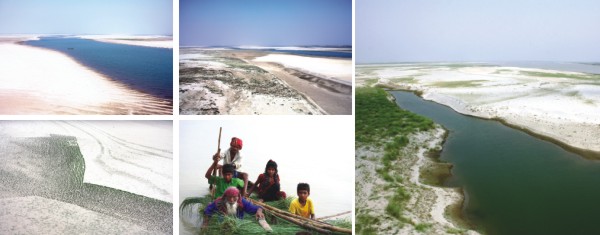
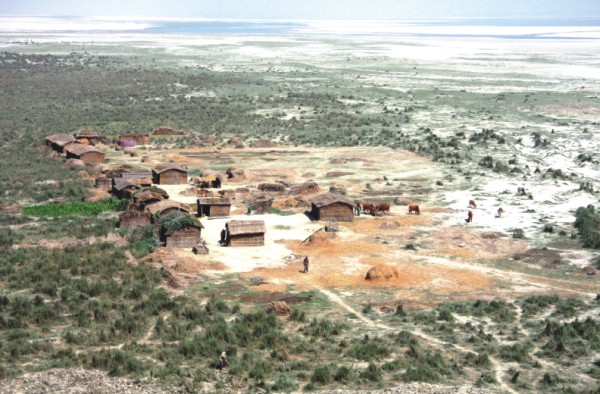
Environmentalists doubt its effectiveness as river grabbing, pollution go on unabated
In the wake of countrywide river grabbing and pollution, the government is forming the National River Protection Commission which will only make recommendations but have no statutory power of implementation.
The government had a legal obligation in this regard as the High Court on July 19 2009 asked it to form a commission which would be the highest authority to save rivers.
The green campaigners, who had long been pressing for the formation of single river authority, expressed their disappointment and said that just another recommendation body would not do any good. The cabinet yesterday gave the final nod to the draft of National River Protection Commission Act, 2013 to constitute the commission. Prime Minister Sheikh Hasina presided over the meeting, held at the cabinet room of Bangladesh Secretariat. The commission will basically advise the government and coordinate the activities of different ministries involved in management of water and rivers, Cabinet Secretary Muhammad Mosharraf Hossain Bhuiyan said yesterday.
Briefing reporters after the meeting, the cabinet secretary also said the commission will be comprised of one chairman and four members. No commissioner would be eligible to act more than two terms of three years each. By every March 31, it will submit the annual report on its activities.
National River Protection Commission Act will help the government to take action to protect rivers from illegal encroachment, pollution and unscrupulous use of rivers as well as other water bodies, Mosharraf said. A rule will also be framed to take measures to protect other water bodies under the act. However, environmentalists say the commission would not bring much change in the current context. "Nobody consulted me about the law with me," said Syeda Rizwana Hasan, the chief executive of Bangladesh Environment Lawyers Association (BELA). After she had filed the petition, the High Court directed the government to form the commission.
"If it is just another recommending body without any statutory power, the commission would not be able to take any action if any decision is not implemented." The draft law should be open for consultations before its placing in parliament.
Columnist Syed Abul Maksud said this commission will just work as a government office, not an independent institution. So it cannot play role to protect rivers. “It will fail to work properly because it got no statutory power.”
At present 14 authorities and agencies of the government take care of different aspects of river management. These bodies lacking coordination have failed to agree even on the number of rivers crisscrossing Bangladesh. As per Bangladesh Water Development Board the number is 259 while another publication of Bangladesh River Institute puts it at 312.
In reply of a question, Water Resource Minister Ramesh Chandra Sen told the parliament that total 97 rivers are dying at the moment facing lack of water flow in the dry season. Over the years the country has lost over 20,000 kilometre of river transport route out of 24,000km due to loss of navigation.(Daily Star, 08.01.2013)
6. Biodiversity losses threaten world’s 900 million poor children
"An unprecedented loss of biodiversity has reduced the amount of food available to the world’s 900 million rural poor and should receive widespread attention, UN Deputy Secretary-General Louise Fréchette said at a commemoration in New York of World Food Day on October 18. Given the growing interdependence among countries and expanding trade in agricultural goods and services, maintaining biodiversity for food security is as much a global priority as a local one," she said. Many freshwater fish species, which can provide crucial dietary diversity to the poorest households, have become extinct, and many of the world’s most important fisheries have been decimated," And it is knowledge of biodiversity - notably by farmers responsible for their families’ health and well-being - that can ensure food availability during periods of crisis, such as civil conflicts, natural calamities, or disabling diseases (UN Deputy Secretary-General Louise Fréchette : October 18, 2004).
Five key environmental issues are identified as crucial to the future sustainability of Bangladesh: land degradation, water pollution and scarcity, air pollution, biodiversity loss, and the threat of natural disasters.
Bangladesh is only country of the world the whole hills are removed as city fathers sleep.
Biodiversity depletion can cause environmental devastation and mal-developmental situation in Bangladesh also. Bangladesh is full of rivers and aquatic bodies. In the country (round the year), the typical ecological condition is to be remained wet, otherwise not only the agriculture is hampered, but also other aquatic bio-resources are always in the troublesome survival condition. Existence of bogs and marsh lands is the characteristic ecological feature of the country. Wetland ecosystem is one of the important factors for maintenance of sound ecological condition in the country. If wetland biodiversity is depleted because of unscientific and unplanned urbanization then automatically bio-resource sustainability will cause mal-directions in the national programmes of all development attempts. Nearby Dhaka city, the entire Ashulia area is under the wetland ecosystem. In the rainy season, the area remains under 12 feet water in average and then that entire area could be utilised as fresh water fish breeding ground and also for the increase of other aquatic bio-resource proliferation site. This will bring economic support and development than more any other attempts if it could be arranged in scientifically planned ways. Moreover, this could be made in more sustainable and environmentally sound way and also for longer time period. But in the name of urbanisation, the characteristic ecology of the wetland habitat is going to be brutally killed and the bio-resource over there has seriously been endangered. So, the biodiversity conservation in the ecosystem is going to be permanently stopped here. This type of brutal attempts to the biodiversity sustainability will seriously threat not only biodiversity conservation but also will create many frontiers of constraints for the sound development of the nation as a whole. Rather this area should be taken under RAMSAR site selection by global declaration. Not only the Ashulia wetland ecosystem, there are many such ecological other\areas passing the critical days in such situation. If the situation is not taken under serious consideration by proper authority, definite change of the local ecology will cause the change in ecology and climate for the worse.
Extinction of Biodiversity in Bangladesh
Back to Content
6.1. DDT, the long-banned insecticide now approved to fight malaria, WHO
Back to Content
DDT, the long-banned insecticide blamed for killing birds and other wildlife, is now approved for use indoors to fight malaria, the World Health Organisation (WHO) announced recently. "One of the best tools we have against malaria is indoor residual house spraying," said Dr Arata Kochi, director of the WHO malaria department. "Of the dozen pesticides WHO has approved as safe for house spraying, the most effective is DDT." Indoor spraying with DDT is a cost-effective response to malaria, which kills about a million people annually, most of them children under five. In parts of Africa and Asia where malaria-carrying mosquitoes spread the disease, 85 percent of home dwellers approached by health workers allow their houses to be sprayed, global health officials said at a news conference
DDT came into common use in the 1930s as an agricultural insecticide. It became notorious after biologist and ecologist Rachel Carson's 1962 book "Silent Spring" exposed how DDT entered the food chain, killing wildlife and threatening humans. In 1969, the National Cancer Institute announced findings that DDT could cause cancer, and a US federal ban was imposed in 1972. Richard Tren, director of the group Africa Fighting Malaria, stressed the difference between agricultural DDT sprayed outdoors and the residual spraying meant to act like a giant mosquito net over individual houses.
"The environmental impact associated with spraying insecticides - whether it's DDT or other insecticides - indoors is minimal, it's negligible ... This is as unrelated to 'Silent Spring' as anything," Tren said. "The science is very clear that there are no harmful human effects." Tren said environmental groups in Africa support its use (Source: The Daily Star, September 17, 2006).
6.2. Environmentalists: Inaction by India, China driving tigers to extinction
Environmentalists accused India and China in a stinging indictment Wednesday of doing almost nothing to stem the rapid decline of tigers in the wild, saying the big cats will likely vanish completely within a few years without government intervention.
Trade in poached Indian tigers is flourishing across the border in Chinese-controlled Tibet, where organized crime groups sell them for use in traditional medicines, ceremonial clothing and as souvenirs, according to two environmental agencies, which secretly photographed the trade. Photos shown at a news conference Wednesday showed dozens of tiger and leopard skins openly on sale, while in others, Chinese police officers laughed and posed with people wearing clothing made of tiger skins. The groups — the Wildlife Protection Society of India and the Environmental Investigation Agency, a non-profit British-based group — accused the Indian and Chinese governments of failing to stop the trade.
"In China, the police have decided to turn a blind eye to the slaughter of tigers in India," despite tough laws against trading in endangered animals, said Belinda Wright, director of the Wildlife Protection Society of India.
She said India has not put together an effective force to combat poaching after 12 years of talking about it. "It is the politics in India that is killing the tiger, the petty agendas and personal rivalries," she said. Environmental Investigation Agency/Wildlife Protection Society for India via AFP/Getty Images
Trade in endangered species, including the Bengal tiger, is banned worldwide under a U.N. convention. But the high premium attached to tiger skins and the use of other tiger body parts in traditional Chinese medicines have created a thriving illegal trade. Kalpana Balkhiwala, a spokeswoman for the Indian Ministry of Environment and Forests, which is responsible for tiger conservation, said the ministry had no comment on the report. Chinese officials could not be immediately reached for comment.Last year, Indian officials were forced to acknowledge that poachers had wiped out every tiger in one of India's premier reserves, and that Indian wildlife officials had long exaggerated the number of tigers across the country. But despite a loud public and official outcry, Wright said tiger protection has not improved.
The U.S. National Fish and Wildlife Foundation's Save the Tiger Fund estimates there are 3,000 to 5,000 tigers currently left in the world, said Judy Mills, director of the fund's Campaign Against Tiger Trafficking. However, conservationists believe official estimates of tigers in the wild are grossly exaggerated and that the true figure may be closer to 2,000 — or as little as several hundred.
"We need to start imagining a world without the great predators," Wright said. "It is about to become a reality. I stand before you completely defeated. So little has been done since we exposed this last year.
The countries involved — India, China and Nepal — have done so little to curb the slaughter. India will soon have no tigers."
"It's just a handful of years before you have none left."
Trade in endangered species, including the Bengal tiger, is banned worldwide under a U.N. convention. But the high premium attached to tiger skins and the use of other tiger body parts in traditional Chinese medicines have created a thriving illegal trade.
Mills said China was considering lifting its ban on the trade of bones from tigers raised on farms for use in medicines. This will undoubtedly fuel the poaching of wild tigers because the animals are expensive to raise on farms and cheap to kill in the forests of India, she warned. And, there's no way to differentiate between the bones, she said. "This will hammer the last nails in the coffin of wild tigers," Mills said by telephone from Washington, D.C. "There's no question in my mind."
An expose last year by Wright's group and the Environmental Investigation Agency helped curb the use of tiger skins in Tibetan ceremonial dress, particularly after the Dalai Lama, the exiled Tibetan spiritual leader, denounced the practice.
Now, she said, Chinese are buying pelts or body parts as souvenirs. "Chinese businessmen are buying it for home decor," Wright said.
The market will continue to expand unless the governments take a strong stand against the trade, said Debbie Banks, head of Environmental Investigation Agency's tiger campaign. "The trade is run by highly organized networks who have far too much invested to let a few isolated raids and random seizures deter them," she said in a statement.
During the investigation, researchers even came across a Tibetan ceremonial tent made of 108 tiger skins. Its owners said it was several hundred years old, but it had recently been repaired and several of the skins looked new, said researcher Nitin Desai.
"I looked at it and said: That is the end of the tiger — 108 skins," he said (Source: USA TODAY, September 27, 2006).A farewell in forests Rare langur
A rare wild monkey sits in its new home at the Forest Department's rescue centre after it was rescued from Srimongol. Inset, a closer view of the white circles around its eyes -- which gives it the local name of Chasmapora Banor.
She clung tight to his neck. With her big round eyes, she gave us a cursory glance and then nibbled at the grape she was holding so delicately with her long, beautiful fingers. Then she saw the apple in my hand and immediately abandoned her grape to reach out. She felt the apple around and explained her joy in a sharp trilling voice. She did not like the cameras much and hid her face in the chest of Dr Anwar Hossain, the zoologist, and trilled. She was wondering why we were there, and why so many people. She found safety in the warmth of the human body. Probably she felt it much like her lost mother from whom she was separated some 10 days ago. And where is her mother? Nobody knows. Probably she was killed and eaten up by the Tipra people. Probably the mother just left her behind, which is unusual for a primate, when people chased them. Nobody can tell that exactly.
The Phayre's Langur, locally known as Chasmapora Banor (spectacled monkey) for the white marks round its eyes set in the jet black coat, was rescued by some locals from a Tipra man in Bishamoni of Srimongol. It was only about two months old. Then it was brought to Sitesh Babu in Srimongol town. Sitesh Babu maintains his own private zoo. But it is in a pathetic condition. Phayre's Langur is a globally threatened primate and in Bangladesh it is critically endangered.
"Its population is declining very fast and the present total number may not exceed 200," Dr Anwar told us as we were travelling to Srimongol to rescue the animal. "Habitat loss and poaching for its gallstones believed to have medicinal value are leading to its fast extinction." The wildlife circle of the forest department has recently set up a rescue centre, but it has not been used since. Dr Anwar thought it would be a good place to keep the baby langur until it is fit enough to be reintroduced in the forest. We carried the baby to our car. She sat there happily on my lap and trilled. She looked around with curious eyes, and shuddered as the AC was put to full blast. In forest, you don't get air conditioners.
As the car started rolling the langur became agitated; she screeched and jumped from one lap to another. Her eyes round with excitement.
"Cool down, my baby. Cool down," Sitesh was trying to soothe the langur. She then hid under his arm. When we entered the Lawachhera forest, the langur became excited again. She looked at the trees and howled. She knew forest is where she belongs.
The rescue centre sits inside the forest, a one-storey building with caged rooms. The langur baby would be the first resident of the centre.
A room had been prepared for the primate with thick tree branches, car tyres and ropes so that she could play and learn the life skills. She looked inside the room with incredulous eyes and clutched to Dr Anwar's chest. He took her gently off his chest and put her on a branch. She protested. Now she was sobbing loudly just like a human baby, breathing heavily. We tried to shove her onto the tree branch. She screeched. We quickly put her there and moved back. She gave out a loud wail, ran along the rope and jumped on Sitesh's chest. She held him tightly and sobbed.
"Meye, eita to tomar ghor. Kaindo na. (Baby, this is your home, don't cry)," Sitesh patted her head buried into the fold of his shirt. "Meye, tumi vala thakba (girl, you will live well here). Ami tomake roj dekhia jamu (I will visit you every day)." Sitesh could not say anymore. His voice choked. He gave her an apple. She would not take it.
We suddenly took her off, put her on the branch and shot out of the room. The door clamped tightly. The langur screeched and wailed. She was desperately hanging onto the wire net and looking at us with her pleading eyes.
We did not stay there. We were walking down the dirt road. She started sobbing loudly again. We were walking fast, but faster travelled her cry. But we knew, one day the little girl would be a nice, young woman and then walk away into the forest where she belongs (Inam Ahmed, Daily Star, March 16, 2009).Tiger population recorded lowest
The Tiger population in India is at an all-time low, according to the government’s tiger census report released on Tuesday. It is estimated there are only 1,411 tigers are now left in the wild, the report said.
The maximum estimated figure, the best scenario possible, is 1,657, which is lower than the 1,800 tigers estimated in India’s first tiger census in 1960. This is a massive fall from 2002 when the tiger population was estimated to be 3,642. The latest figures are of all tiger reserves except those in Jharkhand, and Indravati in Chhattisgarh, where the Naxal threat prevented estimation. In Sunderbans, the estimation process is still on.
Tiger beat to death Sunderban, Bangladesh November 2007
Central India, which has the large tiger population states of Madhya Pradesh, Maharashtra and Rajasthan, has seen the maximum losses. Fifty-nine per cent of the tiger population of Madhya Pradesh, and 50% of Maharashtra, has been wiped out. Tiger reserves in the south — in Tamil Nadu and Andhra Pradesh — and the Jim Corbett Park in the terai have done well, said Rajesh Gopal, member secretary of the National Tiger Conservation Authority.
The Wildlife Institute of India blamed poaching, increasing man-animal conflict, falling prey base and habitat loss for tiger as major reasons for the huge fall in tiger population between 2001 and 2006. But Gopal said it was not too late to save the tigers. “We need to take proactive steps.”
Wildlife conservationist Valmik Thapar said efforts should be initiated as soon as possible to save the big cats. “It is now time to act and save tigers from human beings. We have to create inviolate areas for tigers and provide modern weapons to forest guards,” he said. Thapar added that vacancies of frontline forest staff should be filled fast (Independent, February 18, 2008). Gopal said that the census methodology adopted in 2002 was not foolproof. “Experts had doubted the pug mark counting methodology because it could lead to higher estimation. We adopted the modern technology of camera trap and DNA sampling to reach a near correct figure,” he said.
In Bangladesh it is not known how many tiger died because of SIDR tidal storm. But several death bodies were found.
6.3. "More dolphins are getting killed by fishermen now, than by river pollution,"
Fishermen are killing endangered Gangetic River Dolphins on a vast swath of the rivers Padma and Jamuna, and using their oil to catch fish.
The trade has become so lucrative that some fishermen have switched from fishing to catching dolphins. Each kilogramme of oil extracted from dolphins sells for Tk 400 to Tk 500. The fat from a healthy dolphin can produce 4 to 5 kg of oil.Killing dolphins found at least at thirty places in the Padma and Jamuna
"We found groups killing dolphins at least at thirty places in the Padma and Jamuna," said Dr SMA Rashid, a wildlife expert who is now conducting a survey on Gharial, a crocodile species, now thought to be extinct in Bangladesh.The Padma has reached a greater depth at Yusufpur, at the mouth of the Baral river in Godagari. Because of this feature of the waterways, fish are abundant at these points, and so dolphins also visit these places for food.
"The fishermen have found a new way of maximising their catch. They kill the dolphins, extract oil, and use the oil to attract more fish," said Rashid.
They pour dolphin oil in the water and then lay nets around that. The strong smell of the oil attracts fish to the net.The same practice is going on in the Jamuna. At Lalsamar Char and Saper Char in Chilmari, and at Roumari, killing dolphin is a booming business.
"The sad part is that nobody even bothers to stop the killing, even though the Gangetic Dolphins are an endangered species according to IUCN's Red Book," said Rashid, who runs an organisation named the Centre for Advanced Research in Natural Resources and Management (Carinam).
"More dolphins are getting killed by fishermen now, than by river pollution," Rashid said. Killing dolphins is a crime punishable with imprisonment under the wildlife act. "Unless we act fast, dolphins will be lost forever from our rivers" (Star Report, June 4, 2010.
7. ARTICLES ON ENVIRONMENT
Back to ContentCONTENT
Back to Content
Back to Content
Back to Content
Last Modified November 29, 2015
Back to Tragedy in the Himalays and Ganges-Brahmaputra Plain
Back to Home Garden
Back to Mitigation
Back to Introduction
Back to Article
Top of Page
Home